POLITICS
Mamata’s Nandigram bypoll backing of Congress signals Bengal Oppn reset
Former Bengal CM backs Congress’ Milan Pradhan hours after her faction’s nominee withdraws from the Nandigram contest
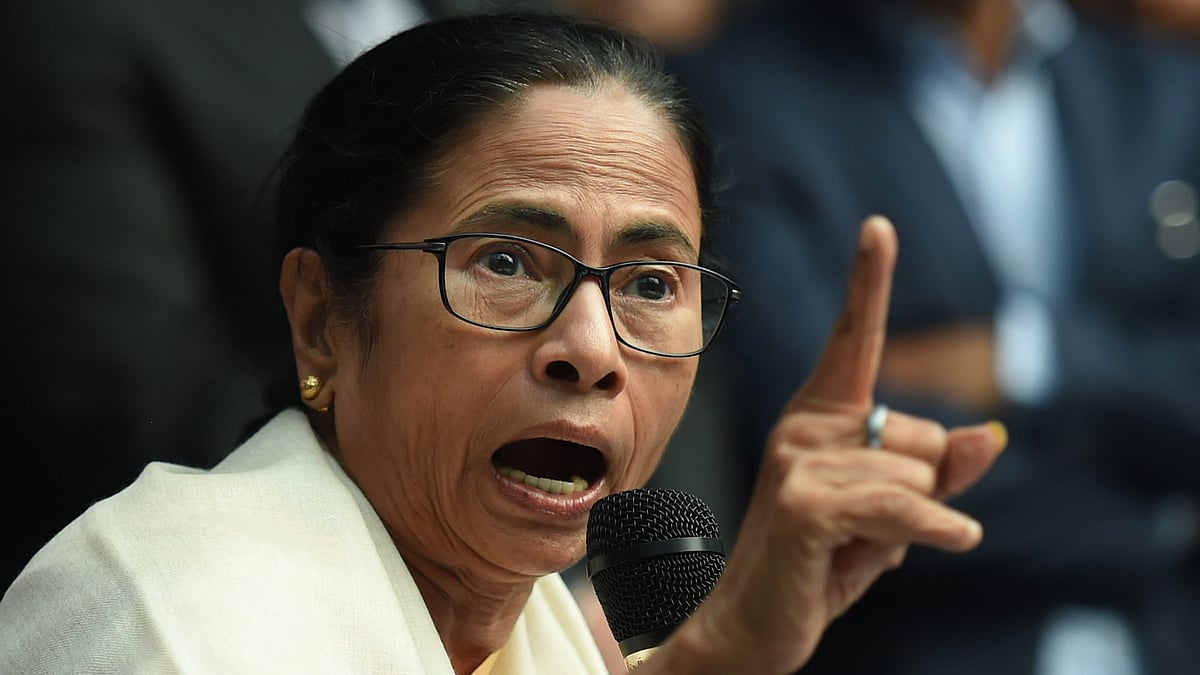
Former West Bengal chief minister Mamata Banerjee’s decision to back the Congress candidate in the Nandigram assembly bypoll marks a striking turn in the relationship between the two parties, which have been political rivals in the state for decades.
The move has also come at a turbulent time for Banerjee’s faction, with the Trinamool Congress’ traditional name and ‘Jora Ghash Phul’ symbol frozen by the Election Commission amid an internal dispute and separate names and symbols allotted to the rival factions for the 6 October bypolls in Nandigram and Rejinagar.
Banerjee announced her support for Congress candidate Milan Pradhan on 18 September, hours after her faction’s nominee, Sanchita Pradhan Dey, withdrew from the Nandigram contest. Dey had met chief minister Suvendu Adhikari at the state secretariat in Kolkata before withdrawing her nomination.
Banerjee described Congress as a “sister party” and a “natural ally”, saying the decision was taken in the larger interest of the country and to strengthen the INDIA bloc. She also said she wanted to send a message about the future of opposition unity beginning from Bengal.
The development, however, came against the backdrop of an unusually difficult phase for Banerjee’s faction. Its initial decision to field a candidate in Nandigram was followed by the nominee’s withdrawal, leaving the Congress candidate as the principal opposition-backed contestant from the constituency.
Pradhan was arrested hours after Banerjee announced her support. He was subsequently sent to judicial custody till 3 October in connection with pending cases dating back to the 2007 Nandigram land-acquisition agitation. Police said there were multiple pending non-bailable warrants against him, while Congress questioned the timing of the action.
The arrest added another layer to an already volatile bypoll. Congress leaders alleged political vendetta, while the BJP rejected any political connection and maintained that the police were carrying out the legal process.
The latest move also carries historical significance. Banerjee herself emerged from the Congress before breaking away in the late 1990s to establish the Trinamool Congress, positioning it as a vehicle to challenge the Left Front and what she viewed as Congress’ inadequate opposition to the CPI(M).
Yet Congress and the TMC have periodically joined hands when confronted with a larger political adversary. The two parties fought the 2001 West Bengal assembly election together after Banerjee severed ties with the NDA. They again allied for the 2009 Lok Sabha election, and their partnership reached its high point in 2011 when they jointly ended the Left Front’s 34-year rule in Bengal.
The alliance subsequently collapsed amid differences over policy, seat-sharing and the functioning of the state government.
Relations became particularly strained during Banerjee’s tenure, with Congress leaders repeatedly accusing the TMC of marginalising their organisation. The Trinamool, in turn, portrayed Congress as a declining political force whose weakness benefited the BJP and the Left.
Against that backdrop, Banerjee’s decision to support Congress in Nandigram has been viewed by political observers as more than a routine bypoll arrangement. It puts Congress at the centre of an anti-BJP electoral strategy in a constituency that has considerable political significance for Banerjee.
Congress veteran Adhir Ranjan Chowdhury, however, sought to play down the possibility of an immediate rapprochement between the two parties.
Reacting to Banerjee’s move, Chowdhury said she should support Congress “not as a fallen leaf but by holding the hand of the banyan tree”, while asserting that the party’s revival under Rahul Gandhi should be recognised.
“One should note the timing of the support. It happened after her candidate withdrew from the race. She now has the ‘football player’ symbol, but she has no player left to play her game,” Chowdhury said, referring to the new symbol allotted to Banerjee’s faction.
“That’s why she has come to us, knowing we are the only third force that has the ability to take on the BJP,” he added.
West Bengal Pradesh Congress president Subhankar Sarkar struck a more receptive tone, saying the party welcomed support from anti-BJP and secular political forces in the state.
“The Congress welcomes any support coming from the anti-BJP and secular political repository of the state, which will recognise our party’s fight against the saffron conglomerate with Rahul Gandhi leading it from the front,” Sarkar said.
“One never knows, this development in Bengal may open up a new political path facilitating a separate cementing factor for the opposition,” he added.
Congress leaders have also criticised Pradhan’s arrest. Congress alleged that the action was politically motivated, while Rahul Gandhi described it as political vendetta and said the party would “fight and win”.
The BJP has rejected the allegations. State president Samik Bhattacharya dismissed the possibility of a meaningful opposition understanding, saying: “Adding zero to zero will only result in zero.”
He alleged that both Congress and the TMC were seeking political survival and argued that an alliance would not revive either party.
For Banerjee’s faction, supporting Congress allows it to avoid a three-cornered opposition contest in Nandigram while projecting a broader anti-BJP position at a time when its organisational identity is being contested.
It also gives Banerjee an opportunity to present herself as part of a wider national opposition effort rather than solely as the leader of a faction fighting over the TMC’s name and symbol.
“There is no love lost between the two sides, but Banerjee seems to be clutching at straws,” senior journalist Biswajit Bhattacharya said.
“But since both sides are struggling for political foothold, this arrangement could benefit both for the time being, with the Congress hoping to gain from some of Banerjee’s remaining popularity,” he added.
The development also puts the INDIA bloc in focus. Banerjee’s description of Congress as a “natural ally” and her call for opposition parties to fight together indicate an attempt to emphasise coordination against the BJP.
Whether the Nandigram arrangement develops into a broader political understanding remains uncertain. The two parties continue to have competing organisational interests in Bengal, and Congress has maintained its efforts to rebuild independently in the state.
For now, the Nandigram bypoll has brought the two long-time rivals together in an unusual electoral arrangement, even as the contest remains shaped by the TMC’s internal dispute, the Election Commission’s decision on party identity and the arrest of the Congress candidate.
With PTI inputs
Join our official telegram channel (@nationalherald) and stay updated with the latest headlines