POLITICS
Modi ji, please direct your attention to this: Rahul flags textile sector problems
US tariff wall and Delhi’s inertia leave Indian textile exporters exposed as orders, jobs and margins shrink
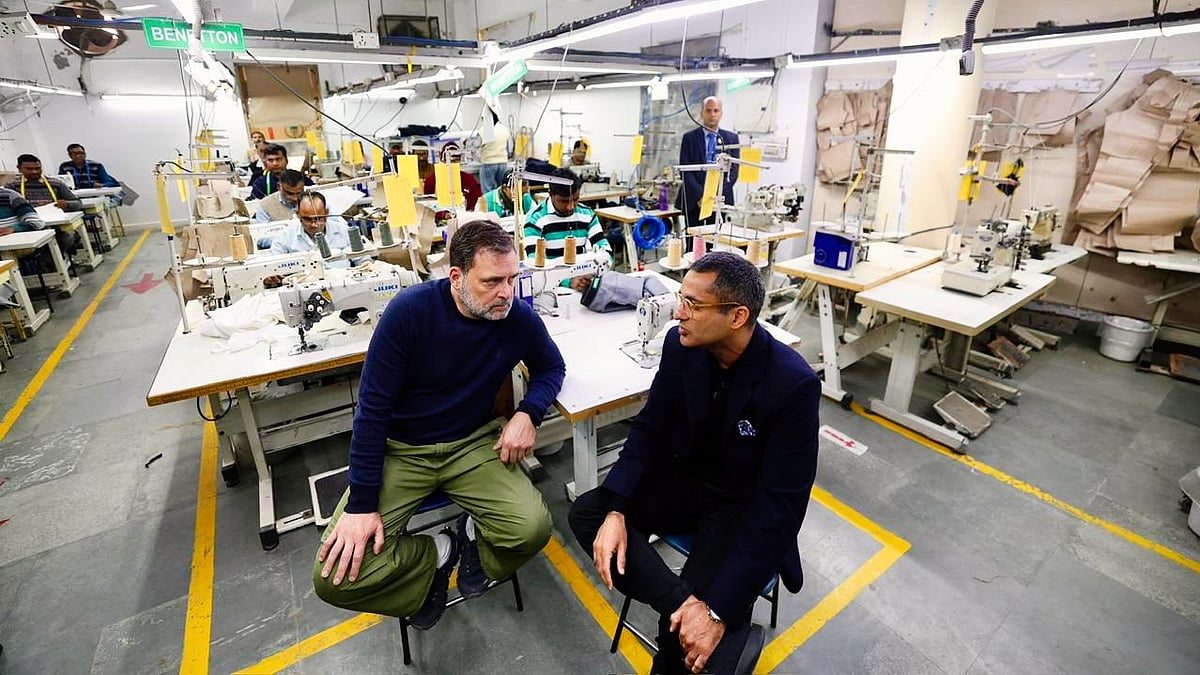
Congress leader Rahul Gandhi on Friday sounded the alarm over what Indian textile exporters have been whispering for months: sky-high US tariffs are choking one of the country’s largest employers while the Indian government mostly watches from the sidelines.
In a video posted from a garment unit in Haryana, Gandhi spotlighted the skill and efficiency of Indian tailors — the sort of quiet industrial competence that usually speaks for itself, except now it’s being drowned out by a 50 per cent tariff wall in Washington and strategic silence in New Delhi.
“50 per cent US tariffs and uncertainty are badly hurting India’s textile exporters. Job losses, factory shutdowns and reduced orders are a reality of our ‘Dead Economy’.” he wrote on X.
Hardly hyperbole: exporters in Tiruppur, Ludhiana and Noida have been reporting thinner order books, payment delays, and buyers switching to Bangladesh and Vietnam, whose governments actually negotiated trade access before the Trump White House slapped punitive duties on India during his last round of tariff theatrics.
That’s the irony: Trump’s protectionist showmanship hasn’t just bruised China — it’s kneecapped Indian textiles too, with Washington classifying a whole swathe of apparel and home furnishing items for duties that can hit 50% depending on fabric type. Meanwhile, India’s pitch for tariff relief or preferential access has been perpetually stuck in the “to be discussed” drawer of Indo–US trade talks.
What’s made exporters even grumpier is the Indian government’s lack of urgency. Gandhi noted that more than 4.5 crore jobs and lakhs of businesses are entwined with textiles, yet “Mr Modi has offered no relief or even spoken about tariffs”.
It’s hard to argue — New Delhi has been busy projecting 'Make in India' while one of its most labour-intensive sectors quietly endures tariffs that make its products look boutique-priced in the US market.
Europe isn’t offering much refuge either. Apparel prices there have softened, and competition from Bangladesh, China and Vietnam is fierce, especially since those countries benefit from preferential trade agreements India doesn’t have. So Indian exporters get the worst of both worlds: high tariffs in the US and price compression in the EU, plus domestic policy limbo at home.
During the factory visit, Gandhi interacted with workers and executives, even trying his hand at cutting fabric, before hammering home the point that a US trade deal prioritising Indian workers and businesses isn’t optional anymore — unless the goal is to preside over a slow-motion unravelling of the industry.
“PM Modi must not allow his own weakness to impact our economy any further,” he added, making it clear the blame doesn’t sit solely in Washington. Trump may have built the tariff wall, but Delhi’s reluctance to climb it is now part of the problem.
With PTI inputs
Join our official telegram channel (@nationalherald) and stay updated with the latest headlines