POLITICS
Oppn moves motion to remove speaker; Lok Sabha debate turns stormy
Opposition leaders say the motion has signatures of 118 MPs, citing the speaker’s alleged “partisan” conduct in the House
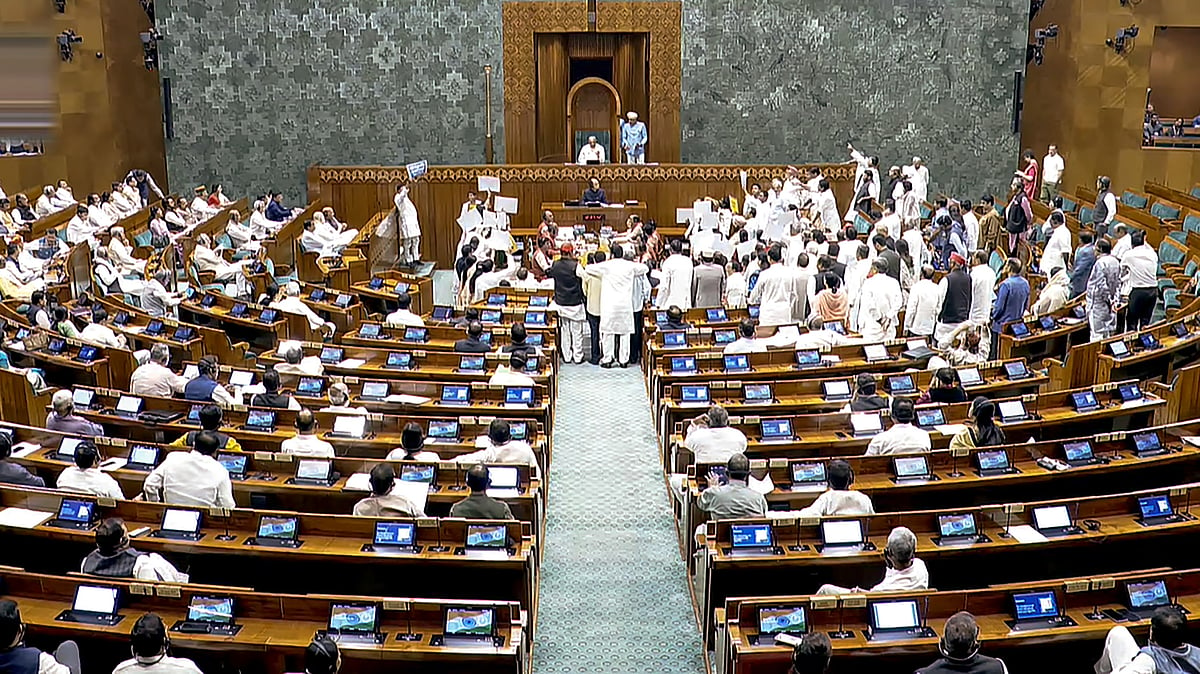
A stormy session unfolded in the Lok Sabha on Tuesday after the Indian National Congress initiated a move to bring a no-confidence motion against speaker Om Birla, setting off a sharp procedural battle between the treasury and Opposition benches over who should preside over the debate.
The motion was formally moved by Congress MP Mohammed Jawed, who sought Birla’s removal from the speaker’s post. According to Opposition leaders, the resolution carries the signatures of 118 MPs, reflecting a broad coalition of parties dissatisfied with what they describe as the speaker’s “partisan” conduct in the House. Much of the Opposition’s anger stems from an incident in which Rahul Gandhi, the leader of the Opposition, was allegedly not allowed to speak during proceedings.
Soon after the motion was tabled, the House descended into a procedural debate. Members from Opposition parties raised questions over whether Jagdambika Pal — who was presiding over the sitting — could continue to conduct the proceedings while a motion for the Speaker’s removal was under consideration.
Raising a point of order, Asaduddin Owaisi of the All India Majlis-e-Ittehadul Muslimeen cited parliamentary rules, arguing that once a motion to remove the speaker is being considered, the speaker cannot preside over the House. Owaisi further noted that since the position of deputy speaker remains vacant, the member presiding over the House effectively holds the Chair with the speaker’s approval. On that basis, he contended that such a presiding member should not conduct proceedings related to the motion.
Owaisi urged the House to first arrive at a consensus on a neutral presiding authority before beginning the discussion on the resolution. The objection was soon echoed by Saugata Roy of the All India Trinamool Congress, who also raised concerns about the procedural propriety of continuing under the existing arrangement.
The treasury benches swiftly pushed back. Nishikant Dubey of the Bharatiya Janata Party argued that parliamentary rules clearly allow any member presiding in the Chair to exercise powers similar to those of the Speaker and to conduct proceedings in the House. His interpretation was supported by parliamentary affairs minister Kiren Rijiju, who maintained that the rules permit the Chair to continue overseeing the debate.
Joining the exchange, Congress MP K.C. Venugopal criticised the government for failing to appoint a deputy speaker — an omission he said had created the present procedural confusion. He insisted that the House should first determine, through consensus, who would preside over the debate on such a crucial motion.
Senior BJP leader Ravi Shankar Prasad also intervened, asserting that the person occupying the Chair has full authority to conduct the proceedings of the House under established parliamentary conventions.
After hearing arguments from both sides, Jagdambika Pal ruled that since the office of the Speaker was not vacant, the Chair had the authority to continue presiding over the session. With that clarification, the House agreed to allocate 10 hours for discussion on the motion seeking Birla’s removal.
Pal also remarked on what he described as the speaker’s “generosity”, noting that initial errors in the notice submitted for the motion had been rectified with Birla’s approval. He further pointed out that the Speaker had voluntarily chosen not to preside over the House during the debate, allowing the discussion to proceed without direct involvement from the office under scrutiny.
As several members attempted to raise additional points of order, Pal assured them that they would be given an opportunity to do so later. The House then moved forward with the process, with Mohammed Jawed formally placing the motion before the Lok Sabha for discussion.
The dramatic exchanges underscored the deepening political tensions in Parliament, with the Opposition pressing its case for accountability while the government insisted that parliamentary rules were being followed in both letter and spirit.
With IANS inputs
Join our official telegram channel (@nationalherald) and stay updated with the latest headlines