POLITICS
Congress plans Kisan Sammelans in 6 states to protest Indo-US trade deal
Outreach suggests party seeking to rebuild broad farmer coalition ahead of next Parliament session
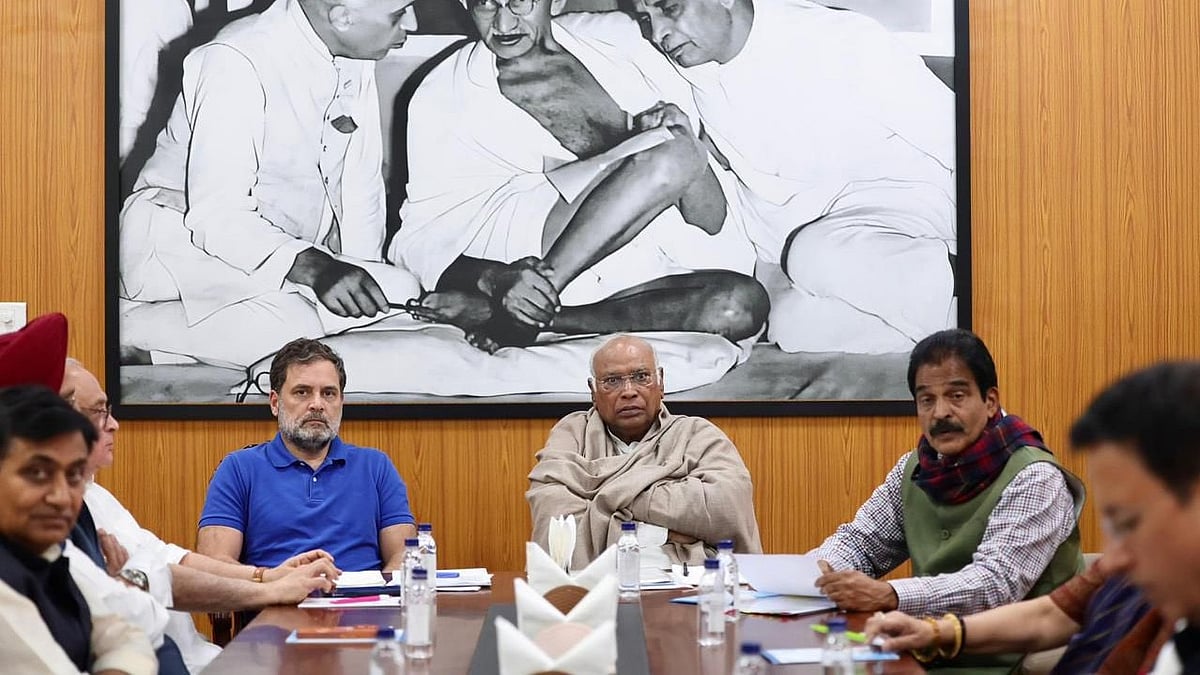
Stepping up its attack on the Modi government over Indo-US trade agreement, the Congress on Friday announced a series of six Kisan Sammelans across key agrarian states, signalling a plan to turn the farmer issue into a political campaign on the ground.
This assumes significance as Assembly elections are due in four key states — Tamil Nadu, West Bengal, Assam and Kerala.
Framing the trade deal as a threat to domestic agriculture, the party drew parallels with the farmers’ agitation against the three farm laws and warned that similar resistance could emerge if concerns over market access, price stability and import competition remain unaddressed.
The outreach suggests the Congress is seeking to rebuild a broad farmer coalition and reclaim political space on agrarian issues ahead of the next phase of Parliament's Budget session, set to begin on 9 March.
The strategy was finalised at a meeting held at the residence of Congress president Mallikarjun Kharge in Delhi, where senior leaders, including Lok Sabha Leader of Opposition Rahul Gandhi, reviewed the political and economic implications of the agreement.
Congress MP and general-secretary (communications) Jairam Ramesh said the discussion focused on crop-specific vulnerabilities — particularly cotton, soybean, maize and fruit-growing belts — which the party believes could face early disruption from tariff changes and import pressures.
“The first such gathering will be held in Bhopal on 24 February, where both Kharge ji and Rahul Gandhi are expected to participate. This will be followed by a similar event in Yavatmal in Maharashtra on 7 March, and a third sammelan in Ganganagar in Rajasthan ahead of the upcoming Parliament session,” Ramesh said.
"Under pressure from Trump, Narendra Modi has committed a brutal betrayal against the country's farmers. This deal has been made by holding a sword to the farmers' throats. The protest against this compromised trade deal is beginning from Bhopal and the Leader of Opposition will kick off the campaign," Madhya Pradesh Congress chief Jitu Patwari said.
The choice of locations reflects a targeted political strategy — regions heavily dependent on cash and food crops where price volatility and import competition can quickly translate into rural distress.
Ramesh alleged that the prime minister had first “surrendered” during Operation Sindoor on 10 May 2025 and was now repeating the same approach in the Indo-US trade negotiations.
India and the United States reached a framework for an interim trade agreement on 2 February, following talks between US President Donald Trump and PM Modi. Notably, the deal was announced by Trump first.
The deal sets a reciprocal US tariff of about 18 per cent on most Indian exports — including textiles, leather, chemicals, machinery, gems and pharmaceuticals — with some sectors likely to receive exemptions later.
In return, India has agreed to cut or remove tariffs on several US industrial and agricultural products and expand purchases of American energy, technology and farm goods. Congress has criticised the deal, warning that lower-duty imports of US farm products could depress domestic prices and hurt small farmers.
Join our official telegram channel (@nationalherald) and stay updated with the latest headlines