POLITICS
Preventive detention and UCC: Bengal's new govt redraws limits
Double legislation reflects BJP's twin priorities of tougher policing and legal uniformity, but raises constitutional concerns
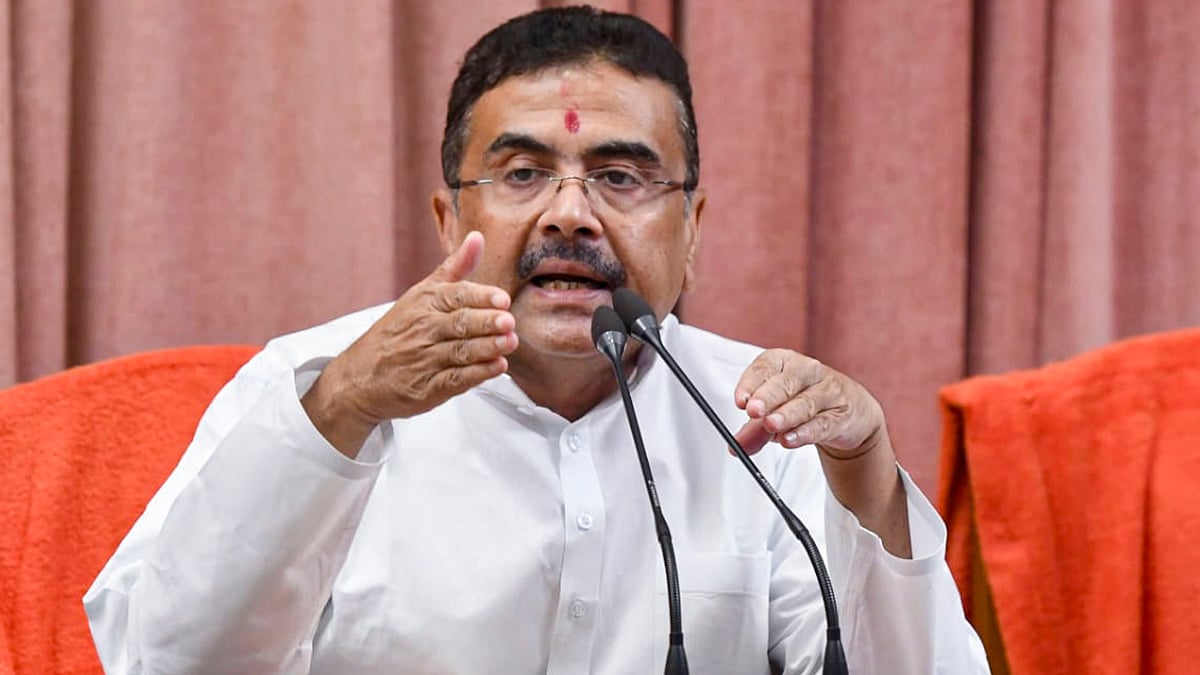
Barely two months after assuming office, the BJP government in West Bengal is preparing to introduce two of its most consequential pieces of legislation yet — one that would significantly expand the state's coercive powers in the name of public order, and another that seeks to replace religion-specific personal laws with a Uniform Civil Code.
Taken together, the West Bengal Public Safety and Control of Anti-Social Activities Bill, 2026, along with amendments to the West Bengal Maintenance of Public Order Act, 1972, and the Uniform Civil Code Bill, 2026, go well beyond routine legislative reform. They reflect two of the BJP's longstanding ideological priorities: a stronger security apparatus backed by wider executive powers, and legal uniformity across communities.
Supporters describe the Bills as long-overdue reforms that will curb organised crime, strengthen governance and ensure equality before the law. Critics, however, argue they represent a significant expansion of executive authority that could weaken procedural safeguards, narrow the space for political dissent and further centralise state power.
At the heart of the proposed Public Safety Bill are powers that extend well beyond ordinary criminal law.
The legislation would allow preventive detention for up to one year without a criminal conviction, empower the government to confiscate property allegedly linked to organised crime, authorise the externment of individuals from specified districts or regions, and permit the recovery of compensation for damage to public or private property from those accused of participating in violent protests.
Collectively, these provisions would give the executive substantially greater discretion to act before offences are proved in court.
The Bill borrows heavily from legislation already in force in Uttar Pradesh and Gujarat, both BJP-ruled states where similar laws have attracted sustained criticism from civil liberties organisations.
According to a senior BJP minister, Bengal has witnessed repeated incidents of political violence, extortion, illegal mining, land grabbing, forest resource theft and organised criminal activity.
"Existing provisions of the Bharatiya Nyaya Sanhita and other criminal laws have not been sufficient to dismantle organised criminal networks," the minister said, arguing that the law would enable authorities to intervene before violence escalates rather than after crimes have already occurred.
The government also argues that the legislation would benefit ordinary citizens, particularly traders, transport operators and residents of crime-prone areas, by enabling faster action against organised criminal syndicates. It says provisions allowing compensation to be recovered from those responsible for vandalism would ensure taxpayers no longer bear the financial cost of violent protests.
Yet it is precisely these preventive powers that have alarmed constitutional lawyers.
Supreme Court advocate Jaideep Bhattacharya described preventive detention as the Bill's most contentious provision. "The most controversial provision is preventive detention. A person can be detained not because they have been convicted of a crime, but because authorities believe they may pose a future threat to public safety," he said.
Although an advisory board headed by a serving or retired high court judge would review such detentions, preventive detention remains one of the most controversial powers available under Indian law because it allows deprivation of liberty without a judicial finding of guilt.
Legal experts also point to the Bill's expansive definition of a 'gunda' or anti-social element, which extends beyond convicted offenders to include individuals against whom charge sheets have merely been filed or who are considered dangerous to society.
Civil liberties advocates warn that such broad and subjective definitions could be invoked against political opponents, protest organisers or social activists if interpreted aggressively by the executive.
The proposed mechanism for recovering compensation during protests has similarly divided opinion.
While governments have a legitimate interest in recovering the cost of damaged public property, critics argue that imposing financial liability before criminal responsibility is conclusively established risks undermining the fundamental principle that every accused person is presumed innocent until proven guilty.
Human rights organisations have levelled similar criticisms against comparable laws in Uttar Pradesh and Gujarat, arguing that exceptional policing powers can produce a chilling effect on democratic dissent even when introduced in the name of public safety.
A Uniform Civil Code — and another ideological milestone
If the Public Safety Bill expands the state's policing powers, the proposed Uniform Civil Code seeks to redefine the relationship between religion, personal law and the state.
The Bill proposes a common legal framework governing marriage, divorce, maintenance, inheritance and adoption irrespective of religion.
Its supporters point to Article 44 of the Constitution, which encourages the state to endeavour towards a Uniform Civil Code, arguing that multiple personal law systems perpetuate unequal legal standards and undermine gender justice.
Women from several communities could benefit if discriminatory inheritance and marriage provisions are replaced by gender-neutral rules, while a common code could simplify family law by replacing multiple overlapping legal systems.
Yet the proposal remains among the most politically contentious constitutional reforms in India. Opposition parties and minority organisations argue that personal laws are deeply intertwined with religious identity and cultural autonomy.
Left leader Sujan Chakraborty said minority communities fear that replacing diverse personal laws with a single framework could disproportionately affect Muslims, whose legal traditions differ substantially from Hindu family law.
Many Muslim organisations have previously maintained that while reforms advancing gender justice are welcome, a Uniform Civil Code should not be imposed without extensive consultation because Articles 25 and 26 of the Constitution also protect religious freedom and the right to manage religious affairs.
The BJP rejects those concerns. According to the minister, a Uniform Civil Code regulates civil rights rather than religious practice and would leave every citizen free to follow his or her faith while ensuring equal legal treatment in family matters.
Viewed together, the two Bills offer perhaps the clearest indication yet of how the BJP intends to govern Bengal. One strengthens the coercive powers of the state in the interests of public order. The other advances one of the party's oldest ideological commitments by seeking to replace religion-specific personal laws with a common civil code.
Supporters see that combination as decisive governance rooted in stronger law enforcement and equal citizenship.
Critics see something different: the consolidation of executive power through legislation that grants wider administrative discretion while reducing procedural safeguards, reflecting a governance model already visible in several BJP-ruled states.
Join our official telegram channel (@nationalherald) and stay updated with the latest headlines