POLITICS
Bengal parties hit back at BJP's UCC pitch in Bengal poll battle
Modi-Shah pitch uniform code as reform; rivals call it polarisation push amid jobs, price rise concerns
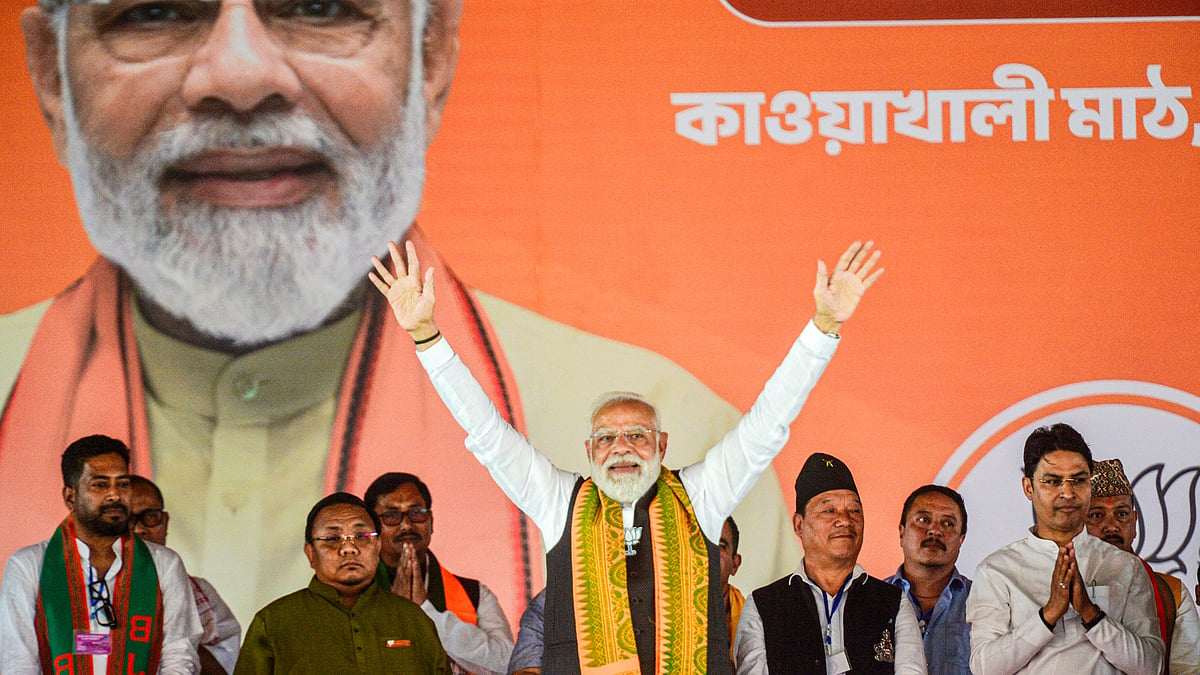
The BJP has stepped up its push for a Uniform Civil Code (UCC) in West Bengal, positioning the issue as a key campaign plank ahead of the 2026 Assembly elections. Senior leaders including Prime Minister Narendra Modi and Union home minister Amit Shah have repeatedly flagged the issue during recent visits to the state, triggering sharp political reactions and reviving debate over whether the proposal addresses legal reform or electoral strategy.
At a recent rally, Modi described the UCC as a step towards “equal justice for all”, pointing to Uttarakhand’s implementation of the law as evidence of its feasibility. Shah echoed the argument at a public meeting, saying a uniform code would end “unequal personal laws” that disadvantage women. Their remarks have amplified the issue in an already polarised political environment, where debates over voter rolls, industrial decline and migration dominate the campaign narrative.
Opposition parties have accused the BJP of foregrounding a national ideological issue to divert attention from economic concerns. Trinamool Congress (TMC) MP Kalyan Banerjee said the party was attempting to import national political divisions into Bengal.
“People here want jobs in Haldia’s factories and other central government organisations, not lectures on UCC. The BJP has failed to deliver on its decade-old promises on employment. This is an old tactic to avoid talking about governance,” Banerjee said.
CPI(M) politburo member Mohammed Salim struck a similar note, arguing that the timing of the debate reflected political calculation. “Why raise UCC now, when mills are shutting and young people are migrating out of Bengal in search of work? There are several pressing issues facing the state. This is polarisation, pure and simple,” Salim said.
The UCC refers to the idea of a single set of civil laws governing marriage, divorce, inheritance and adoption for all citizens irrespective of religion. The concept finds mention in Article 44 of the Constitution as a Directive Principle of State Policy, but has never been implemented nationwide. Uttarakhand enacted its own version in 2025, introducing provisions such as mandatory registration of live-in relationships and a ban on polygamy.
Significantly, even BJP-ruled states such as Gujarat, Assam and Madhya Pradesh — where committees have been constituted — have not yet implemented a Uniform Civil Code, raising questions about the timing of the party’s push in Bengal.
Moreover, in Bengal’s politically sensitive landscape, the proposal has triggered concerns about social cohesion. With Muslims accounting for around 27 per cent of the population and Hindus about 70 per cent, and with communal tensions periodically surfacing during events such as Ram Navami processions, critics warn that the issue could sharpen religious divides.
“BJP knows local controversies such as Sandeshkhali or the school recruitment scam have hurt its prospects. Raising UCC helps consolidate Hindu voters in districts like Asansol and Birbhum, where Modi has addressed rallies,” said Subhamoy Maitra, a Kolkata-based political observer.
Legal experts have also cautioned against oversimplifying a complex reform process. Retired Calcutta High Court judge Amitava Chatterjee said the diversity of customs in Bengal requires careful consideration.
“UCC may sound appealing in principle, but Bengal’s social fabric includes varied traditions, from customary Hindu practices to Muslim waqf laws. Uttarakhand’s legislation itself is facing legal challenges on privacy grounds. If implemented hastily, the courts could see prolonged litigation,” he said.
Women’s rights activist Sarmistha Das argued that while legal reform could strengthen gender justice, political framing risks complicating the debate. “A uniform code could benefit women in certain areas, but presenting it as a Hindu-versus-minority issue risks undermining genuine reform,” she said.
The BJP has rejected the charge that the proposal is politically motivated. Former state president Sukanta Majumdar said the UCC would ensure equality before the law. “TMC calls it divisive, but existing personal laws often disadvantage daughters in matters of inheritance. UCC means one nation, one law, just as GST created uniformity in taxation,” Majumdar said, citing surveys in Uttarakhand that indicated strong support for the reform, particularly among women.
Political analysts see the debate as part of a broader electoral strategy. “The BJP is relying on a national template. The Ram Temple narrative helped in the 2024 Lok Sabha elections. UCC could serve a similar purpose in 2026,” said political analyst Sujit Chatterjee.
He added that the party risks appearing disconnected from local concerns if it fails to address livelihood issues. “Mamata Banerjee’s welfare schemes such as Lakshmir Bhandar and Swasthya Sathi speak directly to everyday economic anxieties. If BJP’s messaging centres primarily on ideological issues, it could reinforce the perception that the party is focused on national themes rather than Bengal-specific problems,” he said.
Another legal expert, Swadesh Taral, pointed to the gap between political messaging and legislative complexity. “A uniform civil code sounds straightforward in political speeches, but its implementation involves intricate questions about rights, exemptions, community practices and constitutional safeguards. An overly aggressive push could create uncertainty rather than clarity,” he said.
For the BJP, the UCC represents a high-stakes electoral calculation — energising core Hindu voters in key districts while attempting to expand its support base. However, critics argue that the strategy could also consolidate minority voters behind the TMC in districts such as Murshidabad.
As campaigning gathers momentum, the UCC is likely to remain one of the BJP’s more visible — and contentious — campaign themes. For supporters, it represents legal uniformity and gender justice. For opponents, it signals an attempt to reshape the electoral narrative by foregrounding identity politics over economic concerns.
Join our official telegram channel (@nationalherald) and stay updated with the latest headlines