POLITICS
What is a totaliser? And why is it back in news?
First recommended in 2008, the totaliser has the backing of the Election and Law Commissions, but its use remains contested
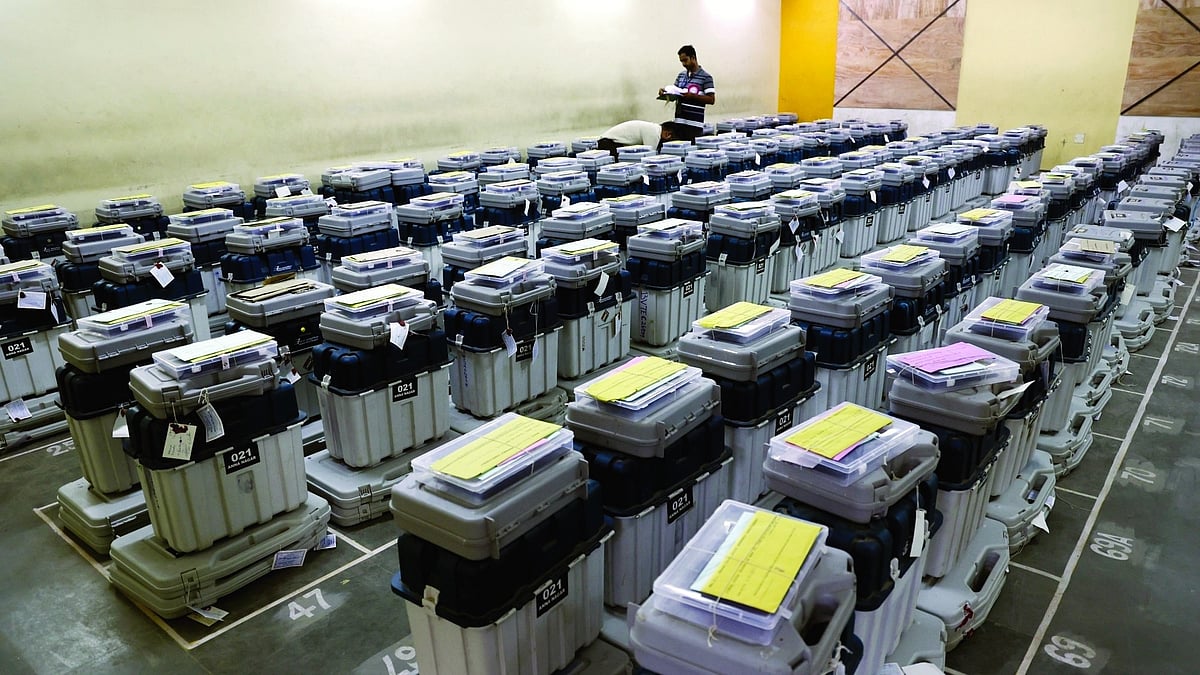
The Election Commission of India (ECI) told the Supreme Court on Tuesday, 1 September, that it had convened an all-party meeting on using a machine called a 'totaliser' for counting votes recorded by EVMs. However, half of the national parties, three out of six, had opposed it, and so did 68 per cent of state-level parties. The government had referred the issue to a group of ministers, who too opposed the introduction of the machine, the court was told.
Here is an explainer on that machine:
Why are totalisers back in news?
Because a Supreme Court bench presided over by CJI Surya Kant on 1 September sought the Union government’s views on its use to count votes. The bench was hearing petitions seeking directions to the ECI to declare results of an entire constituency and not reveal booth-wise voting figures. Petitioners claimed the use of totalisers was necessary to protect voter anonymity and prevent post-poll violence. Voters, they argued, face intimidation because political parties now know who they voted for.
What is a totaliser?
A totaliser is a machine which allows votes from 14 booths to be counted together, instead of individual polling booths. The machine was developed by Bharat Electronics Ltd, Bengaluru and the Hyderabad-based Electronics Corporation of India Ltd. The interface connects to the control units of a 14-EVM cluster, and the consolidated vote count for each candidate is obtained by pressing the result button on the totaliser.
When was its use recommended?
The ECI had first recommended the use of the totaliser in 2008. A PIL was also filed before the Supreme Court in 2014 seeking mixing up of votes from different booths, just as paper ballots were mixed before counting to prevent disclosure of booth-wise voting patterns.
In 2017, the NDA government opposed the use of a totaliser in an affidavit to the Supreme Court, while its usage was backed by the Law Commission and the ECI. The proposal was supported by the Congress, Bahujan Samaj Party and the Nationalist Congress Party and opposed by the BJP, Trinamool Congress and others.
What are the pros and the cons?
On the plus side, the totaliser prevents political parties from learning how specific localities voted in each election, thereby protecting the anonymity of the vote. It protects voters from pre-poll intimidation, post-poll violence and denial of welfare schemes and amenities based on booth-level voting trends. It helps in conducting a free and fair election.
On the flip side, use of a totaliser would make it harder to cross-check booth-wise data with the official booth-wise record of votes polled in Form 17C. It will also make it difficult to match paper audit (VVPAT) slips with votes counted. Introducing yet another machine may raise fresh doubts about data integrity and lead to a trust deficit.
Is the totaliser fool-proof?
While it strengthens voter anonymity, it complicates verification and raises new trust issues. India has debated its adoption for nearly two decades, but no country has fully implemented such a system for EVMs.
Under the existing system, each polling station records the number of votes cast, sealed and later counted from its EVM. This allows precise reconciliation of votes with the voter turnout recorded at that booth. When multiple EVMs are connected and the machine produces a single consolidated tally, booth-level granularity is lost, but anonymity is preserved.
In booth-wise counting, any mismatch between votes polled and votes counted can be traced back to a specific booth. With totalisers, if the consolidated total differs significantly from the sum of booth-wise Form 17C records, it becomes harder to pinpoint which booth’s data was altered. In disputes, parties may blame either the manual booth records (Form 17C) or the totaliser output, creating confusion about which is more authoritative.
Legally, Form 17C remains the primary record of votes polled at each booth. If the totaliser output doesn’t match the sum of Form 17Cs, the discrepancy would be attributed to the totaliser process. This is why critics argue that the totaliser could complicate verification rather than simplify it. With a totaliser, manipulation could be harder to detect since aggregation obscures the source of error.
So, are paper ballots still the best way to ensure anonymity of votes?
With paper ballots, each polling station records turnout in Form 17C (number of voters who cast ballots). Ballot boxes from several booths are then physically mixed together before counting. This prevents anyone from knowing how a particular booth or locality voted. The mixed ballots are counted candidate-wise. The total number of ballots is then counted and matched against the aggregate of Form 17C booth records.
However, while paper ballots ensure voter anonymity, the cost of printing and storage, and physical risks of stuffing etc, it is argued, make them unsuitable for a large country with over 900 million voters.
Join our official telegram channel (@nationalherald) and stay updated with the latest headlines