POLITICS
Why BJP should be worried about bypoll losses in Bankipur and Datia
Recent defeats in BJP strongholds signal shifting voter moods and underline the need for reinvention by both the ruling party and its challengers
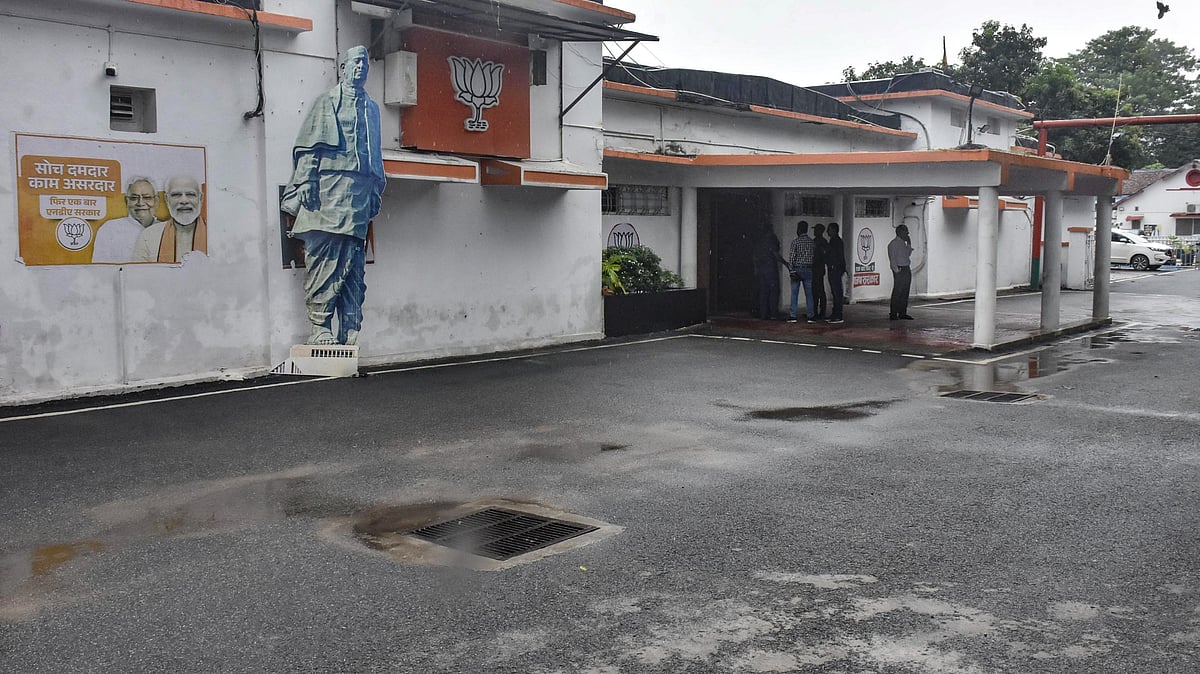
Bye-elections are usually inconsequential. They rarely change the arithmetic and never pose an existential threat to the government in power. The results of the three bye-elections declared on Monday, 3 August in Bihar, Madhya Pradesh and Gujarat, will have no effect on the brute majority that BJP enjoys in all the three state assemblies.
In Bihar, for example, the BJP had 202 MLAs in a House of 240. The loss of the Bankipur seat will reduce it to 201. In Gujarat BJP has 160 MLAs in a House of 182 whereas in Madhya Pradesh BJP MLAs numbered 164 in a House of 230.
While the arithmetic does not change, bye-elections can change the chemistry and psychology on the ground. Indira Gandhi, ousted as prime minister in 1977, stormed back to Parliament after winning a bye-election in Chikmagalur in Karnataka and led the Congress back to power in 1980. V.P. Singh won a bye-election in Allahabad in 1988 and swiftly became prime minister a year later.
The Indian National Congress, which failed to win a single seat in Uttar Pradesh in the 1977 general election, created a toehold when Mohsina Kidawi won a bye-election in Azamgarh in 1978 and two years later the Congress won 309 out of the 425 seats in the UP assembly.
While it certainly appears far-fetched to see the 3 August results as a ‘beginning of the end’ of the BJP, they do signal undercurrents which should worry the party. They seem to be an early warning to both the BJP and the Opposition on the shifting patterns on the ground. They are also another warning that voters cannot be taken for granted.
The results are a signal to the Opposition that the invincible electoral machine of the BJP is not so invincible after all. The psychological boost the results may provide to the opposition is hard to measure; and the actual impact will undoubtedly depend on the lessons the opposition draws, now that they know the depths of disappointment and dissatisfaction that prevails even among the committed voters of the BJP.
These results have shown the cracks in the BJP, and also that the party does not look as cohesive and united as before.
Since the Lok Sabha elections in 2024, as many as 10 assembly bye-elections have been held. The BJP has won five of them, all in BJP-ruled states like Gujarat, Maharashtra, Tripura and Nagaland. The BJP lost two of these bye-elections in Congress-ruled Karnataka and did not field any candidate in the Baramati bye-election in support of Sunetra Pawar of NCP (Ajit Pawar), an NDA constituent.
The Congress had won the two byelections in Karnataka where it is in power. These results were not surprising because ruling parties have traditionally won the bye-elections.
That is why the significance of the BJP losing the bye-elections in Datia and Bankipur, both in BJP-ruled states of Madhya Pradesh and Bihar respectively cannot be underplayed. The blow to the BJP in Bankipur is severe because the party for the first time in history has a Chief Minister of its own in the state.
Samrat Choudhary, who served as a deputy chief minister and an understudy of Nitish Kumar, was hand-picked by Amit Shah; and although the last assembly election was won with Nitish Kumar as the chief ministerial face, as widely anticipated he was eased out within six months and sent to the Rajya Sabha, allowing the BJP to be in the saddle.
The loss is even more galling because the BJP has for the first time someone from Bihar as its national president and Bankipur was the constituency vacated by him. Why a relatively obscure Nitin Nabin was anointed the national president may never be known; but if it was meant to energise the party in Bihar, the gambit appears to have failed.
On paper, Bankipur was a safe constituency for the BJP. Prashant Kishor’s allegation that a BJP leader had boasted that BJP would win the seat even if it had fielded a cat or a dog has been denied by the BJP; however, the alleged boast was not entirely misplaced.
Bankipur, an urban constituency in the heart of the state capital, geographically small and with a total voter count of 3.79 lakh, has been a BJP stronghold for over three decades.
Universities, colleges, coaching institutes, hospitals and nursing homes nestle next to commercial outlets and government offices, the secretariat and the High Court in one of the most urban and educated constituencies in the state. The constituency hosts the elite, retired bureaucrats and ambassadors, in some of the poshest areas of the capital and voters are middle class, aspirational, upwardly mobile and more importantly, predominantly Hindu.
What the defeat signals is that Bihar’s educated, urban middle class have lost their blind faith in Narendra Modi and the BJP. Kishor has openly accusedg the prime minister of being partial to Gujarat and providing only lip-service to Bihar. Growing unemployment, paper leaks and the crisis in education have dented BJP’s narrative of development.
BJP’s bulldozer justice, encouraging the police to stage encounters and break up protests with brute force, kill alleged criminals with impunity and the poor management of the economy seem to have shaken their faith. In Prashant Kishor, they clearly see an alternative.
***
A key lesson for both BJP and the opposition is that with the changing language, grammar and demographic of voters, the conventional, the old and the beaten track is no longer an option. The Congress put up a 79-year-old former minister and a formidable veteran of many battles in the Manjalpur bye-election in Gujarat. While Bankipur rarely if ever polled more than 40 per cent of the votes, Manjalpur always drew a decent turnout even in byelections.
This time, however, the polling plunged to 37 per cent, not much higher than the 34.5 per cent in Bankipur. Voter indifference was visible and the BJP failed to reach out to its core voters and get them to vote. That is why the Congress will be complacent in patting its own back and take solace from the fact that BJP’s winning margin here has come down from 1 lakh to 30,000. The party could possibly have made a more robust bid for victory by fielding a younger candidate, a fresher face.
The lesson is possibly true for the parties in power as well. If the BJP had fielded more recognisable and acceptable faces in Bankipur and Datia, they would possibly have put up a better fight. For a party which boasts of taking every election seriously, the BJP appears to have erred by being whimsical in its choice of candidates, and taking the voters for granted. Narendra Modi’s popularity alone is no longer enough.
One also suspects the BJP has become a prey to the ‘high command’ culture with most of the decisions centralised in the hands of its two central leaders. When the choice of candidates is determined by their personal preferences, likes and dislikes and loyalty to one or the other, voters are not always amused.
In Bankipur, BJP seems to have sensed it was in trouble a week before the polling. A delegation from the party called on the election commission on 21 July to complain that Prashant Kishor was spending more money than was permissible. Since when did the BJP start complaining about its political opponents outspending it?
The delegation complained that shell companies were being used to fund Kishor’s campaign and claimed before the media that evidence had been submitted to the ECI, which, if it took notice of the complaint, does not seem to have acted on it.
Datia constituency in Madhya Pradesh, a semi-rural constituency, is also predominantly Hindu and upper caste dominated. There are pockets of OBCs, mainly Yadavs, and Dalits and the BJP has won the seat as many times as the Congress.
The Madhya Pradesh chief minister Mohan Yadav, sensing that his ability was being tested, camped at Datia for three days and so did his ministers and lieutenants. He eventually took solace in the fact that the seat was won by the Congress in 2023 as well and pointedly mentioned that BJP this time actually secured 1,700 more votes in the constituency than last time when Shivraj Singh Chouhan was chief minister. The message: he put up a better fight than Chouhan.
Join our official telegram channel (@nationalherald) and stay updated with the latest headlines