POLITICS
Why did election commissioners write to the cabinet secretary?
The Indian Express probe into 14 instances of EC dissent raises questions over its independence
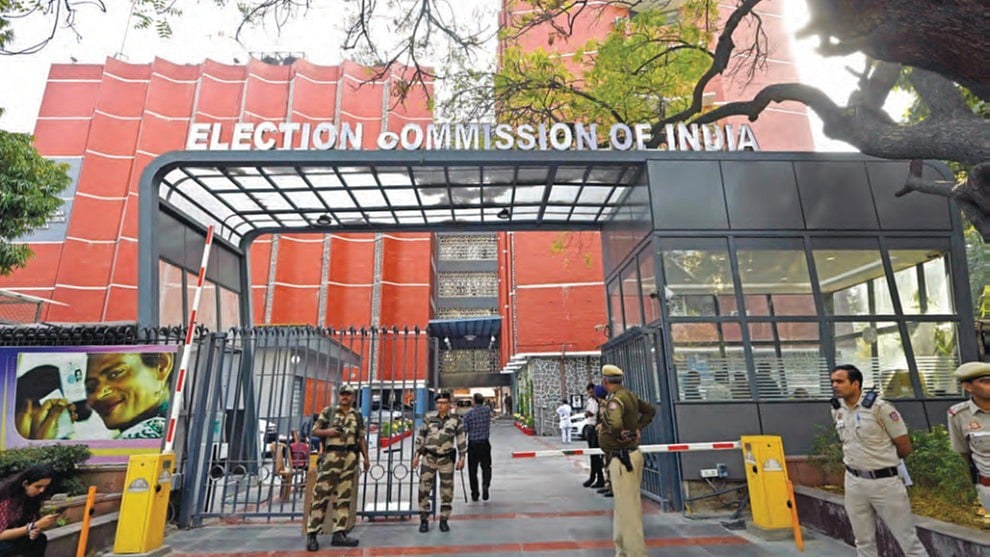
The Election Commission of India, the Government of India and the Bharatiya Janata Party swear that ECI is an autonomous and independent body; that it works independently and the government has nothing to do with its decisions and functioning. The point, predictably, was made again by BJP spokesperson Sambit Patra on Wednesday after The Indian Express investigation rocked political circles. Two of the three election commissioners, who constituted the majority, had on 14 occasions objected in writing to decisions taken without their knowledge or consent.
The ‘Press Note’ issued by the ECI on 23 September labours the point that all decisions were unanimous and that the communications referred to by The Indian Express ‘selectively’ merely pointed to differences of opinion and suggestions for improvement. It was par for the course and normal to have differences, the note stated. It, however, left several questions unanswered. One of the key questions left unexplained is why the two commissioners felt the compulsion of writing to the cabinet secretary about an administrative issue and not to the CEC.
The Election Commission Act stipulates — ever since the multi-member commission was established in 1993 — that decisions should be unanimous, or at the very least, based on a majority view. All three members possess equal rights; the view of two of the three members forming a majority must prevail — involving the two election commissioners or one commissioner and the chief election commissioner.
In other words, Gyanesh Kumar, the chief election commissioner, does not constitute the commission by himself. The other two commissioners could convene a meeting of the commission, if they wanted. The fact that they apparently did not and the commission comprising the three commissioners did not meet even once in four months, between May and August, 2026 is troubling and raises questions about the commission’s functioning.
The Indian Express report stated, “…in a radical departure from the norm, Joshi and Sandhu wrote separately to the cabinet secretary complaining about changes in work allocation that, in effect, removed a layer of oversight of the IT backbone for the electoral rolls. They made it clear: these changes had been done without their knowledge and they struck them down…it was after this, on 9 September, that the CEC and the two ECs met, their first full meeting in four months…”
The ‘Press Note’ does not refute the report or explain why the ‘commission’ failed to met even once in four months when SIR was being rolled out in large parts of the country. What is even more intriguing is why the two dissenting commissioners flagged an administrative issue to the cabinet secretary. The Indian Express report mentions that the two commissioners wrote separately to the cabinet secretary to red flag an ‘illegal’ office order divesting a deputy election commissioner from his oversight function of the IT Division. The day after the Commissioners wrote to the Cabinet Secretary, they reportedly struck down the office order and restored the status quo ‘till the commission takes a decision’. Did they act on the advice of the cabinet secretary?
On paper the Election Commission is a constitutional body which is independent of the government. The commissioners, if they had a problem, should have written to the President of India, not the cabinet secretary, it has been pointed out. As a former CEC T.N. Seshan once famously said, he worked for the Government but he was not ‘under’ the government. That fine distinction does not appear to hold as the Union government decides the budget of the commission, approves appointments and deputation of officers from the government to the commission and approves all contracts and outsourcing by the commission. The ‘complaint’ or ‘appeal’ to the cabinet secretary, therefore, unwittingly reveals the control the government exercises over the commission.
Join our official telegram channel (@nationalherald) and stay updated with the latest headlines