POLITICS
Why faculty members, students and MPs are opposing the ISI Bill
Looming threat to character and structure of Indian Statistical Institute and fears of tightening central govt control
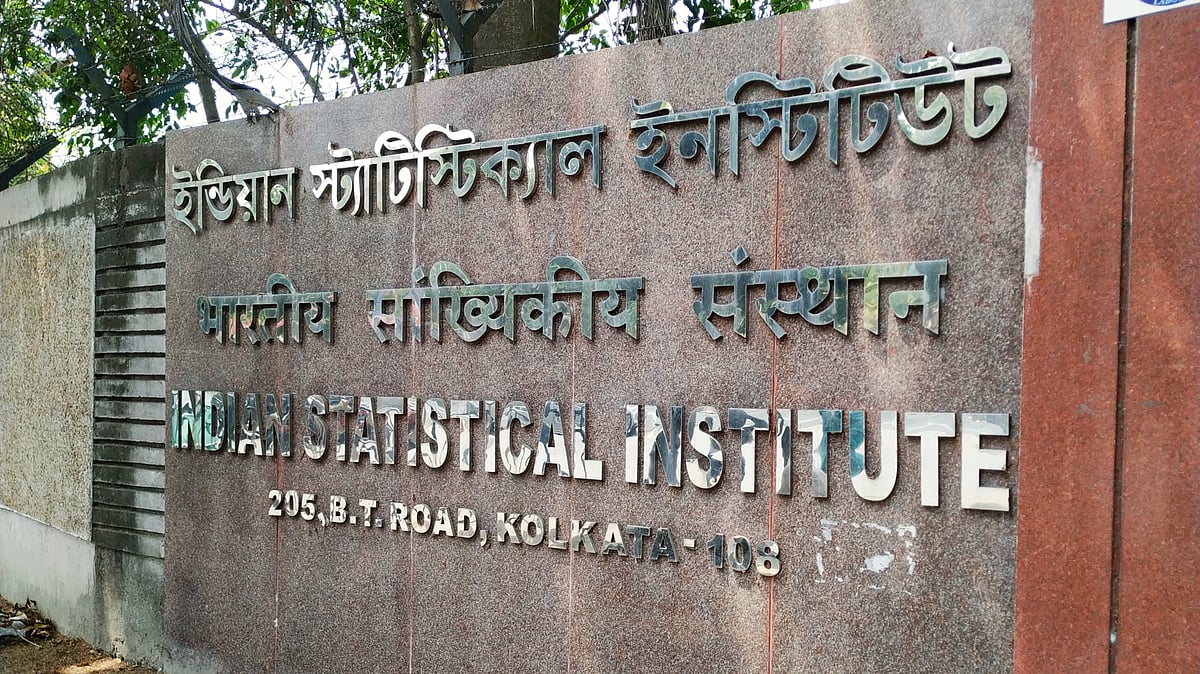
The Indian Statistical Institute (ISI) Bill, 2026, received significant pushback after Rao Inderjit Singh — minister of state (independent charge) of statistics and programme implementation and BJP MP from Gurugram — introduced it in Parliament on 3 August. In a press conference in Delhi on 5 August, a group of ISI faculty and Opposition MPs pointed out that “If the Bill is passed, the ISI will lose all its autonomy, internal democracy, accountability and will be transformed into an arm of the Union Government”.
They urged the Centre to refer the Bill to a Parliamentary Standing Committee and hold wider consultations with faculty, students, alumni and the scientific community before it is passed. “This is a top-down Bill thrust on us. People who drafted the Bill do not understand how academics and governance are carried out in ISI,” faculty member Arijit Bishnu said.
“Our only demand is the government should have more meaningful discussions with the three holding bodies of ISI — ISI Society, ISI Council and ISI Academic Council — as well as with the faculty before pushing the Bill through,” Bishnu added.
As it stands, other than retaining a single clause declaring the Indian Statistical Institute (ISI) to be an institution of national importance, the new Bill repeals the foundational 1959 ISI Act and changes the institution lock, stock and barrel.
“The Bill is a conspiracy to end ISI’s autonomy,” TMC Lok Sabha MP Prof. Sougata Ray told National Herald. “There is a sense of urgency on the part of the government to pass the Bill. Who knows what the government is going to do next week.”
The Bill has created ripples in the Rajya Sabha as well, with Opposition members across party lines demanding greater consultation before it is put to vote. “Both Jairam Ramesh and I have strongly pushed for sending the Bill to the standing committee on finance,” TMC Rajya Sabha member Sagarika Ghose told National Herald.
As part of ISI’s make-over, the new Bill involves restructuring its unique fee structure. At present, students pay no tuition fee for traditional academic programmes — B.Stat, B.Math, M.Stat, M.Math and PhD. In fact, they receive stipends ranging from Rs 5,000 to Rs 42,000 per month depending on the course.
M.Tech students pay around Rs 40,000 for the two-year course. They have to pay a seat rent of around Rs 1,200 per semester, plus recurring mess charges. They are also charged a fully refundable one-time security deposit for libraries and laboratories, which is between Rs 2,000 and 5,000.
However, for non-traditional courses like Bachelor of Statistical Data Science (BSDS), a student has to pay Rs 1,00,000 per semester. A fee of Rs 27 lakh is charged for the two-year programme on post-graduate diploma in business analytics (PGDBA), offered jointly by ISI, IIM-Calcutta and IIT-Kharagpur.
A section of the faculty is apprehensive that the restructuring of ISI could spell the end of the free-courses-and-stipend regime and make the institute’s basic programmes inaccessible for meritorious students.
The government has defended the Bill, arguing that converting the 94-year-old institute from a registered society into a statutory body corporate will unlock long-stalled growth rather than strip it of independence. An anonymous government official told a section of the media that the Bill will hand greater autonomy to the board of governors and to ISI's centres, while ending “the sway of a roughly 1,800-member society in which…only 150 to 200 people typically turn up to decide the institute's direction. What the Bill is taking away is the autonomy of the ISI society".
The wording of the Bill seems to validate the concern over autonomy, both academic as well as operational. 'The nation has now embarked on a historic journey toward Viksit Bharat vision and statistical and institutional infrastructure should evolve to contribute to this vision…It is expedient not only for the institutional strengthening of ISI, but also for the broader national objective of building a future-ready ecosystem of data, research, innovation and skilled human resources in support of Viksit Bharat,' the Bill enunciates, making it an obligation for ISI to align its activities with central government-driven initiatives like 'Viksit Bharat'.
Sourabh Sen is a Kolkata-based independent writer and commentator on politics, human rights and foreign affairs. More of his writing here
Join our official telegram channel (@nationalherald) and stay updated with the latest headlines