POLITICS
Will the anti-defection law apply to Chadha and six MPs? Here’s what experts say
Legal experts say outcome hinges on merger rules under anti-defection law, say news reports
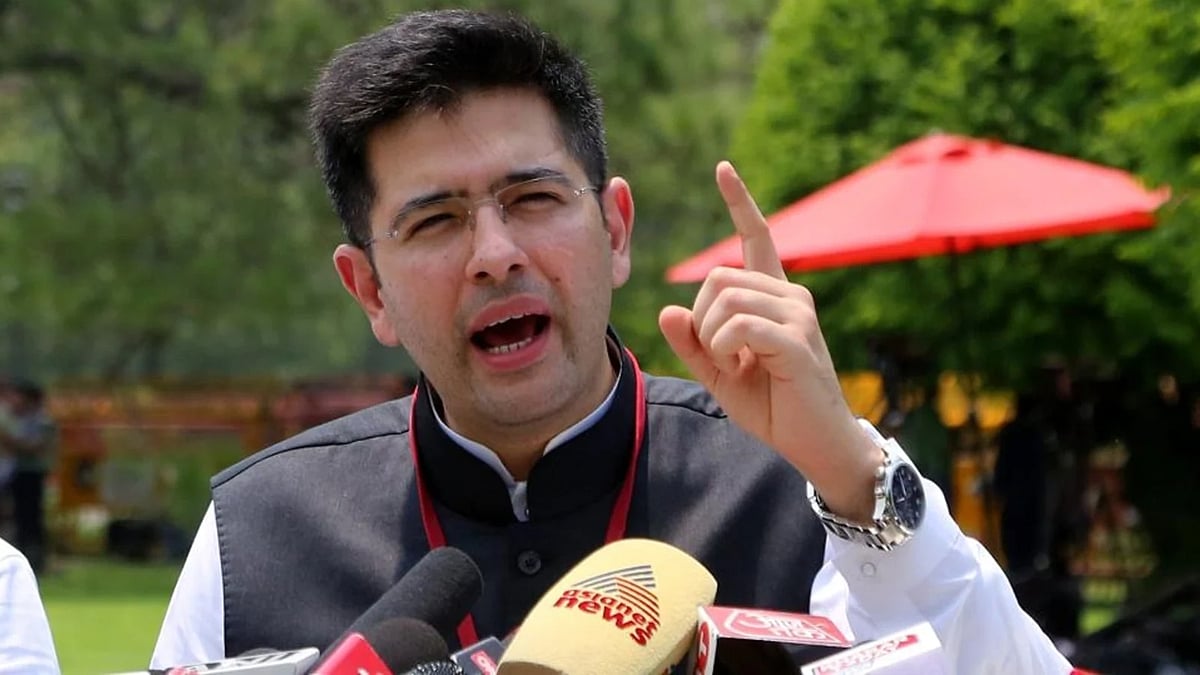
The defection of seven Rajya Sabha members from the Aam Aadmi Party (AAP) to the Bharatiya Janata Party (BJP) has triggered a complex constitutional debate over disqualification, party merger rules and the balance of power in the Upper House.
The defection by Raghav Chadha, Sandeep Pathak, Ashok Mittal, Harbhajan Singh, Rajinder Gupta, Swati Maliwal and Vikramjit Sahney has now leaft AAP with just three representatives in the Rajya Sabha.
Disqualification question hinges on merger clause
Experts suggest the seven MPs may avoid disqualification if their move qualifies as a “merger” under the anti-defection law. Chakshu Roy of PRS Legislative Research told The Indian Express that since more than two-thirds of AAP’s Rajya Sabha members have shifted, the Chairman could accept the move as a valid merger and allow them to continue as BJP members.
He pointed to a past precedent when then Chairman M. Venkaiah Naidu approved a similar merger involving members of another party joining the BJP.
However, former Lok Sabha Secretary General P D T Achary offered a more cautious view. He argued that the law requires the “original political party” — in this case led by Arvind Kejriwal — to merge with the BJP for the exemption to apply fully. He was quoted as saying that the final decision rests with the Rajya Sabha Chairman, and any ruling could be challenged in court.
Until such a decision is made, the defecting MPs will technically continue to be recognised as AAP members, despite publicly aligning with the BJP.
Impact on Rajya Sabha numbers
The development could immediately influence voting dynamics in the Upper House, the Indian Express report said. While the BJP’s official strength stands at 106, support from the seven MPs could raise the ruling alliance’s effective voting strength to 148 on key issues.
If the Chairman formally recognises the move as a merger, the BJP’s tally in the House would increase further.
At the same time, AAP retains the right to issue a party whip to the defecting members. Defying such a whip could itself trigger disqualification proceedings, adding another layer of complexity while any petition is pending.
What the law says
India’s anti-defection framework is rooted in the Tenth Schedule of the Constitution, introduced through the 52nd Constitutional Amendment Act 1985 and later strengthened by the 91st Constitutional Amendment Act 2003.
Under current rules, at least two-thirds of a party’s members in a House must switch sides for the move to be treated as a merger, thereby protecting them from disqualification. If fewer members defect, they are liable to lose their seats.
Notably, the law does not prescribe a deadline for the presiding officer to decide on disqualification petitions — a gap that has often led to prolonged uncertainty.
Political and legal implications
The report notes that the situation also differs from earlier splits in parties such as the Shiv Sena and the Nationalist Congress Party, where the Election Commission recognised breakaway factions based on legislative strength. In the present case, the MPs have indicated a direct merger rather than forming a separate faction.
Background: why anti-defection law exists
The anti-defection law was introduced to curb rampant political switching seen in the 1960s and 1970s, when legislators frequently changed parties — a phenomenon popularly dubbed “Aaya Ram Gaya Ram”.
A report by India Today said that sub-clause (2) introduces a legal fiction whereby if at least two-thirds of a party’s legislators agree to join another party, the move is treated as a formal merger within the House.
Senior Advocate Neeraj Kishan Kaul, who previously appeared for Eknath Shinde in the Shiv Sena split case, said this provision effectively shields such MPs from disqualification, allowing them to retain their seats.
While the law has helped reduce opportunistic defections, critics argue it has also limited the independence of lawmakers by binding them strictly to party directives, especially through the enforcement of party whips.
“Clause 4(2) of the Tenth Schedule makes it clear that when at least two-thirds of a party’s members in a House agree to join another party, the law treats it as a merger within that House. In such a situation, there is no requirement for the ‘original political party’ itself to merge. The protection from disqualification under the anti-defection law would therefore apply,” said Senior Advocate Kaul.
He further noted that the Shiv Sena dispute was distinct in legal terms, as rival factions in that case had each claimed to be the “original” party.
However, Senior Advocate Sanjay Hegde offered a differing view. He said that although a merger is conceptually different from a dispute over party identity, important legal questions remain — particularly whether the term “House” refers to a single chamber of Parliament or the combined strength of a party across both Houses.
What happens next
The immediate future of the seven MPs depends on the Rajya Sabha Chairman’s interpretation of the law. As The Indian Express report underlines, the ruling could either validate the shift as a merger or lead to disqualification proceedings — with significant political consequences either way.
Join our official telegram channel (@nationalherald) and stay updated with the latest headlines