World
Beyond the veil: Iran's women redefining progress amid western narratives
The "oppressed Iranian woman" trope ignores Iran's model of education and empowerment, rooted in prioritising female literacy amid adversity
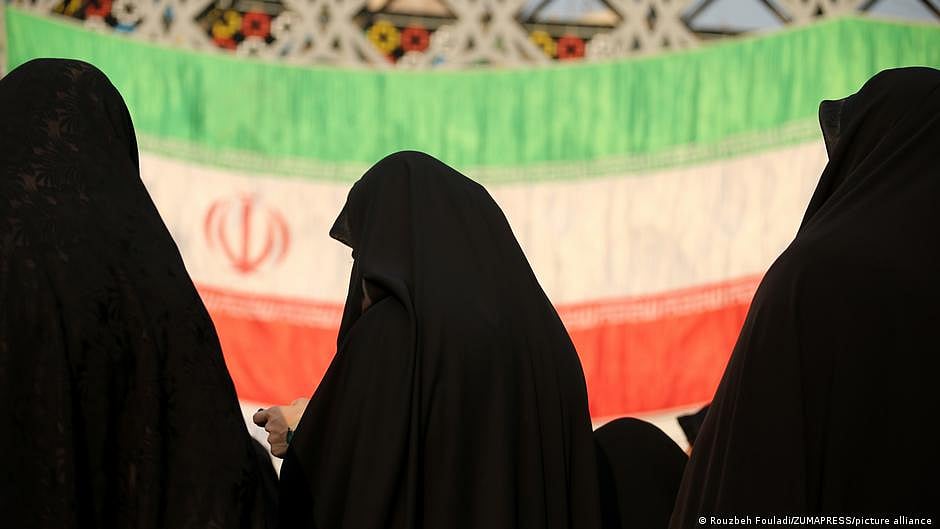
Western media often paints Iran under Supreme Leader Ayatollah Ali Khamenei as a dystopia for women, fixated on hijab mandates and protests while ignoring empirical strides in education and professional fields. This selective lens, amplified by figures like Donald Trump and Benjamin Netanyahu, overlooks data revealing Iranian women outperforming peers in the US and India across key metrics. A closer examination dismantles the plight narrative, spotlighting undeniable achievements.
Iran's female literacy stands as a testament to systemic investment post-1979 Revolution. UNESCO and World Bank data for 2022-2024 peg adult female literacy at 85.5-86.2 per cent, surging to 98.9-99.2 per cent for women aged 15-24. These figures eclipse India's 70.3 per cent adult female literacy (NFHS-5, 2021; World Bank 2024) and approach the USA's 99 per cent youth rate, yet Iran's gains from a 35 per cent baseline in 1976 reflect accelerated equity. This isn't rhetoric—it's measurable. Iran's national literacy campaigns, blending compulsory education with rural outreach, have narrowed urban-rural gaps to under 5 percentage points for young women, per Iran's Statistical Centre (2025). In contrast, India's rural female literacy lags at 64 per cent, hampered by dropout rates exceeding 20 per cent post-primary (ASER 2023). The US, while near-universal, grapples with functional illiteracy affecting 21 per cent of adults (National Center for Education Statistics, 2024).
Iranian women comprise 56-63 per cent of university students, as per Ministry of Science data (2024-2025), with peaks at 65 per cent in some public institutions. Lebanese journalist Sarah Abdallah highlighted this in viral posts, noting excellence in medicine, science, and engineering—claims validated by UNESCO's 2023 Global Education Monitoring Report. This surpasses the 56-58 per cent female enrolment (National Student Clearinghouse, 2024) in the US and dwarfs India's 47-49 per cent (AISHE 2022-23), where female gross enrolment ratios hover at 28.5 versus Iran's 65 per cent.
Why the edge?
Iran's affirmative policies, including scholarships and quotas, have funnelled women into higher education since the 1980s. Over 2.5 million women enrol annually across 2,500+ universities, outpacing male counterparts in entry rates. In the US, rising costs deter 40 per cent of low-income women (College Board, 2024); in India, cultural barriers and safety concerns limit access, with only 24 per cent rural women pursuing tertiary education (NFHS-5).
Academic and STEM dominance
Iran's women shine brightest in STEM, comprising 60-70 per cent of graduates in life sciences, biology, and chemistry (Iranian Ministry of Health, 2024). In medicine, they form 50-60 per cent of students and doctors, alongside 50 per cent of active postgraduates and 40 per cent of specialists—figures from the Medical Council of Iran (2025) that exceed the US's 38-50 per cent female physicians (AAMC, 2024) and India's 18-28 per cent (NMC, 2023).
Female STEM graduates overall reach 35-70 per cent, topping the USA's 22-40 per cent and India's 25-43 per cent, while youth literacy hits 98.9-99.2 per cent against the US's 99 per cent and India's 88-90 per cent (UNESCO 2023-25; World Bank 2024; national stats). University enrolment for women stands at 56-63 per cent in Iran, edging the US's 56-58 per cent and India's 47-49 per cent.
Engineering reinforces the trend: women account for 35-42 per cent of graduates, higher than India's 29 per cent (AISHE 2023) and closing on the US's 22 per cent (NSF, 2024). Globally recognised outputs include Nobel contender Maryam Mirzakhani in mathematics and prolific publications—Iran ranks 15th worldwide in female-authored STEM papers (Scimago, 2024), ahead of India (20th) despite sanctions. Women lead in fields like biomedical engineering, with 55 per cent of PhDs at Sharif University (2024). Comparative lags elsewhere persist: women in the US file just 12 per cent of tech patents (USPTO, 2024); India's female STEM workforce is 14 per cent (World Bank, 2023).
Beyond academia, Iranian women excel in judiciary (33 per cent judges, 2024), sciences (40 per cent researchers), and even piloting (10 per cent of Iran's air force trainees). Nobel laureate Shirin Ebadi's legacy underscores legal advancements. Workforce participation, at 14-18 per cent (ILO 2024), trails the US's 57 per cent and India's 32 per cent, but this masks quality: 70 per cent of new hires in tech and health are women (Iran Labour Ministry, 2025). Sanctions exacerbate gaps, stifling opportunities more than ideology. Yet, microfinance and cooperatives have boosted female entrepreneurship to 25 per cent of small businesses, outpacing India's 20 per cent (GEM 2024).
The "oppressed Iranian woman" trope wilfully ignores these metrics, prioritising imagery over substance. Protests highlight real tensions, but education's empowerment—women now out-earning men in urban professions—counters despair narratives. Iran's model, rooted in prioritising female literacy amid adversity, offers lessons for the Global South, challenging both American individualism and Indian patriarchy. As data affirms, Iranian women aren't victims; they're vanguard achievers. Western discourse must evolve beyond propaganda to engage this reality.
~Hasnain Naqvi is a former member of the history faculty at St. Xavier’s College, Mumbai
Join our official telegram channel (@nationalherald) and stay updated with the latest headlines