World
Injured Bangladesh uprising leader dies in Singapore; Yunus urges calm
Shot in the head by masked assailants in Dhaka last week, Sharif Osman Hadi fought for six days before succumbing to his injuries
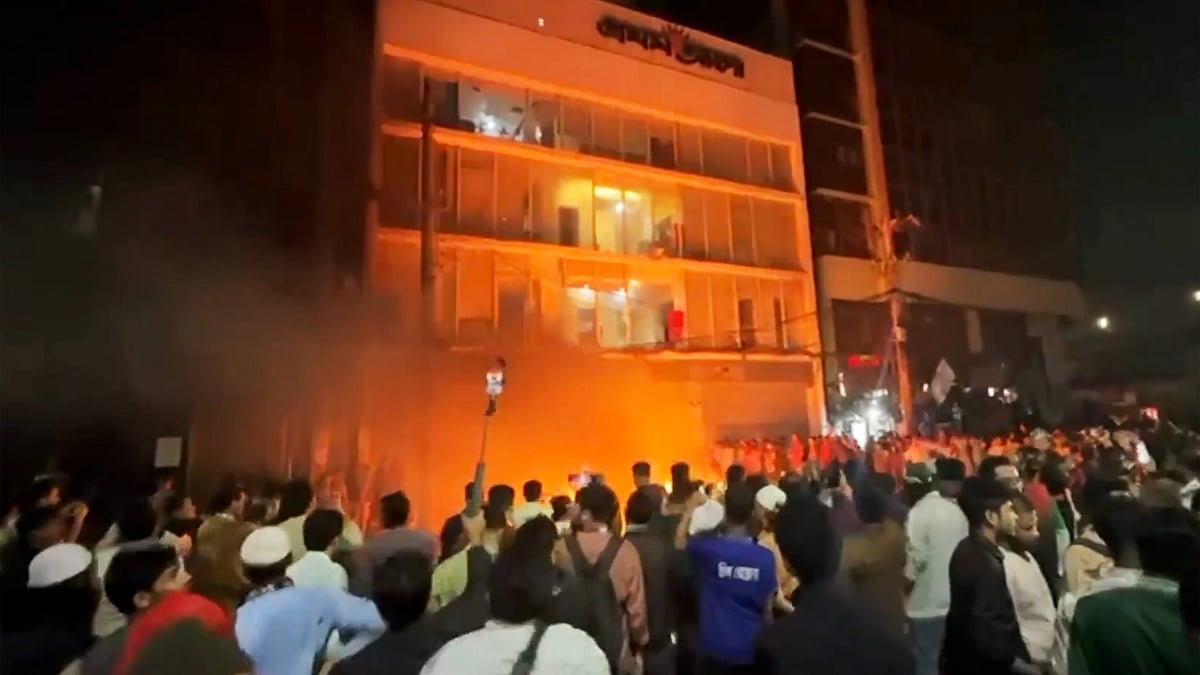
Sharif Osman Hadi, a towering figure of Bangladesh’s July Uprising, succumbed to his grievous injuries late on Thursday at a hospital in Singapore, his death sending shockwaves through the country and igniting fresh political tension and street protests.
Shot in the head by masked assailants in the heart of Dhaka last week, Hadi fought a desperate six-day battle for life before doctors pronounced him dead.
Hadi, who was also contesting the 12 February general elections, was attacked as he set out to launch his campaign in Dhaka’s Bijoynagar area. With doctors in Bangladesh describing his condition as “extremely critical”, the interim government led by chief adviser Muhammad Yunus had rushed him to Singapore in an air ambulance in a last-ditch effort to save him.
Breaking the news in a sombre, late-night televised address, Yunus hailed Hadi as a “fearless frontline fighter” of the July Uprising and the voice of the Inqilab Mancha. He described the killing as a calculated and brutal attempt to terrorise democratic forces, vowing that justice would be swift and uncompromising. “No leniency will be shown,” Yunus warned, promising a relentless pursuit of those behind the assassination.
Even as he expressed grief and anger, Yunus appealed for calm, urging citizens to show patience and allow law enforcement agencies to carry out a thorough and professional investigation. Stressing the state’s commitment to the rule of law, he cautioned against rumours, provocation and rash reactions.
The call for restraint, however, struggled to contain the tide of emotion on the streets. News of Hadi’s death drew hundreds of students and supporters to Dhaka’s Shahbagh intersection near the university campus, where slogans echoed in his memory. The student group Jatiya Chhatra Shakti led mourning processions, joined by activists of the National Citizen Party (NCP), an offshoot of Students against Discrimination, who raised anti-India slogans and alleged that the attackers had fled across the border.
As tensions mounted, protests turned violent in parts of the capital. Demonstrators vandalised the offices of prominent newspapers Prothom Alo and The Daily Star in the Karwan Bazar area, setting fires and briefly trapping journalists inside. Images of the rampage quickly flooded social media, even as the motive behind targeting the media houses remained unclear.
Calling Hadi’s death an “irreparable loss” to Bangladesh’s political and democratic journey, Yunus announced a one-day state mourning on Saturday. The national flag will be flown at half-mast across government and private institutions and at Bangladeshi missions abroad, while special prayers will be held in mosques nationwide after Friday prayers. The interim government also pledged to take responsibility for the welfare of Hadi’s wife and their only child.
Condolences poured in from across the political spectrum, with the Bangladesh Nationalist Party (BNP) and Jamaat-e-Islami among those mourning the slain leader. Describing his killing as a stark reminder of the human cost of political violence, they called for unity to prevent further bloodshed. Meanwhile, police announced a cash reward for information leading to the arrest of the assailants and confirmed that family members of the prime suspect have been detained as the investigation gathers pace.
With PTI inputs
Join our official telegram channel (@nationalherald) and stay updated with the latest headlines