


RBI raises repo rate to 5.50%: What it means for your loans and household budget
Floating-rate borrowers face higher instalments or longer tenures as the central bank tightens policy, with near-term rate cuts ruled out
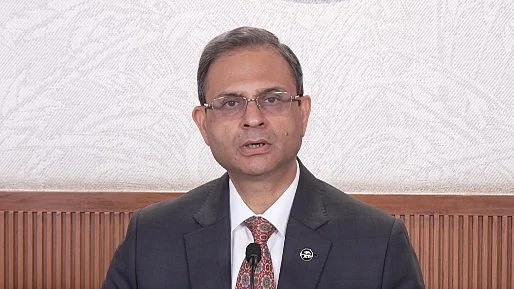


The MPC unanimously raised the repo rate by 25 basis points to 5.50 per cent and shifted its stance to ‘calibrated tightening’
Floating-rate borrowers could face higher EMIs or longer repayment periods once lenders reset their interest rates
Industry representatives warned of pressure on housing demand and funding costs, while economists expect further increases if inflation persists
Home loan borrowers could soon face higher monthly instalments or a longer wait to become debt-free after the Reserve Bank of India’s Monetary Policy Committee raised the repo rate by 25 basis points to 5.50 per cent on Wednesday.
The six-member committee unanimously backed the increase from 5.25 per cent, marking the first hike since February 2023. It also moved its policy stance from ‘neutral’ to ‘calibrated tightening’, signalling that further increases remain possible.
The stance change was approved by a 4–2 majority, with external members Nagesh Kumar and Ram Singh voting to retain the neutral position. Governor Sanjay Malhotra said rate cuts were off the table in the near term. But the next move would be either another increase or a pause, depending on how inflation and economic conditions develop.
For households, the decision brings a fresh borrowing-cost concern at a time when food and fuel prices are already putting pressure on spending. The repo rate is the rate at which the RBI lends short-term funds to banks. An increase can feed through to lending rates, making credit more expensive for consumers and businesses.
Also Read: RBI likely to raise repo rate by 25 bps
The effect will be most direct for floating-rate loans linked to the repo rate. Existing borrowers will feel the change when their loans reach the next interest-rate reset date. The timing and size of the increase will depend on the loan’s benchmark and terms; every borrower’s EMI will not rise immediately.
For a Rs 50 lakh home loan with 25 years remaining, an increase in the lending rate from 7.50 per cent to 7.75 per cent would raise the monthly EMI from approximately Rs 36,950 to Rs 37,766 — an additional Rs 817 a month.
On the same assumptions, a Rs 30 lakh loan would cost about Rs 490 more each month, while a Rs 40 lakh loan would require an additional Rs 654. If the higher rate remained unchanged for the full remaining tenure, the extra interest would total approximately Rs 1.47 lakh, Rs 1.96 lakh and Rs 2.45 lakh respectively.
Borrowers whose lenders retain the existing EMI could instead see their repayment period extended. That would protect monthly cash flow but increase the overall interest bill. Raising the EMI to preserve the original tenure would place a greater immediate demand on the household budget.
Fully fixed-rate borrowers would generally see no immediate change during their fixed-rate period. New home, vehicle and personal loans could become costlier as lenders revise their pricing.
BankBazaar chief executive Adhil Shetty said borrowers should not base their repayment plans on expectations of lower EMIs, given the RBI’s guidance that its next decision would be a hike or a pause.
The central bank’s concern is that price increases are spreading. Higher crude oil prices amid the continuing West Asia conflict, deficient monsoon rainfall and El Niño conditions have added to inflation risks. The RBI also flagged broader food price increases, including spikes in sugar and onions, alongside early signs that inflation was becoming more generalised.
It now expects consumer price inflation to average 5.2 per cent in 2026–27, rising to 6 per cent in the third quarter before easing to 5.7 per cent in the fourth. The GDP growth forecast for the year was raised from 6.7 per cent to 7.1 per cent.
The policy decision therefore reflects the RBI’s assessment that inflation needs tighter control, even though raising rates also increases the cost of financing purchases and investments.
Property industry representatives warned that the timing could affect festive-season buying. ANAROCK chairman Anuj Puri said higher EMIs could prompt affordable housing buyers to defer purchases or recalculate their budgets.
ANAROCK recorded approximately 1,00,220 housing sales across the top seven cities in the third quarter of 2026, an increase of 3 per cent year on year and 10 per cent over the previous quarter. Affordable homes accounted for 16 per cent of sales. Puri said the increase in borrowing costs would test that momentum during a key period for housing demand.
He also cautioned that higher financing costs and potentially softer festive consumption could make retail property developers more hesitant, with some new mall projects possibly deferred. Commercial property was likely to see a more limited direct impact, he said, as demand remained driven by global capability centres, technology companies, financial services firms and other occupiers.
Lenders face their own adjustment. Hero FinCorp managing director and chief executive Abhimanyu Munjal said higher interest rates would affect funding costs for non-banking financial companies, increasing the importance of disciplined pricing, diversified funding and prudent underwriting.
What happens next will depend substantially on oil prices, food inflation and the rupee. The RBI’s Monetary Policy Report estimated that a 5 per cent depreciation of the currency against its baseline could add 40 basis points to headline inflation. Crude oil prices 10 per cent above its assumption could add another 50 basis points. These estimates illustrate the risks rather than predict that either scenario will occur.
Economists expect Wednesday’s increase may be followed by more tightening. HDFC Bank economist Sakshi Gupta forecast another 50–75 basis points of rate hikes in the coming months, with the possibility of stronger action if the West Asia conflict persists and oil remains expensive. State Street Investment Management economist Krishna Bhimavarapu expected cumulative tightening of 100 basis points over the cycle.
For borrowers, the immediate task is to check the next reset date, the revised lending rate and whether the lender will change the EMI, tenure or both. Partial prepayments or a higher monthly instalment can reduce the additional interest burden, subject to affordability and loan terms. Refinancing would require comparing the potential savings with switching costs.
The RBI has left the timing and extent of further increases dependent on incoming data. Until the inflation outlook improves, households considering a new loan will need to allow room in their budgets for borrowing costs to rise further.
With agency inputs
Join our official telegram channel (@nationalherald) and stay updated with the latest headlines