


SEBI’s Rs 15 lakh crore allegation jolts Rajesh Exports
One of India's largest gold exporters is charged with irregularities, fund-routing concerns and governance lapses; company rejects allegations, to prepare response
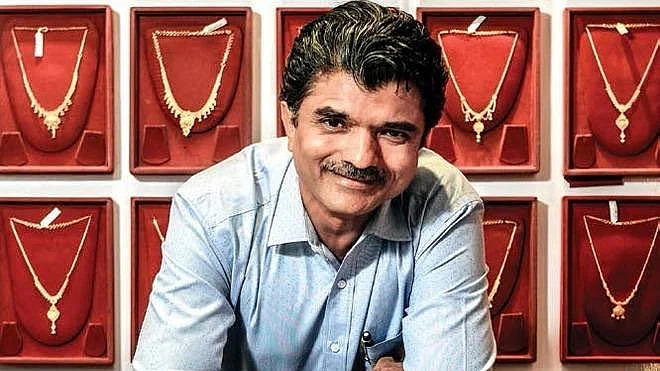


Rajesh Exports Ltd, once counted among India's highest-revenue listed companies and a major player in the global gold industry, has come under intense regulatory scrutiny after the Securities and Exchange Board of India (SEBI) accused the company of large-scale financial misrepresentation and governance failures.
In an interim ex-parte order issued on 3 June, the market regulator alleged that Rajesh Exports and its chairman and managing director, Rajesh Mehta, overstated revenues, engaged in questionable fund-routing practices and failed to adequately cooperate with an ongoing investigation.
The regulator acted on the basis of evidence and findings gathered during its own investigation without waiting for the company’s response before imposing interim restrictions.
Such action by way of an ex-parte interim order is relatively uncommon and is generally reserved for cases where the regulator believes immediate intervention is necessary to protect investors and preserve the integrity of the investigation.
The order also brings the company's auditors into focus. SEBI has referred the matter to the National Financial Reporting Authority (NFRA) and noted concerns relating to the alleged non-availability of audit working papers and records linked to overseas subsidiaries. The statutory auditors identified in the order are Bengaluru-based BSD & Co and P V Ramana Reddy & Co.
Another aspect attracting attention is the company's borrowings. While annual reports indicate debt of roughly Rs 1,000 crore, questions remain regarding the lenders involved, the nature of the security backing these facilities, and the financial information on which the credit assessments were based. The issue is likely to come under greater scrutiny as the investigation progresses.
The company has denied the allegations. Speaking after the order was issued, Mehta told Moneycontrol that the findings were incorrect and that the company was examining the order before submitting a detailed response.
Moneylife reported that at the centre of SEBI's case is an allegation that Rajesh Exports misrepresented approximately Rs 15.15 lakh crore of consolidated revenue between FY21 and FY25, accounting for nearly all of the turnover reported during the period.
The regulator has questioned the manner in which revenues were recognised, particularly in relation to the company's overseas subsidiaries, including Swiss precious metals refinery Valcambi SA, which Rajesh Exports acquired in 2015.
According to the SEBI order, between 97 per cent and 99 per cent of the group's reported consolidated revenue originated from foreign subsidiaries and step-down subsidiaries. However, the regulator said the revenues reflected in the audited standalone financial statements of those entities appeared substantially lower than the figures reported at the consolidated level.
The investigation has raised concerns over whether the company recorded the full value of gold transactions as revenue instead of recognising only the fees, margins or processing income generated from those activities.
In commodity-processing businesses, accounting standards require companies to determine whether they are acting as principals in a transaction or merely providing a service. Where a company earns only a commission, fee or refining margin, recognising the entire value of the underlying commodity can significantly inflate reported turnover without a corresponding impact on profitability or cash generation.
SEBI has also alleged that Rajesh Exports overstated standalone revenues by Rs 12,557 crore during FY21-FY24. The regulator further claimed that certain derivative transactions undertaken by Rajesh Mehta in his personal capacity were recorded in the company's books as sales and purchases. Exchange fluctuation gains and interest income from investments were also allegedly classified as operational revenue.
The developments have also put the spotlight on Rajesh Exports' institutional shareholders. Data for the March 2026 quarter shows that Life Insurance Corporation of India (LIC), the country's largest domestic institutional investor, continues to hold a 10.80 per cent stake in the company. The insurer has not altered its holding since at least September 2023, despite growing concerns around the stock and its prolonged decline.
Foreign institutional ownership, meanwhile, has gradually reduced over the past three years. FII shareholding in Rajesh Exports declined from 17.60 per cent in March 2023 to 14.26 per cent by March 2026. Among the prominent foreign investors currently on the register are Bridge India Fund, which holds 8.46 per cent, and Schwab Fundamental Emerging Markets Equity ETF with a 2.70 per cent stake.
The sharp correction in the share price has significantly eroded the value of these holdings. LIC's stake, valued at approximately Rs 637 crore at the beginning of 2026, is now worth around Rs 347 crore. Similarly, the value of FII investments has fallen from about Rs 838 crore to Rs 456 crore. Rajesh Exports shares have declined nearly 40 per cent over the past 12 months and opened about 5 per cent lower at Rs 103 on June 5 following SEBI's interim order.
Another area of concern relates to the movement of funds. The regulator has flagged alleged transfers of company money through the personal bank accounts of Rajesh Mehta and Siddharth Mehta without the disclosures, approvals or related-party transaction procedures typically required under corporate governance norms.
The interim order additionally questioned a reported investment in African gold mining assets, stating that investigators were unable to independently verify aspects of the transaction based on the financial information available.
The case originated from a shareholder complaint filed with SEBI in March 2024. The complaint reportedly highlighted concerns over large trade receivables that had remained outstanding for extended periods, prompting the regulator to examine the company's accounts and disclosures from April 2020 onwards.
For years, Rajesh Exports maintained a prominent position among India's largest listed companies by revenue. The company built its reputation as an integrated gold business spanning refining, manufacturing, exports, wholesale operations and retail activities. Its acquisition of Valcambi elevated its profile within the global precious metals industry and reinforced its position in international markets.
However, market observers have long pointed to issues including weak cash-flow conversion, sizeable receivables, limited visibility into overseas operations and recurring questions about the relationship between reported earnings and operating cash flows.
While cases involving inflated revenues are often associated with efforts to secure higher borrowing limits or improve access to financing, analysts note that Rajesh Exports does not fit neatly into that pattern. The company has not carried excessive debt relative to the scale of revenues reported in its financial statements, raising questions about the motivations behind the alleged accounting treatment.
SEBI has barred Rajesh Mehta from dealing in the company's securities until further orders and has directed the appointment of a forensic auditor to examine the allegations in greater detail. The regulator has also referred the conduct of the company's auditors during the relevant years to the National Financial Reporting Authority for review.
The findings represent one of the most significant accounting investigations involving an Indian listed company in recent years. As the forensic audit progresses and the company submits its response, investors and market participants will closely watch whether the allegations ultimately point to accounting errors, governance lapses or a broader pattern of financial misrepresentation.
For now, the case has reignited debate over disclosure standards, subsidiary transparency and the effectiveness of corporate governance mechanisms in some of India's largest listed companies.
Join our official telegram channel (@nationalherald) and stay updated with the latest headlines