


Explained: From air strikes to detention — how President Nicolás Maduro was taken
From Caribbean bases and carrier groups to special forces insertion, how Washington assembled air, sea and ground power to seize Maduro
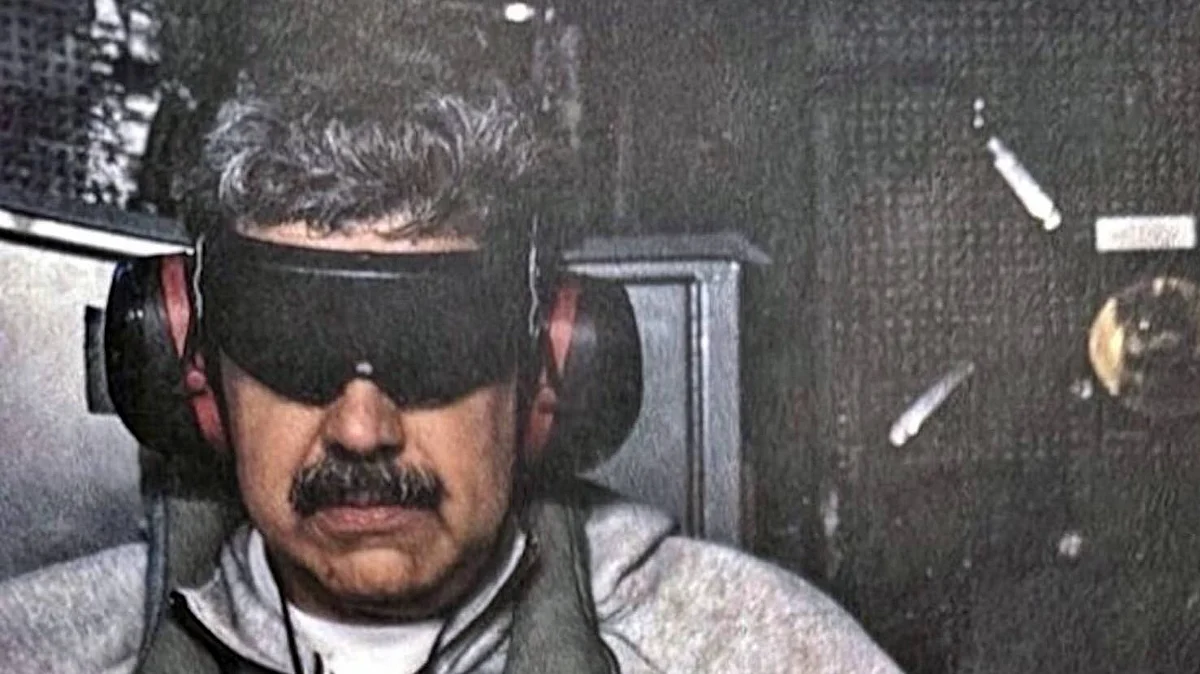


The US operation that culminated in the detention of Venezuelan President Nicolás Maduro was not a single-night action but the outcome of a tightly layered military arrangement built over months across the Caribbean and the wider Western Hemisphere.
Codenamed Operation Absolute Resolve, the much criticised pre-dawn strike on 3 January combined air dominance, naval containment and a precision special forces raid in Caracas. Explosions and power outages were reported across the Venezuelan capital as the opening phase unfolded, signalling the activation of a force posture designed to overwhelm air defences, isolate the battlespace and extract a high-value target within minutes.
Air bases and forward staging network
US officials said the air campaign relied on a dispersed basing model to maintain tempo, redundancy and deniability. Aircraft were launched from a mix of continental US bases, forward Caribbean facilities and a carrier strike group at sea.
Key elements of the air staging included:
Puerto Rico as a forward hub, with assets operating out of Muñiz Air National Guard Base, enabling rapid fighter and support sorties into northern South America.
Continental US bases providing long-range strike and support aircraft, including bombers and aerial refuelling tankers.
Forward Caribbean locations used for rotational deployment of fighters, electronic-warfare aircraft and intelligence platforms to sustain continuous pressure on Venezuelan airspace.
The first wave focused on suppressing Venezuelan surface-to-air missile systems, radar sites and command-and-control nodes, creating what US planners described as a “clean air corridor” into Caracas. Electronic warfare assets jammed communications and degraded situational awareness, while surveillance platforms maintained persistent coverage of military installations.
President Donald Trump later said the precision of the opening strikes made further bombardment unnecessary, framing the action as a decisive demonstration rather than a prolonged campaign.
Naval encirclement and maritime control
Parallel to the air build-up, the US Navy assembled a substantial naval presence around Venezuela under the cover of an expanded counter-narcotics mission. Officials said the naval posture was critical to isolating the theatre and deterring external interference.
The naval deployment comprised:
An aircraft carrier strike group, centred on a nuclear-powered carrier, providing strike fighters, airborne early warning and command-and-control capabilities.
Guided-missile cruisers and destroyers tasked with air and missile defence as well as land-attack roles.
Additional surface combatants and support ships, including amphibious vessels capable of hosting special operations forces and helicopters.
Maritime patrol aircraft and naval surveillance platforms monitored Venezuelan coastal waters, while the carrier group’s air wing integrated with land-based aircraft to maintain continuous air superiority.
Special forces assault in Caracas
With air and sea dominance established, the operation shifted to its decisive phase: the seizure of Maduro. The ground assault was led by the US Army’s Delta Force, supported by the 160th Special Operations Aviation Regiment, known as the “Night Stalkers”.
Modified MH-60 and MH-47 helicopters flew at low altitude into Caracas, landing at or near Maduro’s residence—described by US officials as part of one of the country’s most heavily fortified military complexes—at around 2.01 am local time. The assault team breached reinforced doors and internal barriers in a raid lasting under 30 minutes.
US intelligence agencies, including a small Central Intelligence Agency team reportedly on the ground since August, had tracked Maduro’s movements across multiple safe houses. Real-time intelligence was used to confirm his presence at the compound minutes before the helicopters were cleared to land.
Preparation, rehearsals and air package
Officials said the speed of the raid reflected months of preparation. A full-scale replica of Maduro’s alleged safe house was constructed at a US training facility in Kentucky, allowing assault teams to rehearse breaching and room-clearing drills repeatedly under timed conditions.
On the night of the operation, the air package supporting the raid included:
F-22, F-35 and F/A-18 fighters providing air superiority and close protection.
B-1 bombers positioned for rapid precision strikes if required.
EA-18 electronic-warfare aircraft and E-2 early-warning planes, backed by tankers and intelligence, surveillance and reconnaissance platforms.
These assets suppressed residual air defences, jammed communications and maintained overwatch for the helicopters during insertion and extraction.
Capture, extraction and fallout
US accounts say Maduro and his wife, Cilia Flores, attempted to move towards a secure area as helicopters descended but were intercepted by US forces and accompanying law-enforcement personnel. Trump later said he had urged Maduro to surrender beforehand, claiming the option had been “very close” before the raid removed it.
The two were flown out of Venezuela aboard US aircraft and transported to New York, where they are expected to face federal charges, including narcoterrorism and weapons-related offences linked to a 2020 indictment. US Attorney General Pam Bondi said the action was framed as enforcing US criminal law.
US officials said no American personnel were killed, though a small number sustained injuries and were listed in stable condition. Venezuelan authorities reported multiple explosions and damage to military facilities, but casualty figures remain unclear.
Caracas has denounced the strike as an act of aggression and a violation of sovereignty, while Washington insists it was a combined military and law-enforcement operation. The sheer scale of the force assembled —spanning air bases, naval power and elite ground units — has intensified global debate over the legality and precedent of using large-scale military power to detain a sitting head of state.
Join our official telegram channel (@nationalherald) and stay updated with the latest headlines