


Iran army chief threatens preemptive attack over 'rhetoric' targeting country
Army chief reacts to Trump’s threat to “rescue” protesters; Tehran braces for unrest and external pressure
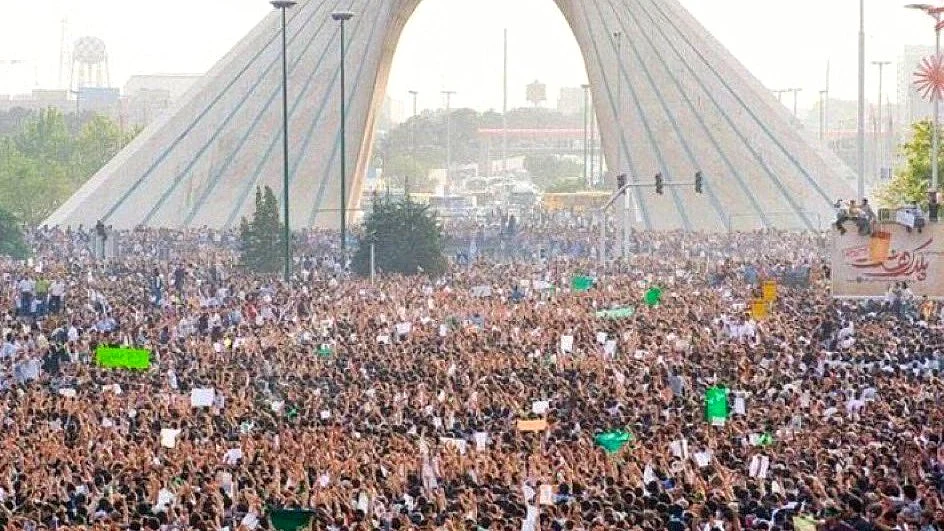


Iran’s army chief warned on Wednesday that Tehran could resort to pre-emptive military action in response to "hostile rhetoric" from the United States, as nationwide protests that have killed at least 36 people entered their second week and showed no sign of abating.
The comments are widely seen as a reaction to recent statements by US President Donald Trump threatening intervention if Iranian authorities violently suppress protests.
Speaking to cadets at a military academy, Major-General Amir Hatami said Tehran would treat such language as a direct threat. “The Islamic Republic considers the intensification of such rhetoric against the Iranian nation as a danger and will not leave its continuation without a response,” Hatami said, according to the state-run IRNA.
“I can say with confidence that today the readiness of Iran’s armed forces is far greater than before the war,” he added. “If the enemy commits an error, it will face a more decisive response, and we will cut off the hand of any aggressor.”
Hatami assumed command of Iran’s regular army — known as the Artesh — after Israel killed several of Iran’s senior military commanders during a 12-day conflict in June 2025. His appointment marked a rare shift in Iran’s power structure: he is the first conventional army officer in decades to hold a role long dominated by the elite Islamic Revolutionary Guard Corps.
Hatami’s remarks come as Iran faces what officials describe as a dual challenge — heightened confrontation with Israel and the United States abroad, and sustained public unrest at home driven by economic hardship and anger at political repression.
Trump’s warning that the United States would “come to the rescue” of Iranians if protesters were violently targeted has drawn sharp responses from Tehran, including from Ayatollah Ali Khamenei. The comments took on added significance after a US military operation over the weekend detained Venezuelan President Nicolás Maduro, a close ally of Iran.
Despite the rhetoric, there has been no immediate public indication that Iran is preparing for a military escalation in the region.
At home, the government moved to blunt public anger by announcing new cash subsidies aimed at offsetting soaring food prices. State television reported that more than 71 million Iranians would receive a monthly payment of 10 million rials — roughly $7 — credited directly to the bank accounts of household heads.
The payment more than doubles the previous subsidy of 4.5 million rials, but economists and shopkeepers warn it is unlikely to keep pace with inflation. Prices for basic goods such as cooking oil, rice, meat and pasta are expected to rise sharply after the government ended a preferential dollar–rial exchange rate for importers. Iran’s currency now trades at more than 1.4 million rials to the dollar and continues to slide.
The Soufan Center, a New York-based research group, said the protests reflect “not only worsening economic conditions, but longstanding anger at government repression and regime policies that have led to Iran’s global isolation”.
Iranian vice-president Mohammad Jafar Ghaempanah, who oversees executive affairs, described the situation as a “full-fledged economic war”, blaming sanctions, structural corruption and what he called rent-seeking policies. He said the country needed “economic surgery” to stabilise the economy.
Iran has experienced repeated waves of nationwide protests in recent years, but the current unrest has been fuelled by the sharp fall of the rial in December, following the June conflict with Israel and tighter sanctions enforcement.
Demonstrations began on 28 December and entered their eleventh day on Wednesday, 7 January, spreading across much of the country. The US-based Human Rights Activists News Agency said protests have taken place in more than 280 locations across 27 of Iran’s 31 provinces.
The group reported a death toll of at least 36 people, including 30 protesters, four children and two members of Iran’s security forces. While the organisation relies on an activist network inside Iran, its figures have generally been considered reliable during previous bouts of unrest.
As protests show no sign of abating, Tehran faces mounting pressure on both its streets and its borders — testing the government’s ability to manage economic collapse without triggering wider confrontation at home or abroad.
Join our official telegram channel (@nationalherald) and stay updated with the latest headlines