


Naga-Kuki violence adds new faultline to Manipur’s ethnic conflict
As Naga-Kuki violence spreads, political alignments are shifting over land, migration, the SoO pact and the proposed NRC
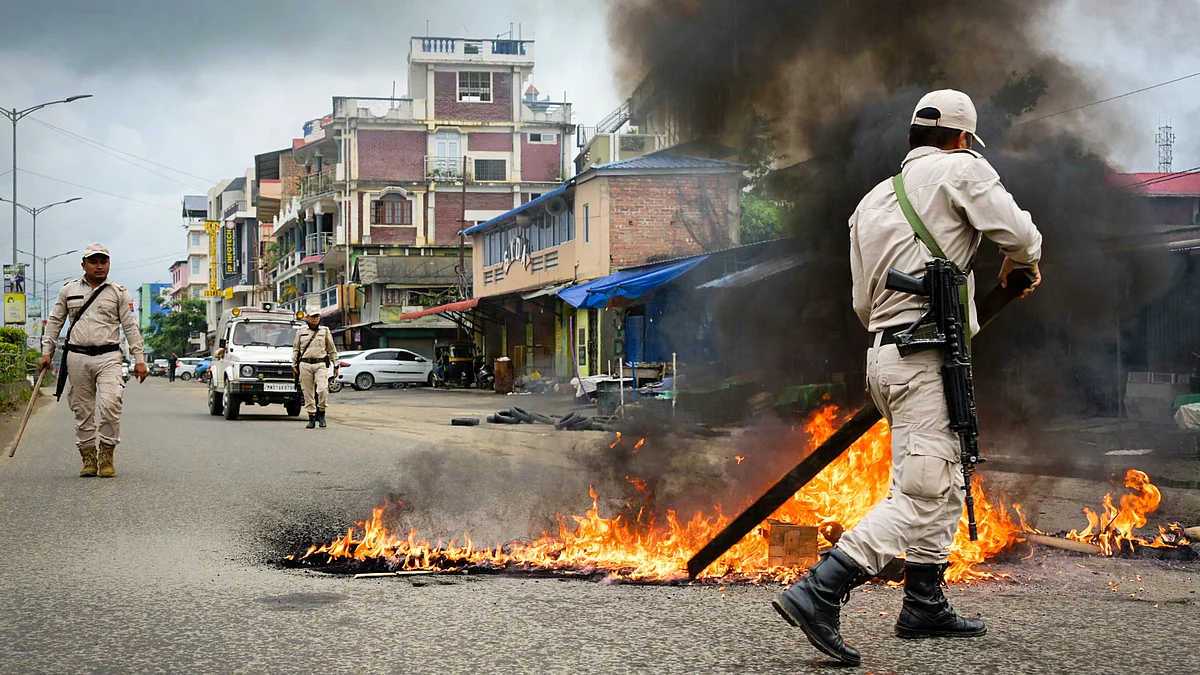


Fresh reports of violence and escalating tension between the Naga and Kuki communities in Manipur have emerged, indicating a possible expansion of the state's ongoing conflict beyond the Meitei-Kuki axis that flared up in 2023. This time, the epicentre of the violence is along the Imphal-Tamenglong (IT) Road in Kangpokpi district.
On 27 August, an ambush between Makui Ashang and Thananba Naga villages killed four Naga civilians and injured several others. Local Naga organisations attributed the attack to armed Kuki groups. On 31 August, assailants attacked N. Teikhang, a Kuki village along the same road, killing three Kuki civilians and injuring several others. On 1 September, armed miscreants opened fire and burned down around 30 houses in Tapon Khullen, Tapon Khunou and Makui Pipuram — contiguous villages in Kangpokpi district inhabited by Liangmei Nagas.
Concerned over the growing incidents of violence against Nagas in Manipur, eight of the nine Naga MLAs jointly submitted a letter to Union home minister Amit Shah on 31 August. The MLAs demanded the immediate arrest of Kuki-Zo leaders, including Thangboi Kipgen, chairman of the Kuki National Front (President), whose wife Nemcha Kipgen is deputy chief minister; action against Nemcha Kipgen; and the immediate abrogation of the Suspension of Operations (SoO) agreement with all Kuki armed groups, including the KNF-P.
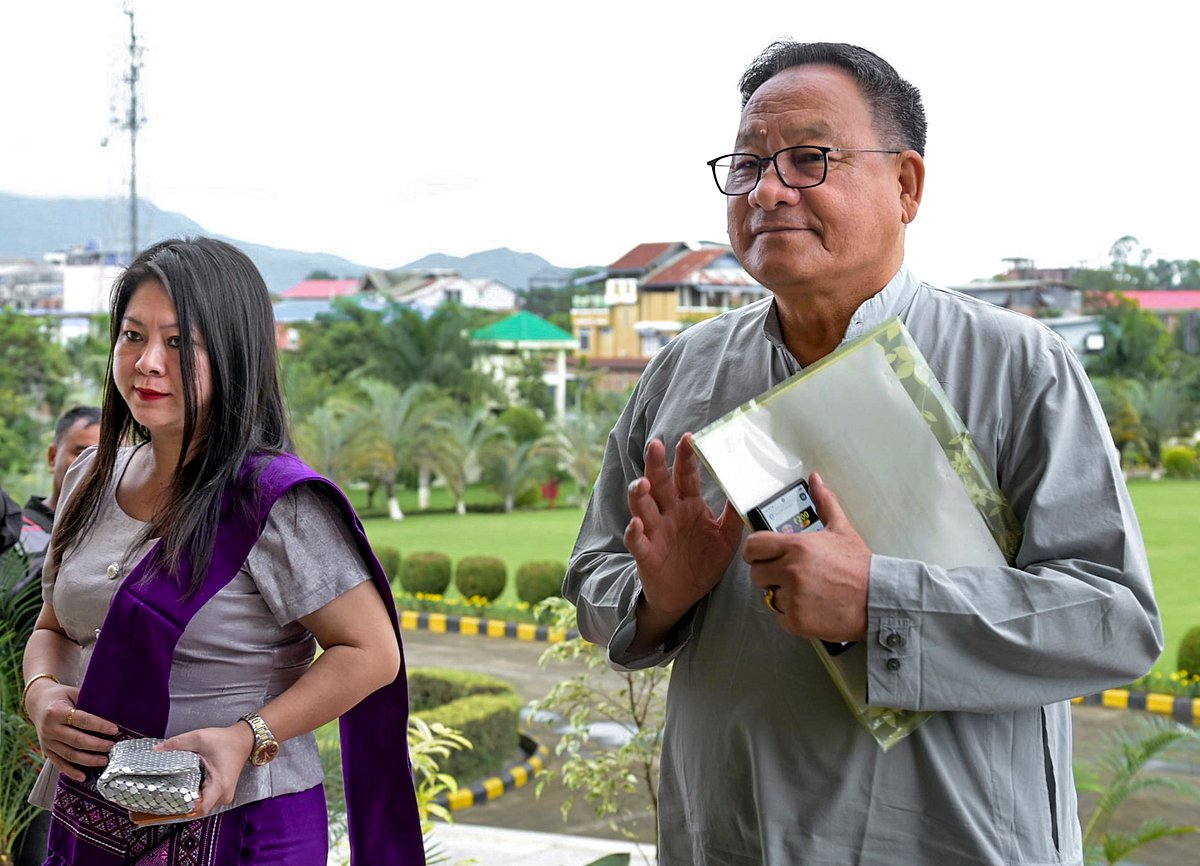
Signatories to the letter included deputy chief minister Losii Dikho — a Mao Naga — putting the state government in an awkward position, with one deputy chief minister demanding action against another over allegations that the latter colluded with her husband's alleged role in the killing and mutilation of six Nagas.
"We have pointed out to the Union home minister that we do not want to accommodate a person whose family is linked with an armed group within the government," Dikho told National Herald.
But the punchline appeared in the letter's last paragraph, particularly in view of the Assembly elections due in March 2027. It said: '...should the aforementioned actions are not being initiated, we, the undersigned Naga Legislator, shall be unable to defend or adequately respond to the challenges raised by the public, concerning our continued support to the Government of Manipur.'
"That message is significant," Dikho said. "Nagas and Kukis have a history of conflict in Manipur. But we decided to forgive and forget and move on. There are crucial issues like land disputes, rights of indigenous people in the face of illegal immigration and NRC that need to be addressed."
While Naga MLAs distancing themselves from Manipur's NDA coalition may not be numerically significant, the message is not lost.
Manipur watchers point out that the letter is also an indication that the state's political outfits are putting their ducks in a row ahead of the upcoming elections. "Nagas traditionally dominated Manipur's hills. So, any move to consolidate the Kukis' hold over the hills will inevitably trigger conflict between Nagas and Kukis," a human rights activist in Imphal explained.
Not to be left behind, the Kuki-Zo MLA Forum also shot off a letter to Shah on 2 September, rejecting the allegations made by the Naga MLAs against Kuki-Zo leaders. Forum leaders Haokholet Kipgen and Chinlunthang expressed concern over the renewed violence affecting both communities and condemned the killings and arson, saying those responsible should be held accountable regardless of their community affiliation.
The forum also rejected allegations against individual Kuki-Zo leaders and opposed calls for the immediate abrogation of the SoO agreement, arguing that such a step would be counterproductive.
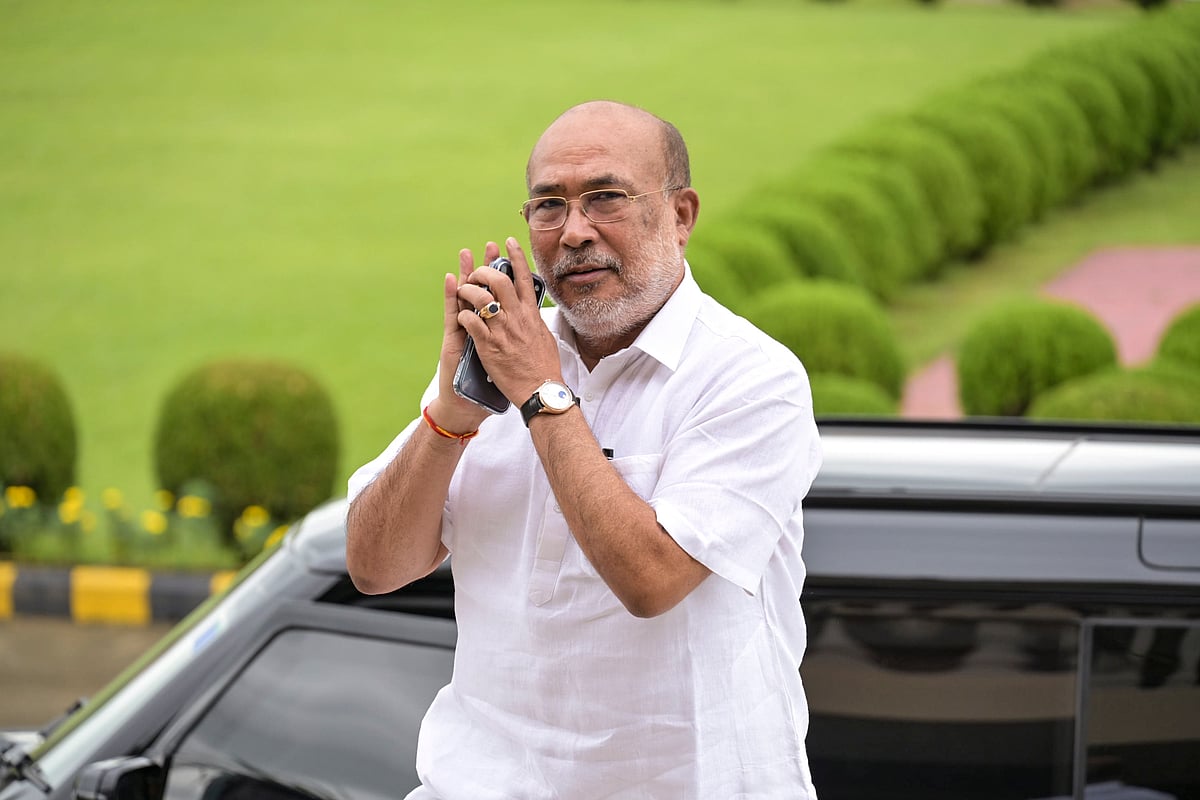
A Kuki human rights activist, meanwhile, blamed former chief minister N. Biren Singh and his associates for fomenting violence by allegedly colluding with Tangkhul Nagas to corner the Kuki community.
"Kukis have become a buffer between Meiteis and Tangkhuls; being devout Christians, Tangkhuls cannot be visible on the front lines when churches are being attacked. Zeliangrong and Mao Nagas in Manipur are being misled and encouraged to fight the Kukis, and the current spate of Naga-Kuki violence is going to spread beyond Ukhrul to Tamenglong, Noney and Senapati districts," he said.
With land disputes and cross-border migration at the core of Manipur's ethnic conflict, it may be time to think beyond conventional solutions such as autonomous councils, a separate state or a Union Territory with a legislature for the Kukis — all of which have faced strong resistance from Manipur's other communities.
There are also reports of an India-Myanmar land swap involving Myanmar's Kuki-dominated Kabaw Valley along the India-Myanmar border. Local civil society organisations such as the Coordinating Committee on Manipur Integrity (COCOMI) and the United Committee Manipur (UCM) have expressed strong opposition, warning against ceding any territory along Manipur's border with Myanmar.
Stirring up the state's ethnic broth further, the government of India announced that it had decided to defer Census operations in Manipur following a high court order directing that house-listing operations be kept in abeyance until 12 October. The house-listing phase was scheduled to begin on 1 September.
The high court order followed a public interest litigation filed by groups such as the Kangleipak Students' Association (KSA) and the Indigenous People's Society of Kangleipak (IPSA), which demanded that the National Register of Citizens (NRC) be updated first, using 1951 as the base year, before any population count or delimitation takes place. The organisations cited the ongoing ethnic unrest and illegal migration from Myanmar as reasons why a fair census could not be conducted.
The Campaign for Just and Fair Delimitation (JFD) called a 24-hour statewide strike on 1 September. Normal life was affected, with markets and business centres remaining closed, while roads wore a deserted look in Imphal East, Imphal West, Thoubal, Bishnupur and Kakching districts. Educational institutions also remained closed.
Manipur home minister Govindas Konthoujam said the decision to defer the Census was taken after the Central government considered the aspirations and sentiments of the people of Manipur. He urged the JFD to reconsider its decision to go ahead with the 24-hour general strike.
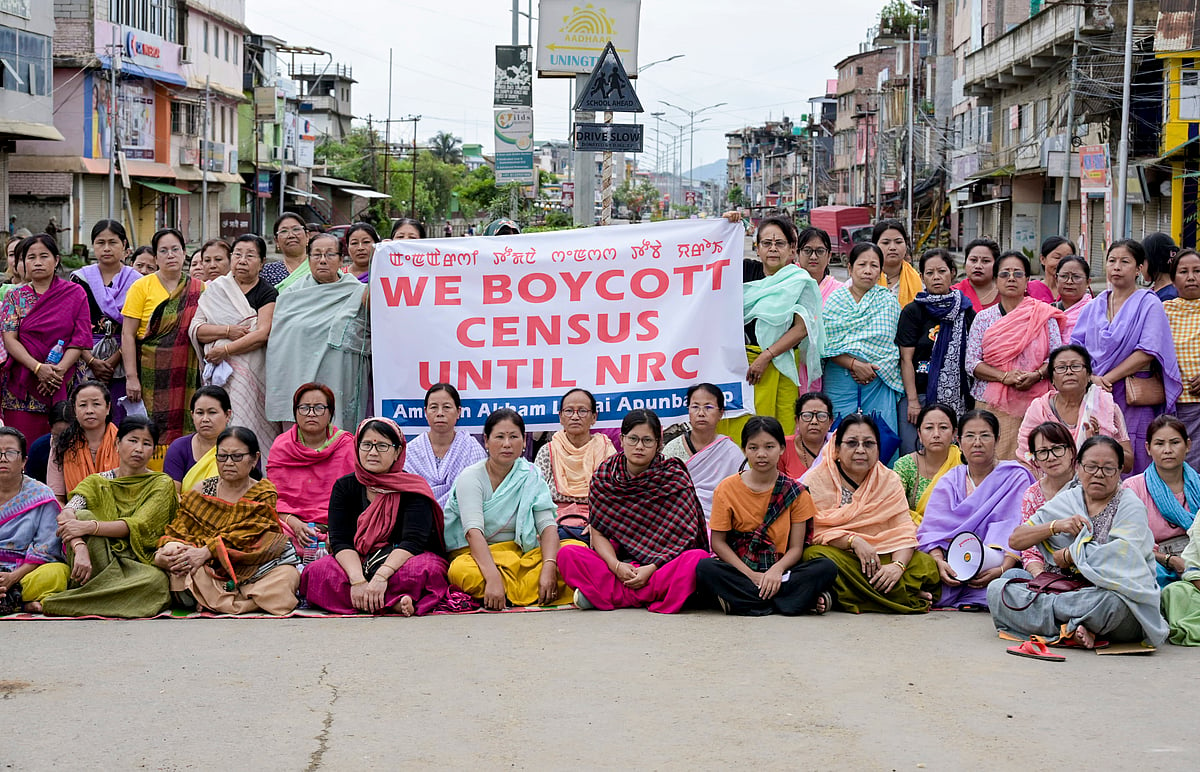
JFD's demands included postponing or boycotting the Census until Manipur's NRC is updated, with 1951 as the cut-off year, to identify and deport illegal immigrants. The organisation's concern is that conducting a population census without updating the NRC may lead to legal status being granted to illegal migrants — a large proportion of whom it alleges are Kukis from Myanmar — who entered the state in recent decades, thereby skewing the demographic profile.
"You have to identify the citizens before you count them. We will even march to the Assembly if the government does not meet our demands," JFD convenor Jeetendra Ningomba told National Herald.
The success of the JFD agitation in Manipur's valley districts, and the presence of Meitei-backed civil society organisations, local clubs and Meira Paibis (women-led social movements) in the organisation, indicate that the NRC issue could well emerge as another flashpoint in Manipur's restive ethnic cauldron.
Sourabh Sen is a Kolkata-based independent writer and commentator on politics, human rights and foreign affairs. More from him here
Join our official telegram channel (@nationalherald) and stay updated with the latest headlines