


Publish list of logical discrepancies: SC to ECI on Bengal SIR
Bench orders publishing of 'logical discrepancy' list, says both Class 10 admit card and pass certificate must be taken as age proof
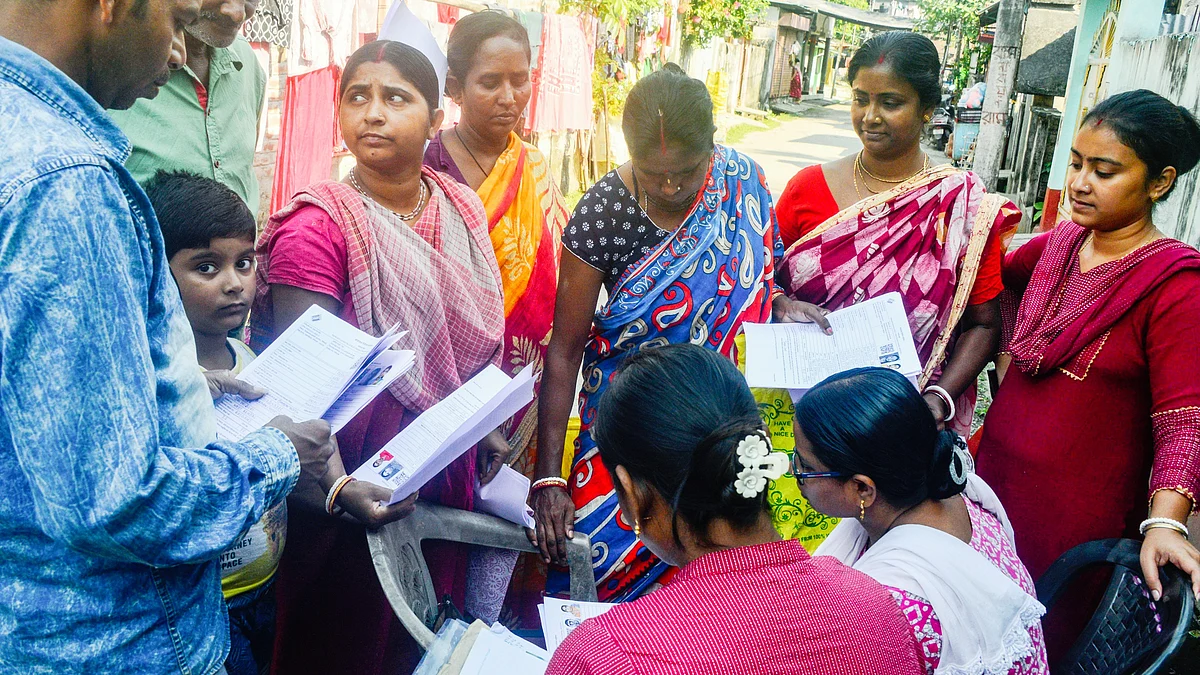


The Supreme Court on Monday remarked on the Election Commission of India’s (ECI) fraught Special Intensive Revision (SIR) in West Bengal, directing the poll body to publish the names of roughly 1.25 crore people it has flagged under the controversial 'logical discrepancy' category.
A Bench of Chief Justice of India Surya Kant and Justices Dipankar Datta and Joymalya Bagchi underlined the scale of the problem, noting that notices have been issued to about 2 crore people for verification, split into three buckets — mapped, unmapped and logical discrepancy. Under the latter, authorities have been citing “father name mismatch”, “mismatch of parent age” and differences in the age of grandparents as grounds for scrutiny.
Given the staggering number of notices, the Court ordered that the full list of flagged names be displayed in gram panchayats, block offices and ward offices. Objections must be allowed within 10 days, with additional time to submit documents.
The Bench insisted that “wherever the document is not found satisfactory.. such persons shall be given an opportunity [to] present documents and also be heard at that very time in person or through authorised representative present with the voter”.
It also directed the state government to provide adequate manpower, ensure law and order, issue receipts for documents received and give written reasons for decisions. Highlighting public anxiety, Justice Bagchi told the ECI, “Over 1 crore people have been notified. Please understand the stress people are suffering. We will issue directions where needed.”
The hearing sharpened scrutiny on the Commission’s lack of transparency and chaotic instructions. CJI Kant flatly objected to the ECI issuing directions through WhatsApp, saying, “There is no question of running everything through WhatsApp. Circular has to be issued.”
Senior advocate Shyam Divan drew the Court’s attention to a WhatsApp message instructing officials to keep booth-level agents (BLAs) out of hearings, prompting further concern. Divan said in one district alone, “logical discrepancy” objections had been raised against 2.30 lakh people, remarking, “They are going on algorithm basis.”
Senior advocate Kapil Sibal said the ECI’s criteria were absurd and exclusionary: “Please see what is the logical discrepancy... If there is X number of years difference between grandfather and child then there is discrepancy. All these names are there in the voter list.”
He also argued that venues for hearings were grossly inadequate — “the number of venues approved for hearing is 300 when 1,900 are actually needed” — and accused the Commission of weaponising minor spelling differences: “They say if Ganguli is spelled differently... They omit the name. My lord knows that Datta is spelt differently. They are issuing notice with only the aim to exclude the names.” He urged the Court to allow BLAs to assist affected voters.
Representing the ECI, senior advocate Rakesh Dwivedi appeared to offer a weak defence, saying there were “cases where there is only 15 years difference of age between parents and child.” Justice Bagchi cut in: “How can 15 years age gap between mother and son be logical discrepancy...? We are not in a country where child marriages are not a reality.”
When senior advocate Kalyan Bandyopadhyay revealed that notices had been issued even to Nobel laureate Amartya Sen and sitting MPs, Justice Bagchi expressed surprise. Dwivedi shot back, “Enough for tomorrow’s paper,” prompting Bandyopadhyay to retort, “Yes, yes it is clear that you are doubting everybody.”
The Bench also interrogated the ECI’s documentary demands. Bandyopadhyay said authorities were refusing to accept Class 10 certificates that show date of birth, even though they are “statutorily required to consider it.” Justice Datta clarified that the class 10 admit card has the date of birth while the passing certificate does not, noting, “That is why you cannot insist on the other.” The CJI concluded that both documents “will have to be taken”.
The contentious SIR has been expanding since the ECI rolled out the process in Bihar last year despite challenges from groups such as the Association for Democratic Reforms (ADR) and the National Federation for Indian Women (NFIW). On 27 October 2025, the Commission extended the exercise to other states and Union Territories, including West Bengal, Kerala and Tamil Nadu, triggering a wave of litigation.
While the ECI’s counsel protested that critics were unfairly undermining the institution — “If the ECI is to be distrusted, let not the ECI hold the elections at all” — Monday’s proceedings made clear that the trust deficit is now rooted in the Commission’s own conduct: unannounced algorithmic sweeps, grotesque data filters, mass notices, WhatsApp governance and a refusal to explain itself on paper.
The Supreme Court’s latest intervention forces daylight into a process that, until now, has felt to many less like voter roll revision and more voter intimidation.
With PTI inputs
Join our official telegram channel (@nationalherald) and stay updated with the latest headlines