


Will the scars of the old year heal in the new?
Bareilly’s familiar festivities unfold against a backdrop of anxiety, protest and quiet erosion of trust


It was past midnight when the sound of firecrackers rent the air—the customary noisy proclamation of the arrival of the New Year. Across the city of Bareilly, the lights that were switched off for celebrations had flickered back on by now. The city was awake.
Though this wakefulness felt untouched by anything resembling the fervour of a famous midnight tryst with destiny. There is something metronomic about these celebrations, about inboxes overflowing with messages, endless notifications of good wishes, newspapers filled with advertisements, the mad scramble to dominate social media—all of which seems about as emotional as a wind up toy.
And leaves me wondering what changed when we ushered in the new year. Does the moment leave an imprint on our hearts and minds, on the range of our reflection and concern? Is the residue of recent incidents our city has witnessed so easily drowned out in the revelry? Incidents that have unsettled the city’s sense of itself, its temper and social character.
On the evening of 24 December, word spread rapidly that members of the Bajrang Dal had staged a protest outside Bareilly’s St Alphonsus Cathedral, a protest featuring a collective recitation of Hanuman Chalisa. Why the protest?
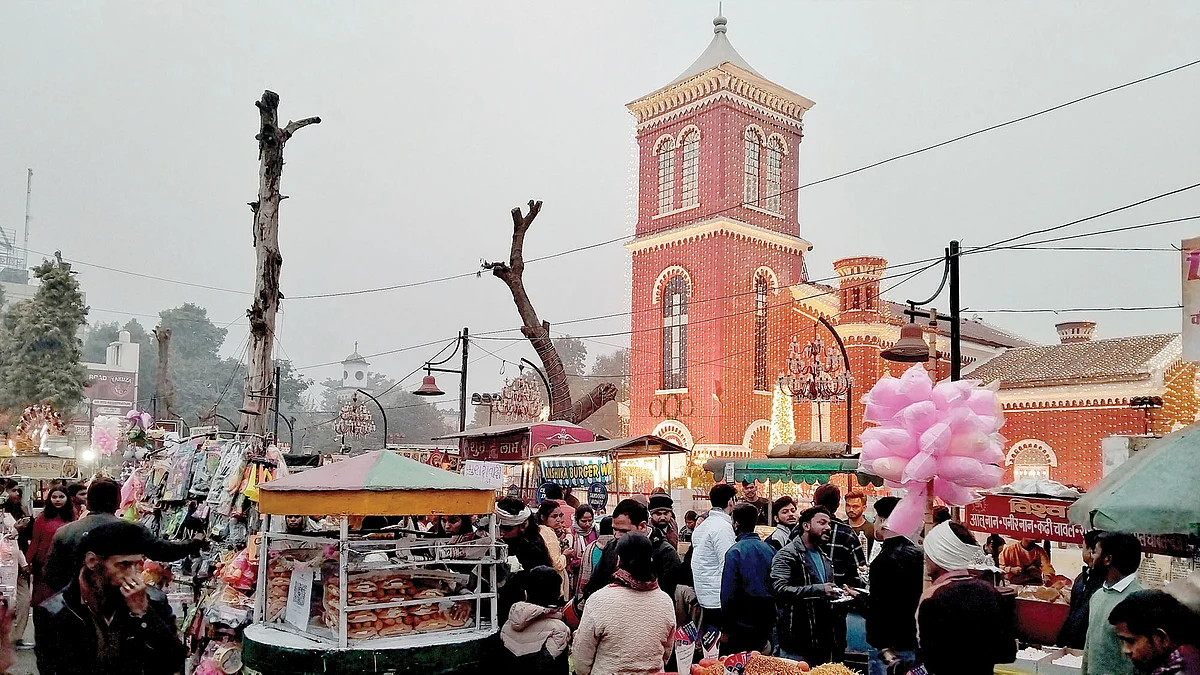
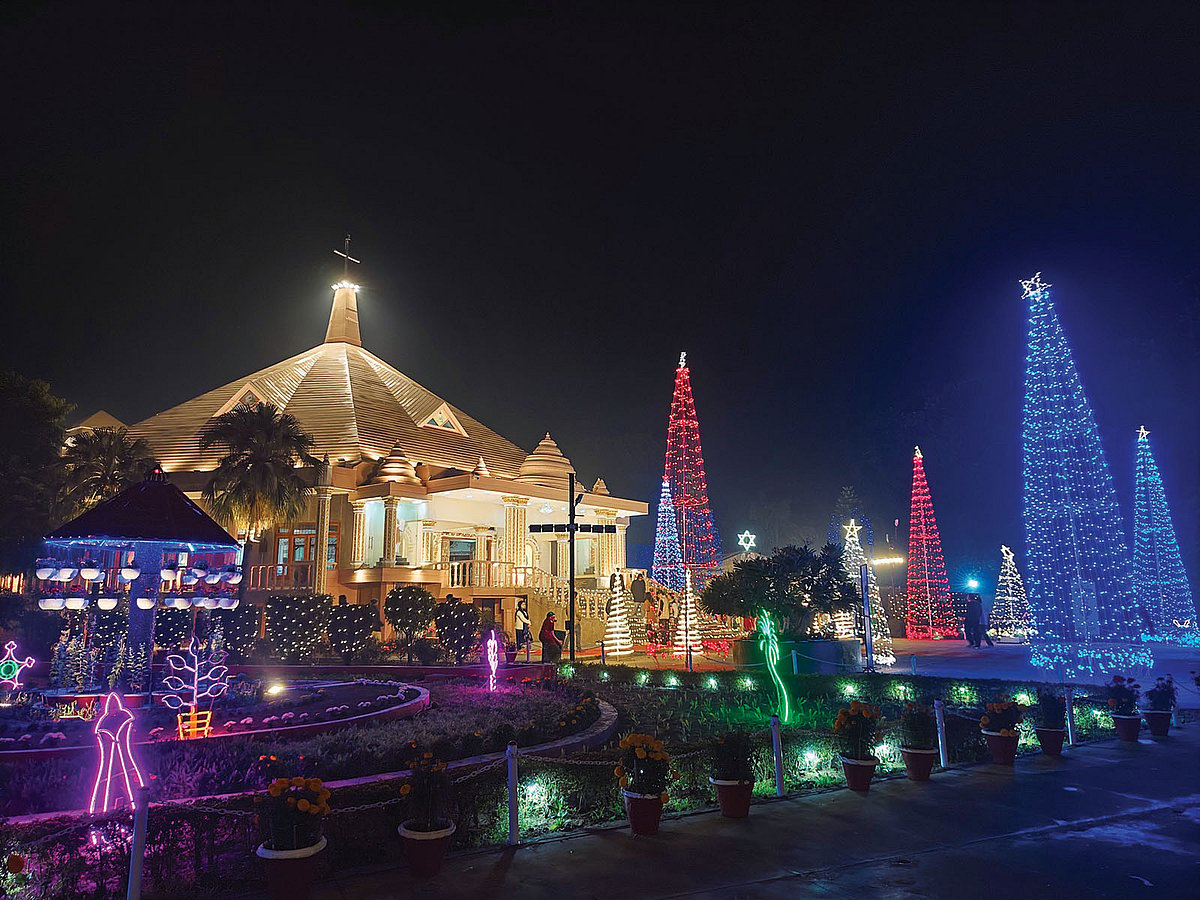
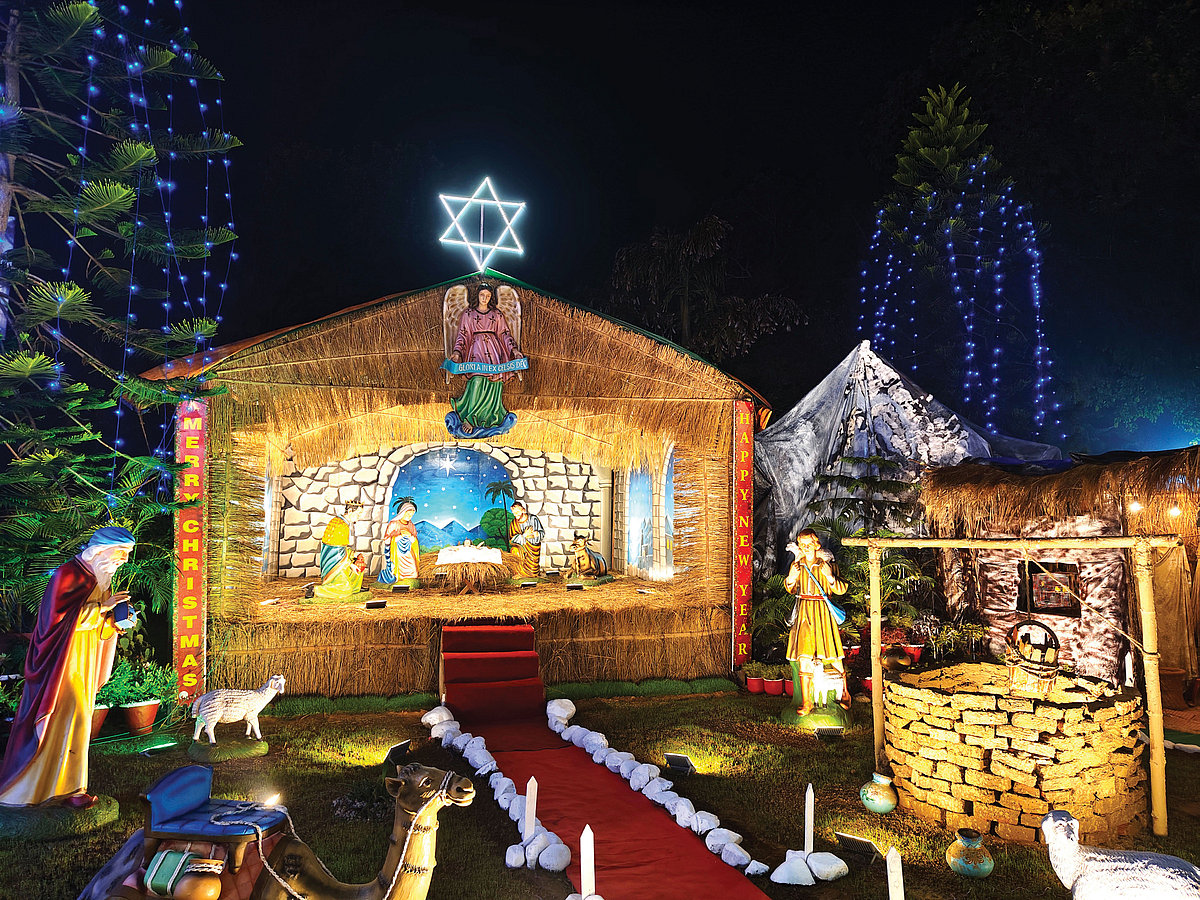
Because a play staged by schoolchildren during the Christmas Christmas celebrations at the Christ Methodist Church (top) and the St Alphonsus Cathedral (above, left and right) in Bareilly, Uttar Pradesh celebrations had allegedly misrepresented Hindu religion and society, hurting the sentiments of the children and their parents.
After about half an hour of sloganeering, the group submitted a complaint to the police and left. The cathedral stands within the Bishop Conrad School campus, in the cantonment area adjoining Civil Lines. A three-day fair during Christmas is an old tradition here. The entire campus is bathed in colourful lights. Food stalls spill far out onto the road.
There are cultural programmes, and the crowds make even walking difficult. It’s not just the schoolchildren and their families, people gather from all over the city and the fair is a big draw for the young.
Community portal Catholic Connect put out a placatory statement from Ignatius D’Souza, the bishop of Bareilly. The incident, he offered, may have been the result of “a misunderstanding”, since the school programme had addressed contemporary social issues.
According to the bishop, a complaint had been lodged with the police seeking an FIR against the school management, but the complainants had not produced any evidence to substantiate their allegations. Incidentally, the police had given the church advance notice of the protest and even deployed personnel as a precaution.
The cathedral fair went on regardless— and, as always, a cheerful crowd gathered at the Christmas fair at Christ Methodist Church as well. On Christmas Day, the road leading to the church from Ayub Khan Chauraha towards Chowki Chauraha was closed to vehicular traffic. After the morning prayers, the church doors were shut, but the campus was buzzing with life.
A nativity scene marking the birth of Jesus was on display. Three or four wide tables had been pushed together where devotees lit candles, bowed their heads before the closed doors, and then moved on with their children towards the toy sellers and food stalls lining the street.
It was in this crowd that I met Rajesh Babu Maurya, a former classmate from Government College, who had come with his wife, granddaughter and nephews. He said he had been coming to the fair every year since his own children were in school— simply because he liked being here.
While Christmas festivities are an old tradition in Bareilly, the community makes up only 0.78 per cent of the urban population (0.33 per cent as per the 2011 Census) and 2.03 per cent in the cantonment area.
Even before the hubbub over the 24 December protest had had a chance to settle down, another incident took place on 27 December, at the Den Café in Rajendra Nagar. Shivangi, a nursing student, had gone there with her classmates to celebrate her birthday.
A little while later, a crowd barged in, shouting slogans. Flaunting Bajrang Dal connections, they grabbed Shivangi’s friends Waqif and Shaan and started beating them up. When others intervened, they scuffled with them too, but Waqif and Shaan were clearly the two they were after. It was only when the police arrived on the scene that they finally left on their motorcycles, with the smugness of hitmen who’d dealt with their quarry.
The police detained the injured Waqif and Shaan, along with café owner Shailendra Gangwar, took them to the station, and booked them for disturbing the peace. It was the presence of these two boys that had triggered the unrest, police inspector Rajbali Singh simply said. After widespread outrage over the police action, a case was eventually registered against 25-odd people, some of them named, and six arrests were made, including a minor.
Kevalanand Gaur, the city convenor of Bajrang Dal, distanced the organisation from the incident, claiming that the alleged ringleader, Rishabh Thakur, had been expelled from the outfit on 14 December and that the organisation had nothing to do with the incident.
It’s a familiar manoeuvre, and by now people know how it plays out. The very day Rishabh Thakur posted a video on social media proclaiming his innocence and justifying the violence in the name of opposing ‘love jihad’, the police in Subhash Nagar informed senior officers that orders had already been issued in August to extern him from the district, that he had been jailed in July in a theft case, that he also faces charges of attempted murder. Shivangi has been in shock since the café incident. There were ten people at the party that day—six women and four men.
Speaking to the media about the so-called ‘love jihad’ outcry, she said there was no such yardstick when it came to friendships. Listening to Shivangi, the first question that came to mind was: how did Rishabh and his group even know who among those ten people belonged to which religion?
And then I was reminded of Neha Dixit’s book The Many Lives of Syeda X, which documents the ways and networks of those who run these ‘love jihad’ campaigns. I also recalled something Kaifi Azmi once said during a conversation in Mijwan: that you won’t find a Muslim in this country who doesn’t have a fair few Hindu friends, nor the other way round. Why, then, should it trouble anyone who Shivangi counts as her friends or decides to celebrate her birthday with?
And then Prof. Kripanandan came to mind. He is remembered as a freedom fighter, a teacher of English in Bareilly College, a scholar, a Sarvodaya activist, a shining light among the city’s liberal intelligentsia. Zakia Khatoon was his student, and later his life partner.
Zakia Khatoon was devoutly religious; Prof. Kripanandan a non-believer, more or less. Their two sons were named Ashok and Angel. I found myself thinking how wondrous that world was, even with all its overt religiosity… if only because it didn’t have so many self-proclaimed defenders of the faith.
The accused in these disturbances may be caught at some point; they may even be punished for their deeds. But what about the scars the incident will leave on Shivangi’s mind? What about Shaan and Waqif? Their injuries will heal, but will they be able to forget this incident? Let’s hope or pray.
Join our official telegram channel (@nationalherald) and stay updated with the latest headlines