


The Trump backlash and democracy’s power to correct itself
Corruption, foreign wars and cronyism fuel a voter backlash, exposing the limits of Trump's power
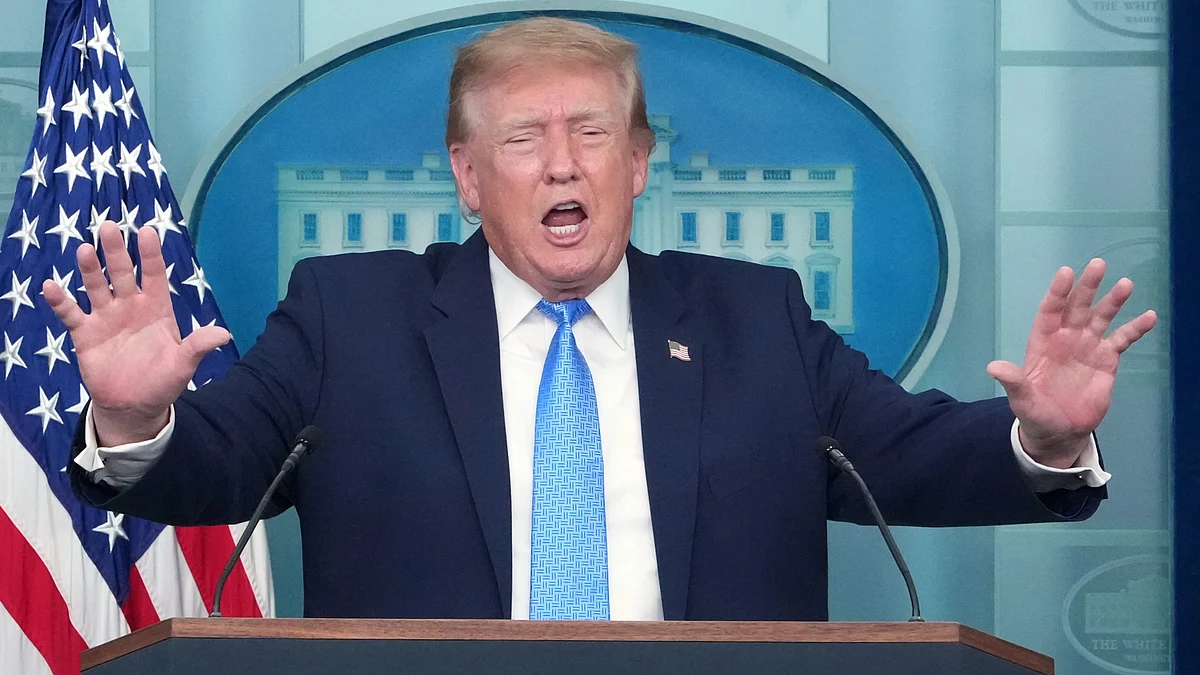


Democracies correct themselves through elections. The leadership of all nations is imperfect, and the problems become especially visible when strongman leaders take charge. With great power comes great overreach, and with overreach comes pushback. The American population has pushed back against its president and the way he governs.
It may surprise some of us — it certainly did me — that the number one factor behind the Republicans losing both the House and the Senate was neither inflation nor the dumb war in Iran. Both ranked high, but the most important reason voters punished Trump's party was corruption and their unease at the way the government was being run by the wealthy, for the wealthy. Nine in 10 voters ranked this at the top of their concerns.
The president's sons have made thousands of crores while he has been in office, and are making more. Trump's son-in-law has made thousands of crores as well, while holding an unofficial position as an envoy and negotiating with the same Gulf nations from which he is taking money.
The president himself has zoned out and is focused on things like the 600-metre reflecting pool between the Lincoln Memorial and the Washington Monument (that long, Egyptian-style obelisk), and an arch. Photographs show that his 90,000-sq. ft ballroom is now larger than the White House itself, let alone the East Wing that it replaced.
Daily reporting on all of this, coming at a time when fuel prices are high and inflation is on the rise, was the last straw for many Americans, and they have brought Trump down a notch.
What happens from here? A few things. The first is that there is now pressure on Trump to conclude the war and normalise fuel prices and supplies. This might be difficult to achieve, given that the only way it seems doable is to return to the surrender document he signed at Versailles on 17 June. This lifted sanctions on Iran and gave it control over Hormuz. Trump was fine with it until he was shamed into pulling out of the MOU by the warmongers he is surrounded by, who work in Israel's interests.
That is the second thing that has now changed. The sweeping victories by the Democratic Party's left wing show that Israel is an unpopular cause among Americans. Two-thirds of Americans think poorly of Israel, including three-fourths of those under 29. This means that, in the long term, Israel will not be able to rely on America to fight its wars.
The most influential lobby group, AIPAC (American Israel Public Affairs Committee), said on 21 October that it would stop endorsing candidates or giving them money directly. This happened after Republicans begged it to stay away from their races — a remarkable turnaround.
Along with their antipathy to foreign wars, the left wing also pushes strongly for policies such as Medicare for All. This is intended to make healthcare accessible in the country where it is the most expensive in the world. It is hard to see how this does not become the consensus view of both parties over time.
The president has appointed his most hawkish anti-immigration supporter, a man named Stephen Miller, as his chief of staff. But the brutality of the agency enforcing immigration law, called ICE, has meant there has been a backlash from ordinary Americans. There is a feeling that, other than criminals, undocumented immigrants (those referred to as 'illegal' by the unsympathetic) should be allowed to stay and given a pathway to citizenship. Some movement on policy may be expected there as well over time.
The last thing that will change is Trump's stranglehold on his party. He draws his power from the fact that those he backs usually win their Republican primaries (the step before the election). As he staggers into his final months as president, those seeking to replace him and challenge him will assert themselves as they have not done since 2016.
America has shifted course through elections before. Republican George W. Bush was replaced by a Democrat, Barack Obama, the first African American president, because Americans had tired of the wars in Iraq and Afghanistan. Democrat Lyndon Johnson, otherwise one of the most accomplished leaders given his record on civil rights, was succeeded by Richard Nixon, who finally ended the Vietnam adventure.
The erosion of the Republican Party in this month's elections also came in the Deep South, in places such as Mississippi and Texas, without which the party cannot win the presidency in 2028, given the narrow path to 270 electoral college votes. This is bound to force a change in the party and its leaders as they chart a path to survival.
The world will benefit from the correction America is going through. Less violent foreign intervention will mean less suffering, both direct and indirect, for all of us. Democracies correct themselves through elections. But for that to happen, elections must be fair and free. Where elections are no longer seen as legitimate, the desire for correction expresses itself in other forms, as we are seeing on our streets today.
Views are personal. More of Aakar Patel’s writing here