


Why are mosques becoming a political flashpoint in western UP before 2027?
Different disputes over construction, government land and ownership raise questions about their role in western UP’s electoral politics
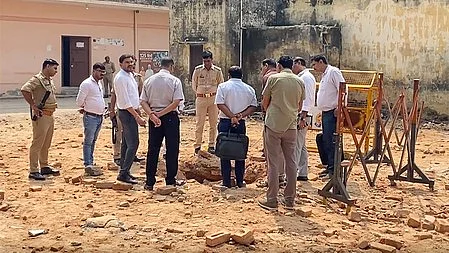


The demolition of a mosque inside the Saharanpur Collectorate and the emergence of disputes over mosques in Moradabad and Sambhal have brought religious structures back into the political conversation in western Uttar Pradesh, months before the 2027 assembly elections.
The immediate issue in each case is different, involving allegations of unauthorised construction, government land or disputed ownership. But the timing has raised a larger political question: are these simply enforcement actions against illegal structures or are mosque-related disputes becoming part of the electoral politics of western UP?
The government maintains that the actions are based on law and property records. Opposition leaders and Muslim organisations, however, have questioned the timing and procedure and warned that such actions could sharpen communal divisions.
The Saharanpur demolition has become the most prominent case. The two-storey mosque, built on 315 square metres inside the Collectorate complex, was demolished on 5 September after an overnight operation involving seven bulldozers, 12 dumpers and four tractor-trolley. The administration said the structure stood on government land and was an unauthorised occupation.
Saharanpur City Magistrate Kuldeep Singh defended the action, saying, "The mosque was demolished because the appeal against the eviction order issued in July had already been rejected by the higher court."
The mosque management disputes that account. Mutawalli Tanveer Ahmed said the July order was an eviction order and not a separate demolition order. "The city magistrate issued an eviction order in July, directing that the premises be vacated within 30 days," he said.
The mosque committee challenged the order before the district judge and its appeal was dismissed on 2 September. But Ahmed argued that the period during which the matter remained pending in court should not be counted within the 30-day eviction period. "Therefore, according to us, the eviction period had not expired, yet the mosque was demolished on 5 September," he said.
The dispute began in March 2025 after a complaint by former Bajrang Dal regional convener Vikas Tyagi. A revenue inquiry said Khasra No. 539, measuring 28.04 bighas, was recorded as the Kachahri-Collectorate complex. The mosque management, however, produced old documents in support of its claim, including a 1 January 1911 electricity connection certificate, municipal tax receipts and a 1994 lease agreement between the waqf and the post office.
After nearly 477 days of inquiry and hearings, the city magistrate on 16 July 2026 ordered the eviction of the mosque management and declared the land government property. The order also directed recovery of Rs 6.41 crore as compensation for alleged unauthorised occupation over 70 years.
The mosque committee appealed, but the district judge dismissed the appeal on 2 September. Demolition followed three days later. The matter is now before the Allahabad High Court. On 11 September, the court stayed recovery of the Rs 6.41 crore compensation amount until the next hearing and sought the state government's response. The next hearing is scheduled for 12 October.
For Muslim organisations, however, the issue goes beyond the legal dispute over one mosque. Lucknow's Shahi Imam and Islamic Centre of India chairman Khalid Rashid Farangi Mahali said, "There are many temples in Uttar Pradesh built on government land, but Muslims have never objected to any of them. The government should also keep in mind that its decisions should not disturb communal harmony."
That statement captures the concern among Muslim organisations that a series of actions involving Muslim religious structures could acquire a larger communal and political meaning.
The Saharanpur demolition has already triggered a political response. Congress MP from Saharanpur Imran Masood called it a "black day" for the people of Saharanpur and said it was an attack on the Constitution. He also said the matter would be taken to the high court and Supreme Court.
The government, meanwhile, has sought to keep the issue within the framework of law and enforcement. Minister of State for Minority Welfare Danish Azad Ansari said, "The state government is working on the principle of Sabka Saath, Sabka Vikas. There is rule of law in Uttar Pradesh. There is no discrimination at any level. The government has the support of every section of society."
The political temperature rose further when two more mosque-related cases emerged in western UP within days of the Saharanpur demolition.
In Moradabad, the development authority issued a notice on September 8 concerning the nearly 40-year-old Mustafa Mosque, located next to the boundary of Teerthanker Mahaveer University. The notice followed a complaint alleging unauthorised construction.
In Sambhal, the Baba Bahuddin Shah Mosque in the Chaudhary Sarai area came under scrutiny over allegations concerning its construction and land. A complaint sought an inquiry into the disputed property, while an initial inspection found a travellers' shelter on the site.
These cases have acquired significance because of the political geography of western UP.
Saharanpur, Shamli, Muzaffarnagar, Baghpat and Meerut together have around 26 Assembly constituencies where Muslim voters play a significant role. Dalit voters are also an important political constituency. Saharanpur itself has seven assembly seats and is regarded as a politically sensitive district in western UP.
The question therefore is not simply why individual mosques are facing administrative action. It is also why disputes involving religious structures are becoming politically prominent at this particular point in the electoral cycle.
There is no evidence in the material available to establish that the government is deliberately demolishing mosques to widen the Hindu-Muslim divide. The government's stated position is that it is enforcing the law against unauthorised construction. At the same time, opposition leaders and Muslim representatives argue that repeated action involving Muslim religious structures can deepen communal tensions.
The pattern is not confined to Saharanpur, Moradabad and Sambhal. In Sant Kabir Nagar, a madrasa was demolished after a commissioner court order. In Varanasi, a mazar and mosque were demolished during railway station remodelling after being treated as encroachments. In Bahraich, 10 mazars on government land inside the Maharaja Suheldev Medical College campus were demolished. Similar disputes have emerged in Deoria and Lucknow.
For the BJP government, these cases provide an opportunity to emphasise enforcement, government land and the rule of law. For opposition parties, they offer an issue around which they can question the government's intentions and appeal to Muslim voters.
That is what makes the developments politically significant ahead of 2027.
Western UP has previously seen religious and caste issues become central to electoral mobilisation. The region's closely balanced social equations mean that an administrative action involving a mosque can quickly become a political controversy involving the wider Hindu-Muslim relationship.
Whether the present disputes remain legal battles over land and construction or become a larger electoral issue will depend largely on what happens next, including the government's actions against other religious structures, the response of political parties and the extent to which these cases enter the 2027 campaign.
Join our official telegram channel (@nationalherald) and stay updated with the latest headlines