


Women’s reservation and all that jazz
When the BJP knew the Bills wouldn’t have Opposition support and, therefore, the two-thirds majority needed to pass them, what was it playing at?


On Thursday, 16 April, Tamil Nadu chief minister M.K. Stalin burnt a copy of the proposed Constitution (131st) Amendment Bill 2026 and hoisted a black flag to signal state-wide rejection of what he called a “black law” that would turn Tamils into “refugees in their own land”.
He was not alone. The southern states were united in their opposition, with Punjab’s Sukhbir Singh Badal calling the move “highly discriminatory”. Sonia Gandhi publicly called out the government’s real agenda, when she wrote in a sharply worded critique (The Hindu, 16 April), that ‘delimitation, and not reservation for women, is the real issue… [and] the plan is extremely dangerous and an assault on the Constitution itself’. Her intervention shifted the national conversation from so-called gender justice to democratic representation.
On Friday, 17 April, the Lok Sabha rejected the Bill (278 voted for, 211 against). When the government knew it wouldn’t have Opposition support and, therefore, the two-thirds majority needed to pass the Bill, what was it playing at? How does anyone trust a government that says something and does the exact opposite? Even as the Delimitation and Union Territories Bills were also withdrawn, the mystery is worth unpacking.
At first glance, the government’s move to operationalise women’s reservation ahead of the 2029 general elections appeared overdue, even welcome. A special sitting of Parliament was convened, urgency was invoked and a narrative framed around gender justice. But as the fine print of the Delimitation Bill began to be debated in Parliament, it became increasingly evident that the real story lay elsewhere.
What was presented as ‘progressive reform’ quickly started looking like subterfuge, a surreptitious gaming of the Constitution, an exercise in political re-engineering.
Also Read: The subterfuge of women’s reservation
The most striking departure from past practice lay in what the Bill does not say. In the earlier delimitation framework, particularly the Act that followed previous exercises, Section 8 explicitly mandated that constituency boundaries would be redrawn on the basis of the 2001 Census.
At the same time, it clearly protected the federal balance by stating that the total number of seats allocated to each state in the Lok Sabha would remain frozen, based on the 1971 Census.
That provision was not a mere technical clause. It was the political and moral anchor of India’s federal compact. It ensured that states which had successfully implemented population control policies would not be penalised with reduced representation in Parliament.
That safeguard was conspicuously absent in the draft Bill that the government made available barely one-and-a-half days before introducing it. The prime minister, home minister and Union ministers repeated that no state would lose its proportional share of seats, in fact the proportion would remain the same. Not true.
Section 8 of the current Bill was silent on any such protection. It did not commit to maintaining the existing distribution of seats among states. It did not reaffirm the 1971-based allocation. In effect, it removed the only statutory guarantee that had so far prevented a population-based redistribution of political power.
In legislative terms, what is not written in the law is often more significant than what is. Oral assurances, however emphatic, do not carry the force of law. They cannot bind future governments, nor can they be enforced or reviewed. A statutory omission, on the other hand, creates space for interpretation — and, potentially, for drastic shifts in policy down the line.
****
This is precisely where the Opposition’s criticism gained traction. Several leaders argued that what was being presented as a women’s reservation initiative was, in fact, a delimitation exercise in disguise.
The charge stems from the structural sequencing embedded in the Bill itself, where reservation is contingent upon delimitation, and delimitation is left open-ended by design, leaving the law open to interpretation by the government, the courts and in this case the Delimitation Commission, an opaque and arbitrary institution that the government is in no mood to change.
Congress leader Priyanka Gandhi Vadra raised a pointed question in Parliament: why the delay, and why the opacity? She also flagged the government’s tendency to sidestep the issue of OBC representation by labelling it a “technical matter”.
The critique was not limited to intent, it extended to drafting.
A Congress MP from Chandigarh described the Bill as poorly drafted, warning of serious constitutional complications if it was implemented in its current form. One of the most glaring examples concerned the absence of any clarity on the total number of seats.
There was widespread speculation that the number of seats in legislative bodies could be increased by as much as 50 per cent to accommodate women’s reservation without displacing existing representatives. Yet, the bill itself contained no such provision. It neither committed to an expansion nor outlined a formula for it.
Take Uttar Pradesh as an example. If a 50 per cent increase were to be applied to its legislative assembly, the number of seats would exceed 500. However, Article 170 of the Constitution clearly stipulates that the size of a state Assembly must be between 60 and 500 members.
The government did not propose any amendment to this constitutional limit. This created a legal contradiction: either the projected expansion was unrealistic, or the bill was incomplete. In either case, the lack of clarity raised serious concerns about legislative preparedness and constitutional compliance.
Beyond these technicalities lies a larger, more consequential issue — the potential reshaping of India’s federal balance.
For decades, there existed a broad political consensus that delimitation, whenever undertaken, would not disturb the equilibrium between states. This understanding was critical in holding together a diverse union where demographic trends vary widely across regions.
Southern states, in particular, were justifiably worried that population-based redistribution would reduce their voice in national decision-making, despite their relative success in governance and social indicators.
Their anxiety was mirrored, albeit differently, in states like Odisha, Himachal Pradesh and Punjab, which also faced the prospect of diminished representation.
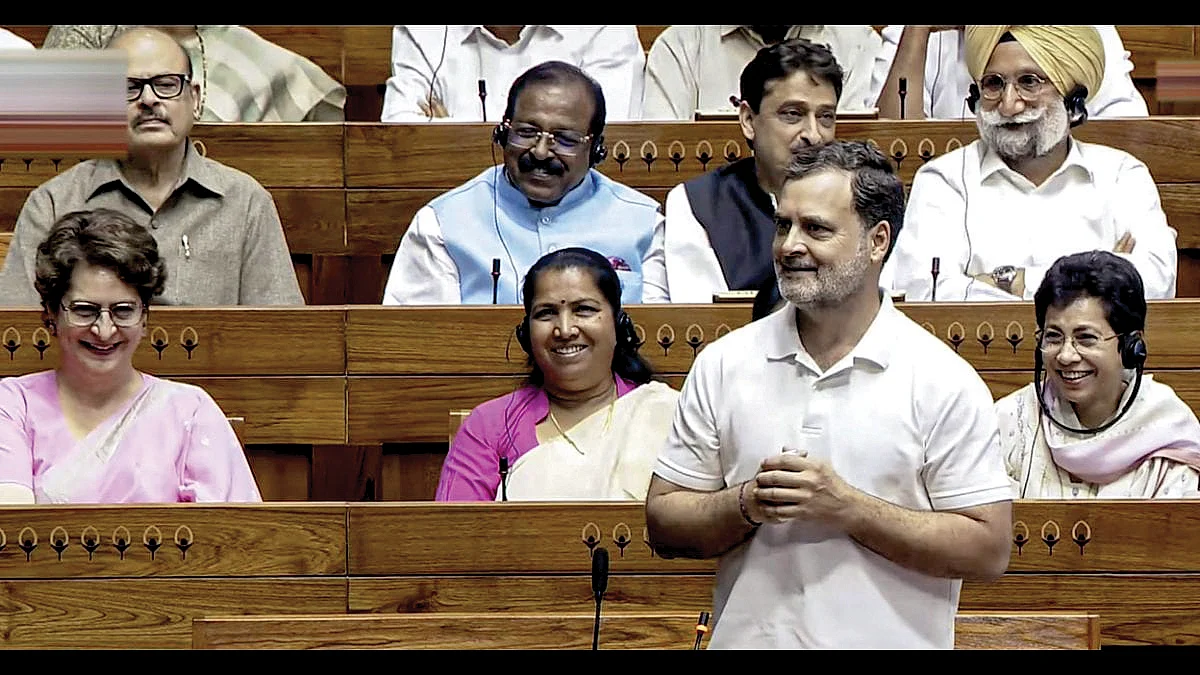
The debate in Parliament, credibly and forcefully argued by women MPs and the Leader of the Opposition, brought to the surface what was initially obscured by the rhetoric.
What’s next? If the government is genuinely committed to preserving federal balance while advancing gender justice, the path is straightforward: incorporate explicit safeguards within the law, clarify the framework for seat expansion, and address constitutional inconsistencies before implementation.
Join our official telegram channel (@nationalherald) and stay updated with the latest headlines