


ECI’s new ‘lock’ on voter deletions draws barb from Rahul Gandhi
ECI goes out of its way to insist new feature is not a knee-jerk response to Gandhi's allegations about Aland Assembly seat


The Election Commission of India (ECI) has discovered the magic of the one-time password. Barely a week after allegations of mass voter deletion attempts by Lok Sabha Leader of Opposition Rahul Gandhi in Karnataka’s Aland Assembly segment under the Bidar Lok Sabha constituency embarrassed the poll body, the ECI on Wednesday rolled out an e-verification system to “prevent misuse” of Form 7 applications that allow objections or deletions in electoral rolls.
From now on, anyone seeking removal of a voter’s name will need to validate the request with an OTP sent to their registered mobile number. In theory, this is to ensure no one mischievously files a deletion request using someone else’s name or contact.
“There could be cases where a person seeking removal of a name gives someone else's name or phone number while filing objection online. This added feature will prevent such a misuse,” an unnamed official was quoted as saying in media reports, as if the last week’s fiasco in Aland were purely hypothetical.
The ECI has gone out of its way to insist that the new feature is not a knee-jerk response to Karnataka. But numbers tell their own story. In Aland, as Gandhi showed during his press conference of 18 September where he levelled his accusations, a staggering 6,018 Form 7 applications for deletion were submitted online. After verification, only 24 were deemed genuine. The remaining 5,994 were baseless.
Put bluntly, more than 99 per cent of applications were bogus. Yet, until the spotlight turned on Aland, the ECI appeared blissfully unaware of its own porous safeguards.
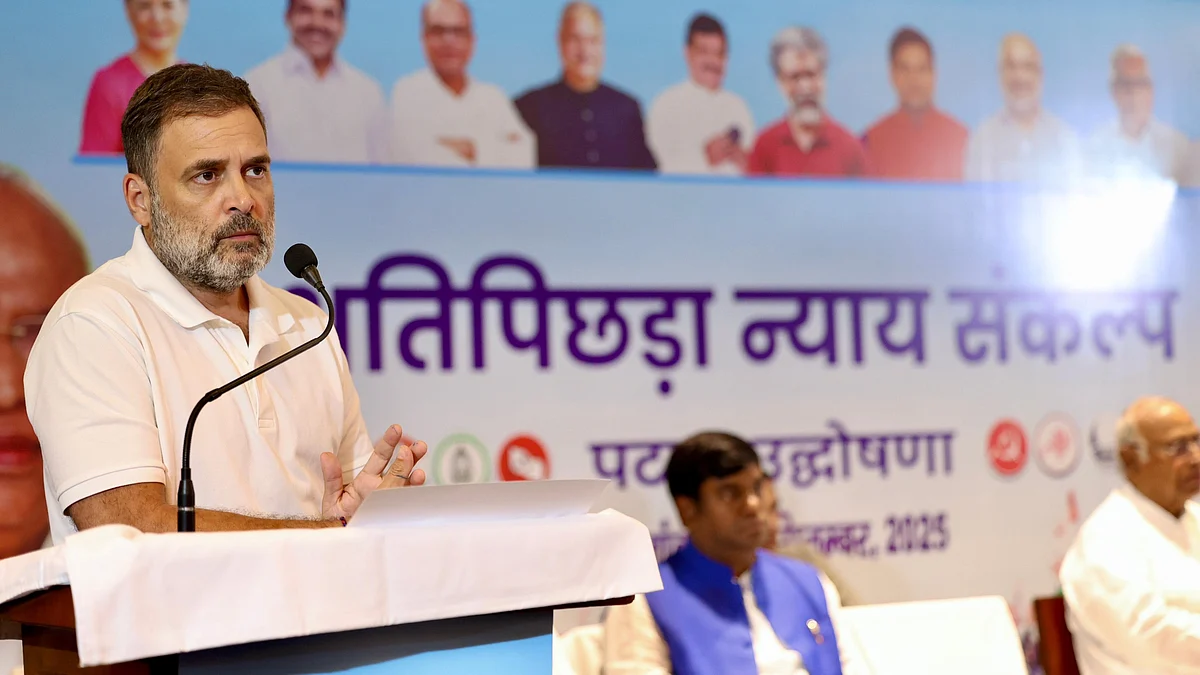
Gandhi wasted no time in connecting the dots. In a post in Hindi on X, he suggested that the EC had “locked the house only after the theft was caught.”
“Gyanesh ji, we caught the theft and only then did you remember to put a lock — now we’ll catch the thieves too,” Gandhi quipped, addressing Chief Election Commissioner Gyanesh Kumar directly in his post.
He also asked when the Commission would provide evidence to the Karnataka CID regarding the large-scale deletions as part of the latter's ongoing probe, suggesting that the new OTP measure was less a reform and more a fig leaf after the scandal.
The Commission insists the feature had been in the works for some time. But the timing — less than two weeks after Aland made headlines — leaves observers unconvinced. Critics argue the ECI is attempting to portray the change as a proactive reform when, in reality, it is damage control dressed as innovation.
After all, the logic of phone verification is not cutting-edge discovery; banking, taxation and vaccination drives have relied on OTPs for years. The fact that the ECI “found” this solution only after public embarrassment raises uncomfortable questions about whether electoral rolls were ever adequately shielded from manipulation.
The ECI’s reluctance to admit the link to Aland has drawn mockery from political observers. The sequence of events paints a familiar picture: irregularities are flagged, public outrage swells, political leaders hammer the issue, and only then does the Commission scramble to plug the leak — often without acknowledging the hole in the first place.
This is precisely what Gandhi has sought to underline. By crediting the new safeguard to his party’s intervention, he is not only taking ownership of the issue but also casting the ECI as an unwilling reformer forced into action.
With PTI inputs
Join our official telegram channel (@nationalherald) and stay updated with the latest headlines