


Parliament review: Who noticed the Opposition get the better of BJP?
Increasingly poor media coverage of Parliament reflects indifference of the govt and attempt to deny Opposition exposure
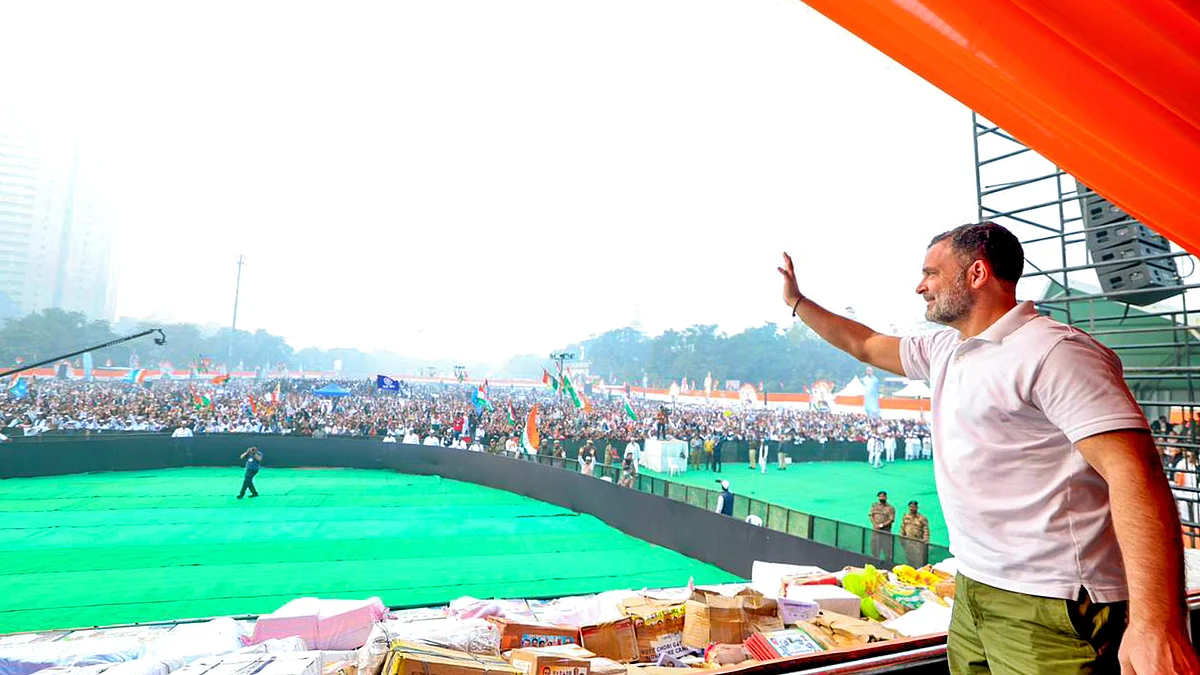


It came as no surprise when mainstream media in the national capital ignored the impressive Congress rally against ‘vote chori (theft)’ at the Ramlila Maidan in Delhi. Not only were perfunctory reports buried inside, virtually every newspaper, news agency and TV news channel across the country refrained from showing the crowd of Congress supporters. The same ‘boring’ still picture of Congress leaders standing together on stage were used by most of them. This was anticipated, of course.
Similarly, the media took scant notice of the pathetic performance of the government in Parliament last week. Parliamentary coverage in the media has virtually come to a standstill in the last several years, and even the Question Hour, which last week elicited the reply that public-sector banks had written off Rs 6.5 lakh crore of loans in the last five years, is no longer newsworthy.
The media also ignored the poor attendance on the treasury benches during the debates. Indeed, the Rajya Sabha had to be adjourned for 15 minutes because no cabinet minister was present even when the chair called them to lay papers in the House.
No wonder people are being deprived of the opportunity to watch the performance of their elected and unelected representatives. To cite just two instances from last week would hopefully drive home the point.
The government last week insisted on a ‘debate’ in Parliament on our national song Vande Mataram on the 150th publication anniversary of the novel Anandamath, which contained the song, though it was written earlier. The Opposition also insisted on a debate on the ongoing SIR (Special Intensive Revision) of electoral rolls, but agreed to a discussion on electoral reforms instead.
Vande Mataram was, in fact, discussed in both Houses of Parliament intermittently for five days. Initiating the debate, Prime Minister Narendra Modi claimed that the Congress, which was formed in 1885, had divided the song and the ‘division’ led to the Partition of Bengal.
What he meant was the decision of the Congress Working Committee in 1937, 10 years before Partition, to adopt the first two stanzas of the poem written by Bankim Chandra Chattopadhyay as the national song.
What he failed to mention was that 'Bankim da’, as the PM called the late poet and novelist, was himself responsible for the ‘division’, writing the first two stanzas several years before adding two more stanzas in 1875 while including it in the novel.
Union home minister Amit Shah and outgoing BJP president J.P. Nadda claimed that it was Jawaharlal Nehru who had a poor opinion of the poem, had insulted the national song, and was responsible for dropping the last two stanzas added for the sake of the novel. It was left to Opposition leaders like Priyanka Gandhi Vadra, Jairam Ramesh, Akhilesh Yadav, Mahua Moitra and Sanjay Singh, among others, to give the BJP a history lesson.
They tutored the treasury benches on how it was Rabindranath Tagore who made the song popular, scored the music, and actually sang the song at the Congress session in 1896. The words 'vande mataram' became a war cry against the British in 1905, when attempts were first made to divide the Bengal Presidency. The song itself was banned and thousands of men, women and even children were detained for singing it. Every Congress session thereafter began with the song.
Opposition leaders also schooled NDA speakers on the fact that it was on the Tagore's advice that the CWC adopted the first two stanzas as the national song. Tagore had pointed out that the two later stanzas, in keeping with the context of the novel, contained words which may seem hurtful to Muslims.
They also pointed out that after Independence, the government had shortlisted three stirring songs for adoption as the national anthem. Saare Jahan Se Achha by Allama Iqbal was dropped because of his passionate support for a separate Pakistan, and because he chose to migrate to the new nation.
The other two songs were adopted as the national anthem and the national song, both treated on an equal footing. Jana Gana Mana…was preferred as the national anthem because its tune was more easily adaptable as a marching song by military bands.
During the discussion on electoral reforms too, the best the ruling coalition could do was to accuse the Congress and the Opposition of being guilty of stealing elections. Neither a point-by-point rebuttal of the charges levelled by the Opposition, nor any constructive ideas and suggestions to make elections more impartial and robust was forthcoming from the treasury benches.
Shah in fact lost his cool while speaking, used a cuss word, and angrily said that he would not be dictated by Lok Sabha Leader of Opposition Rahul Gandhi. He would say, Shah declared, what he had to say at a time of his choosing.
In any case, Shah did not answer the three questions put to him by Gandhi:
a) Why did the government find it necessary to remove the Chief Justice of India from the collegium which appoints election commissioners?
b) Why were election commissioners granted immunity from civil and criminal prosecution even after retirement just before the Lok Sabha elections in 2024?
c) Why the hurry to do away with the rule that allowed the election commission to preserve and share CCTV footage of polling for up to a year?
Shah also kept quiet on why electoral rolls in machine-readable formats are not shared with political parties, on an independent audit of the architecture of EVMs (electronic voting machines) and on why BJP leaders and workers were allowed to cast their votes in more than one state.
Join our official telegram channel (@nationalherald) and stay updated with the latest headlines