


Voter roll hearings in Bengal trigger distress among elderly and vulnerable
As the second phase of SIR unfolds, scenes at block offices reveal a widening gap between administrative intent and human cost
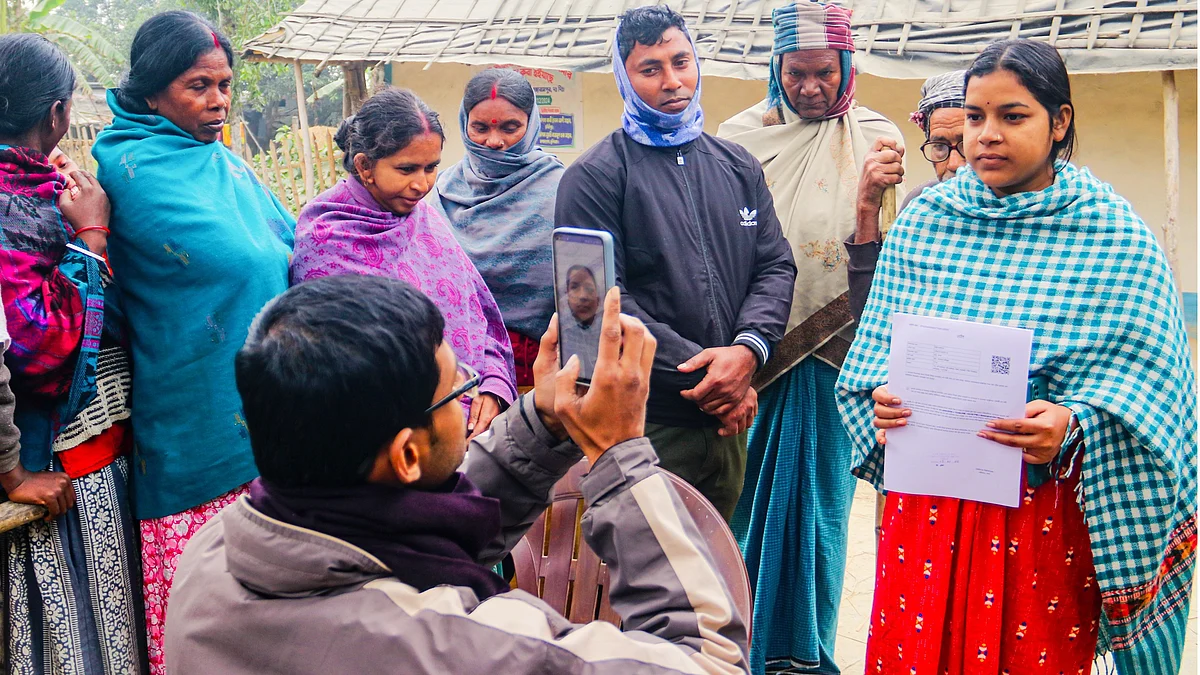


As the second phase of the Special Intensive Revision (SIR) of electoral rolls gathers momentum in West Bengal, block offices across the state are becoming sites of anxiety and distress. What was conceived as a technical verification exercise has, on the ground, turned into a deeply emotive public issue, with elderly, disabled and economically vulnerable voters enduring physical hardship, long journeys and loss of livelihood to establish their status as “legitimate” electors.
From rural districts to urban centres, hearing venues have witnessed scenes that critics say undermine claims of a routine clean-up of voter lists. Octogenarians arriving on stretchers or leaning heavily on relatives, persons with disabilities struggling to navigate office premises, and daily wage earners skipping work out of fear that their names could be struck off have sharpened political fault lines ahead of the 2026 assembly elections.
In Paschim Medinipur’s Debra block, 87-year-old Sneholata Bhakta travelled 32 km by car for her hearing. Seeing her frail condition, the block development officer verified her documents inside the vehicle and allowed her to leave. “Why should I spend money and suffer so much just to prove I am a voter?” she asked.
Nearby, 65-year-old Jharna Das, seriously ill and unable to walk, was carried into the hearing centre in her brother’s arms. “If we didn’t come, her name might be deleted,” he said. “That fear leaves no choice.”
Fear, rather than confusion over paperwork, has emerged as the dominant factor driving attendance. Notices warning of deletion, combined with uncertainty around timelines for home verification, have compelled even those physically incapable of travel to appear in person.
Dipankar Das, blind since birth, was summoned despite his name appearing in the 2002 electoral rolls. With assistance, he navigated the block office. “I cannot see. I walk very carefully,” he said. “Still, I had to come.”
The absence of names from the 2002 rolls has become a recurring trigger for summons, disproportionately affecting migrant workers, urban tenants, women who changed residence after marriage, and elderly voters who were outside their home districts at the time.
In one instance from south Kolkata’s Garfa area, a 78-year-old retired central government employee travelled nearly 150 km to Dantan after discovering his name missing from the older list. “The officials behaved properly,” he said. “But such a journey is extremely difficult at this age.”
For daily wage earners, the cost has been immediate and tangible. Shyamal Kotal, a mason from Narayangarh, forfeited a day’s income to attend his hearing. “My family survives on my daily wages,” he said. “But losing my vote would be even worse.”
In Purulia’s Balarampur block, Shyam Singh Sardar, 80 per cent disabled since birth, was forced to crawl across the block office floor after being summoned, as no wheelchair was available. “At least home hearings should be arranged for people like us,” he said. “This is unbearable harassment.”
Elsewhere, in Hooghly’s Tarakeswar, a 72-year-old man collapsed while alighting from a toto to attend his hearing, suffering a head injury. The same centre also summoned an eight-month pregnant woman, despite guidelines exempting such categories. In Jalpaiguri’s Dhupguri, an ailing octogenarian couple arrived clutching voter cards and notices. “They said our names would be cut if we didn’t come,” the husband said.
The Election Commission published the draft electoral rolls on December 16 after the first phase of the SIR, with the electorate shrinking from 7.66 crore to 7.08 crore following the deletion of over 58 lakh names. The second phase, which began on December 27, involves hearings of 1.67 crore electors under scrutiny, including 1.36 crore flagged for logical discrepancies and 31 lakh whose records lack mapping.
While EC guidelines provide for home hearings and exemptions for vulnerable categories, repeated instances of physical summons have exposed gaps in implementation. Families often report receiving verbal assurances of accommodation, only to be served written notices requiring personal appearance.
The ruling Trinamool Congress has seized on these episodes, alleging that the SIR risks disenfranchising genuine voters ahead of the polls. The BJP, meanwhile, maintains that the revision is essential to ensure transparency and integrity in electoral rolls and should not be politicised.
At its core, the SIR remains an administrative exercise. On the ground, however, it has become intensely personal—measured in kilometres travelled by the infirm, wages lost by labourers, and fear etched on faces outside block offices. For a process intended to correct records, it has unsettled something less easily repaired: public confidence in the act of voting itself.
With PTI inputs
Join our official telegram channel (@nationalherald) and stay updated with the latest headlines