Art and Culture
AMU entrance: When Bashir Badr failed a viva on a couplet he himself had written
The legendary Urdu poet once failed an exam at AMU after an examiner rejected his interpretation of his own verse
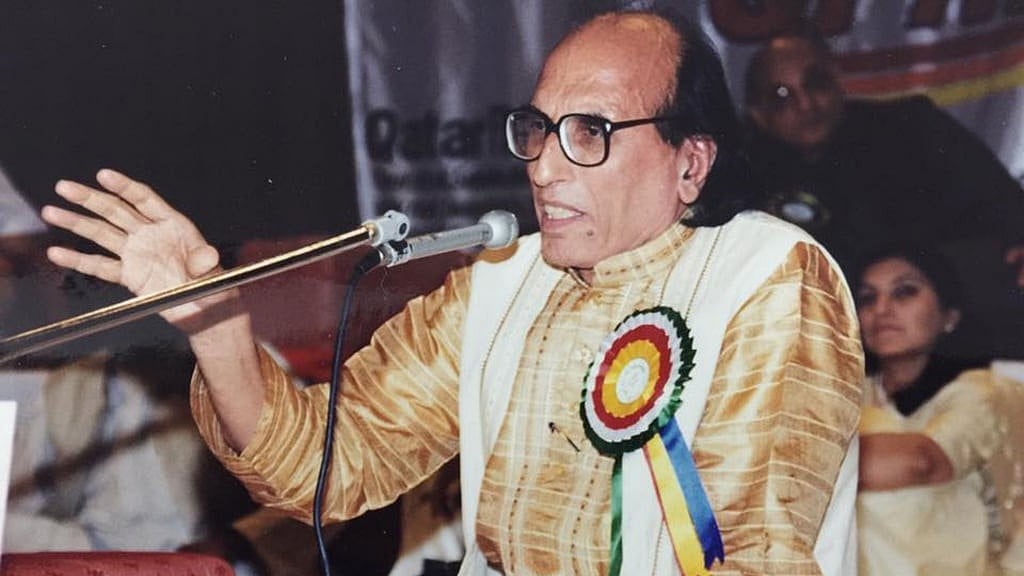
Long before Bashir Badr became one of India’s most celebrated Urdu poets, he once failed a university viva because an examiner disagreed with his explanation of a couplet — unaware that the verse had been written by Badr himself.
The veteran poet, who died in Bhopal on Thursday at the age of 91, leaves behind not only an enduring literary legacy but also stories that reflected his wit, humility and quiet sense of irony.
One such memory was recalled by his son, Tayeb Badr, who recounted the incident from the poet’s student days at Aligarh Muslim University.
Badr had enrolled for higher studies in Modern Urdu Ghazal and Literature when, during a viva examination, a professor asked him to explain the deeper meaning of a widely admired couplet:
“Ab hum milenge toh kayi log bichad jayenge, Intezar aur karo mera agle janam ka.”
(“If we meet now, many will be torn apart,
Wait a little longer, wait for me until the next birth.”)
“Abba jee explained the couplet to the examiner during the viva without telling him that he himself was the author,” Tayeb Badr told PTI.
“But to his utter surprise, the examiner completely disagreed with his explanation,” he said.
The disagreement cost the young poet his viva examination.
What later made the anecdote part of literary folklore was the irony that the examiner had effectively rejected the interpretation of the very man who had written the lines.
The couplet itself later became one of Bashir Badr’s most discussed verses because of its unconventional imagery and emotional daring.
Literary observers often described it as revolutionary for its use of “agle janam” — or “next birth” — in the context of love and longing, an expression more commonly associated with Indic philosophical traditions than conventional Islamic belief, which speaks instead of “aakhirat” or the Day of Judgment after death.
Despite the failed viva, Bashir Badr went on to become one of the most widely quoted Urdu poets in contemporary India, with his verses crossing generations and linguistic boundaries to become part of everyday conversation and popular culture.
Join our official telegram channel (@nationalherald) and stay updated with the latest headlines