Business
Adani Airports to raise Rs 9,825 crore as concerns over market concentration grow
Investment will fund airport expansion and city-side development as government weighs safeguards against operator dominance in the next privatisation round
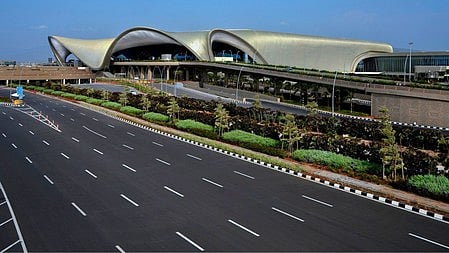
Adani Airport Holdings Limited (AAHL) on Wednesday announced plans to raise Rs 9,825 crore ($1 billion) from a group of global investors to expand its infrastructure and non-aeronautical businesses, even as the company’s growing presence in the sector renews calls for a more competitive airport privatisation framework.
AAHL, a subsidiary of Adani Enterprises Limited, has signed binding agreements with Alpha Wave Global, Premji Invest, Temasek and funds managed by BlackRock. The transaction values the airport operator at $18 billion before the infusion of fresh capital.
The company described the fundraising as one of the largest primary-equity investments by financial institutions in India’s airport infrastructure sector.
“This partnership marks an important milestone in building out the Adani Airports platform, and we are privileged to have such marquee, long-term investors alongside us on this journey,” said Jeet Adani, Non-Executive Director of AAHL.
The proceeds will be directed towards modernising and expanding infrastructure across the company’s airport portfolio. AAHL also plans to accelerate the development of integrated airport-city ecosystems, including 22 million sq. ft. of mixed-use development in the first phase.
A portion of the capital will be used to scale passenger-facing services, ground handling and other non-aeronautical operations. According to the company, these investments will enable its airports to serve 200 million passengers annually while improving passenger experience and strengthening commercial revenue streams.
AAHL currently manages eight airports and accounts for more than 23 per cent of India’s passenger traffic. Its concentration at this scale has, however, sharpened the policy debate over whether future airport privatisation rounds should include limits on the number of assets awarded to a single bidder.
However, concerns stem partly from the 2018 privatisation round, when Adani Enterprises secured all six airports offered by the government after emerging as the highest bidder for each. The outcome led to widespread criticism that the auction design had allowed a major portfolio of public assets to be transferred to one operator without adequate safeguards to ensure wider participation.
Among the new airports under Adani, the Navi Mumbai International Airport, a greenfield project, is facing a serious last-mile connectivity problem even months after its launch in late April.
Passengers in social media posts currently contend with inflated fares, inadequate availability of app-based taxis, a disorderly token system and limited public bus services, particularly after 11 pm. With passenger traffic expected to go up with time, the airport needs to urgently strengthen its ground transport network to ensure a reliable and affordable journey beyond the terminal.
The issue of a single entity operating multiple airports has gained urgency after Jeet Adani indicated that the group would compete aggressively in the next round of airport privatisation.
The government could also consider a framework under which airports would be offered in regional blocks and each bidder could secure no more than two blocks, representing four airports. If the same company submitted the highest bid for another block, the second-highest bidder could be allowed to match the winning offer.
The proposal is intended to broaden participation and prevent excessive concentration while retaining competitive price discovery. Smaller airports may also be bundled with larger facilities in the same region to improve their commercial viability.
Representatives of the civil aviation and finance ministries and NITI Aayog are as per an Economic Times report involved in examining the structure, while final clearance will be required from the Public-Private Partnership Appraisal Committee.
There is, however, no agreement within the government on imposing bidder limits. Finance ministry officials have reportedly cautioned that restrictions could prompt participants to submit more conservative bids, potentially reducing the proceeds generated from the privatisation exercise.
The 2018 round has delivered substantial financial returns to the Airports Authority of India, which earns more than Rs 700 crore annually from the privatised assets. Policymakers therefore face the challenge of balancing revenue maximisation with competition, operational diversity and long-term resilience in a strategically important infrastructure sector.
Safeguards used in international airport auctions are also being examined. Brazil, for instance, has previously introduced restrictions aimed at preventing a single operator from securing a dominant share of privatised assets.
The next privatisation exercise forms part of the government’s National Monetisation Pipeline 2.0, which targets Rs 27,500 crore from the civil aviation sector through the financial year ending March 2030.
AAHL, meanwhile, has set its sights on becoming the world’s largest airport platform.
“We will continue to build capabilities within AAHL to scale it into the world’s largest airports platform,” said Arun Bansal, Chief Executive Officer of AAHL, citing India’s growth prospects, rising consumer spending and the economic potential of city-side developments.
The fundraising follows Adani Enterprises’ Rs 15,000-crore qualified institutional placement in July 2026, described as India’s largest such offering by a non-financial company.
With IANS inputs
Join our official telegram channel (@nationalherald) and stay updated with the latest headlines