Business
Trump proposes tariffs on 14 trading partners, with India facing up to 25%, China 20%
New Delhi rejects Washington’s claim of excess manufacturing capacity and pushes for an early trade deal that would cap the proposed levy on Indian goods at 17%
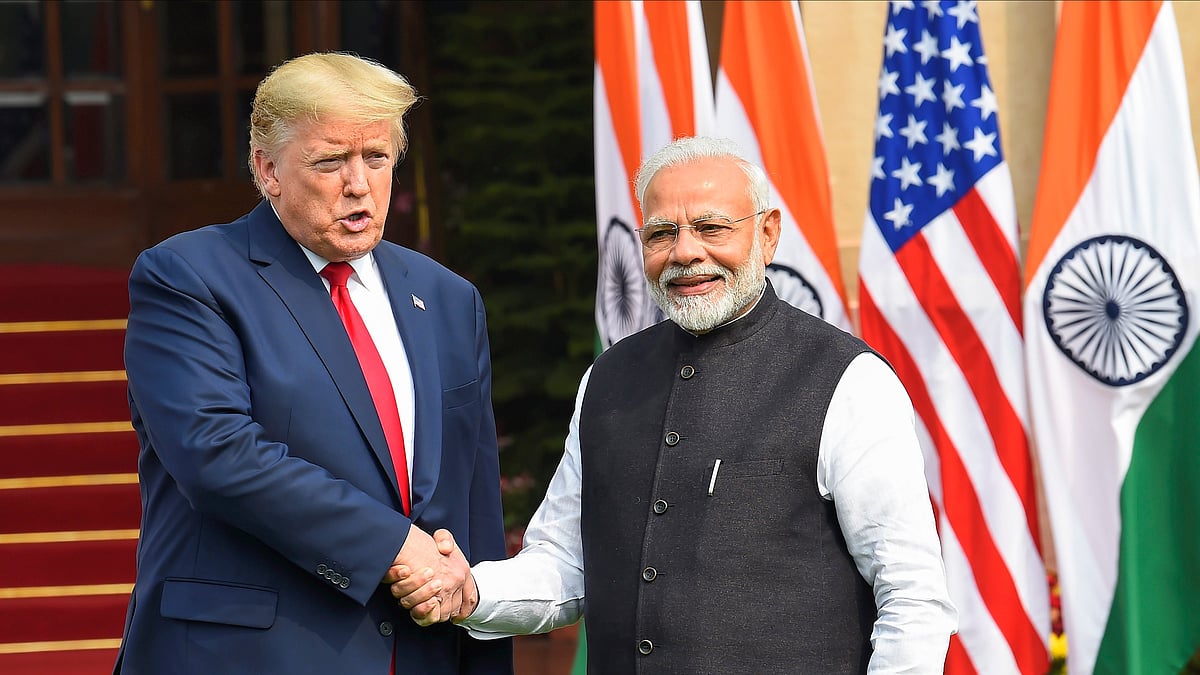
The US has proposed tariffs of up to 25% on imports from India, with a 17% cap if New Delhi and Washington conclude a bilateral trade deal
India rejected the US claim of structural excess manufacturing capacity and said it was reviewing the proposal while working towards an early agreement
China faces a proposed 20% levy on top of existing duties. The European Union, Japan and South Korea are also among the 14 trading partners targeted
The Trump administration on Wednesday proposed fresh tariffs on 14 trading partners, with India facing duties of up to 25 per cent and China a new 20 per cent levy. New Delhi rejected Washington’s claim that India had structural excess manufacturing capacity and said it would work closely with the US to conclude a bilateral trade agreement at the earliest.
The US proposal would cap the tariff on Indian goods at 17 per cent if the two countries reach a deal. That would put the levy eight percentage points below the proposed maximum, potentially giving Indian exporters an edge over some Asian competitors.
The commerce ministry said it was examining the US Trade Representative’s formal notice, which sets out its findings and invites comments. The notice covers the policies and practices of 14 economies that Washington says contribute to excess industrial production and give their manufacturers an unfair advantage.
Why Washington is proposing new tariffs
The proposals follow an eight-month investigation led by US Trade Representative Jamieson Greer. The inquiry began after the US Supreme Court struck down President Donald Trump’s sweeping global tariffs in February.
Washington conducted the probe under Section 301 of the Trade Act of 1974, which allows the US to impose tariffs and other measures in response to trading practices it considers unreasonable or discriminatory.
Alongside India and China, the proposed measures cover the European Union, Bangladesh, Cambodia, Indonesia, Japan, Malaysia, Singapore, South Korea, Switzerland, Taiwan, Thailand and Vietnam. The inquiry covered 16 trading partners. Investigations into Mexico and Norway are continuing.
Gregory Shaffer, a professor of international law at Georgetown University Law Center, told Al Jazeera that the administration’s use of Section 301 would give the president broad discretion to set and change tariffs, weakening Congress’s authority over taxation.
China faces an additional 20 per cent levy
The proposed 20 per cent tariff on Chinese goods would come on top of duties of roughly 25 per cent imposed during Trump’s first term. About $30 billion worth of Chinese imports being considered for tariff reductions through the bilateral Board of Trade would be exempt from the new levy.
Washington has long argued that Chinese industrial subsidies have fuelled low-cost exports of steel, electric vehicles and solar products. Chinese Foreign Ministry spokesperson Guo Jiakun rejected the overcapacity claim and called for stable relations between the world’s two largest economies.
European Commission spokesperson Olof Gill said the EU would review the preliminary findings and disputed Washington’s claim that Europe was a source of structural overcapacity. Switzerland also rejected the US findings. Norwegian Foreign Minister Espen Barth Eide welcomed his country’s exclusion from the current proposals and said its companies produced in response to market demand.
Rachel Ziemba, an adjunct senior fellow at the Center for a New American Security, told Al Jazeera that the mid-December G20 summit could provide an opening for negotiations. She said the tariff proposals also raised the risk of inflationary pressure and economic volatility in 2027.
US proposes separate duties on Brazilian aircraft and sugar
In a separate move, the White House proposed a 10 European Commission spokesperson Olof Gill said the EU would review the preliminary findings and disputed Washington’s claim that Europe was a source of structural overcapacity. Switzerland also rejected the US findings. Norwegian Foreign Minister Espen Barth Eide welcomed his country’s exclusion from the current proposals and said its companies produced in response to market demand.
Rachel Ziemba, an adjunct senior fellow at the Center for a New American Security, told Al Jazeera that the mid-December G20 summit could provide an opening for negotiations. She said the tariff proposals also raised the risk of inflationary pressure and economic volatility in 2027.
Nasdaq and S&P 500 fall as markets weigh tariff news
US stocks ended mixed. The technology-heavy Nasdaq Composite fell more than 4 per cent in early trading before closing 0.6 per cent lower. The S&P 500 slipped 0.25 per cent, while the Dow Jones Industrial Average reversed earlier losses to finish 0.3 per cent higher.
Gold fell more than 3 per cent to its lowest level in more than a year as investors also weighed a 0.3 per cent rise in a key US inflation gauge. The yield on the 10-year US Treasury note fell 6.8 basis points to 4.834 per cent, while Germany’s 10-year bond yield dropped 4.5 basis points to 3.2 per cent.
With agency inputs
Join our official telegram channel (@nationalherald) and stay updated with the latest headlines