Business
Indian auto retail sales hit record high in FY26, near 3 crore milestone
Strong growth across segments driven by affordability gains and rising rural and urban demand
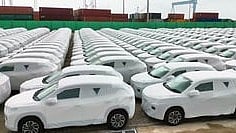
India’s automobile retail sector recorded its strongest-ever annual performance in FY26, with total sales reaching 2,96,71,064 units, marking a year-on-year growth of 13.30 per cent, according to data released by Federation of Automobile Dealers Associations (FADA).
The figures bring the domestic auto market close to the significant milestone of 3 crore units in a single financial year, a level that appeared out of reach just a few years ago.
FADA president C.S. Vigneshwar said the year’s performance stood out for its structural strength, supported by improved affordability, rising mobility demand across both urban and rural markets, and a more diverse mix of vehicle powertrains.
Across segments, five out of six categories achieved record annual sales. Two-wheelers led the recovery, surpassing their pre-pandemic peak with over 2.14 crore units sold, reflecting a 13.40 per cent increase. The segment’s growth was aided by better affordability following tax changes, improved rural incomes, and a wider range of offerings catering to both budget-conscious and aspirational buyers.
Passenger vehicles also posted a milestone year, crossing the 47 lakh mark for the first time with 13 per cent growth. The expansion was driven by a steady stream of new models, ongoing urbanisation, and continued consumer preference for SUVs and alternative fuel options.
Tractors emerged as the standout performer, with sales exceeding 10 lakh units for the first time and registering a robust 18.95 per cent growth. This surge was attributed to favourable agricultural conditions, including a strong monsoon, healthy rabi sowing, and improving farm economics.
Commercial vehicles also achieved record volumes, crossing the 10 lakh mark with an 11.74 per cent increase, supported by infrastructure-led freight demand and strong performance in the medium commercial vehicle segment. Three-wheelers recorded their third consecutive annual high, growing 11.68 per cent, with electric vehicles now accounting for more than 60 per cent of the segment’s retail sales.
Construction equipment was the only category to see a decline, falling 11.70 per cent due to project delays and a high base effect.
According to Vigneshwar, a key inflection point came in September with the rollout of GST 2.0, which reduced the effective tax burden on mass-market two-wheelers, small cars, three-wheelers and select commercial vehicles. This improved affordability at a time when consumer demand was already strengthening.
Rural demand continued to close the gap with urban markets during the year. Overall rural retail grew 13.05 per cent compared with 13.62 per cent in urban areas. In the passenger vehicle segment, rural growth significantly outpaced urban demand, rising 17.12 per cent versus 10.43 per cent.
Looking ahead, the near-term outlook remains stable, although the market is expected to enter a phase of consolidation following a strong finish to the financial year. FADA’s dealer survey indicates that 50.56 per cent expect growth in April, while 40.15 per cent anticipate flat performance, suggesting a period of normalisation rather than slowdown after record-breaking sales.
With IANS inputs
Join our official telegram channel (@nationalherald) and stay updated with the latest headlines