Business
Limited strategic stockpiles, slow expansion add to India’s energy security concerns
According to a report by The Print, India currently has strategic petroleum reserves sufficient for about nine to ten days of consumption
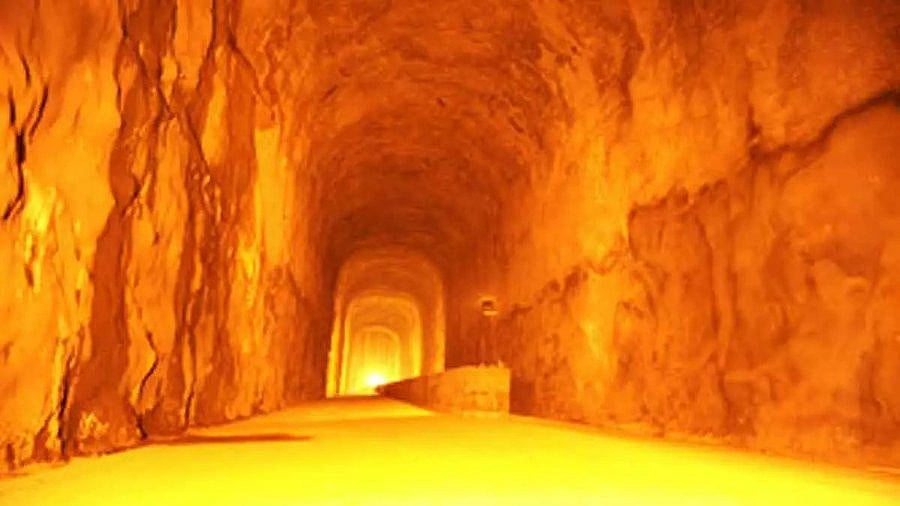
India’s crude oil reserves have come under renewed focus amid escalating tensions in West Asia, with a report by ThePrint highlighting concerns over the country’s preparedness to handle prolonged supply disruptions.
According to the report, India currently has strategic petroleum reserves sufficient for about nine to ten days of consumption, with an additional 64–65 days of crude held by state-run refineries in commercial inventories. Despite this combined buffer, experts say the country’s overall запас remains modest compared to other major economies.
India imports nearly 85–90 per cent of its crude oil requirements, much of it from West Asia, making it particularly vulnerable to geopolitical disruptions, especially in key shipping routes such as the Strait of Hormuz.
The report notes that while India has not yet tapped into its emergency reserves, the ongoing conflict involving Iran has renewed urgency around energy security planning. Disruptions in the region could significantly impact global oil flows, raising concerns over supply continuity.
India’s strategic petroleum reserves currently have a storage capacity of 5.33 million metric tonnes across facilities in Visakhapatnam, Mangalore and Padur, of which about 3.37 million tonnes are filled. Even with additional inventories held by oil marketing companies such as Indian Oil Corporation, Bharat Petroleum Corporation Limited and Hindustan Petroleum Corporation Limited, the запас falls short of global benchmarks.
For comparison, countries like Japan maintain reserves covering over 200 days, while China’s stockpiles are estimated to cover more than 100 days of imports. The International Energy Agency recommends reserves equivalent to at least 90 days of net imports for its member countries.
Experts cited in the report attributed India’s relatively limited reserves to a combination of high costs, bureaucratic delays and competing fiscal priorities. Although the concept of strategic reserves was introduced in the late 1990s, actual implementation progressed slowly, with the first facilities becoming operational only between 2015 and 2018.
Plans to expand storage capacity, including new facilities and upgrades under a public-private partnership model, have also faced delays due to land acquisition challenges and procedural hurdles. Even if all proposed projects are completed, total capacity would still cover only a fraction of the country’s growing demand.
The report also flags a more acute vulnerability in liquefied petroleum gas (LPG), which is used by millions of households. Unlike crude oil, India has limited strategic LPG reserves, with only a few days’ worth of запас available in underground storage facilities.
Recent policy measures, including a directive to shift households with access to piped natural gas away from LPG, are seen as efforts to manage demand and reduce pressure on supplies.
While the government has maintained that there is no immediate shortage of fuel, the findings underscore broader concerns about India’s long-term energy security, particularly at a time of rising geopolitical uncertainty and increasing dependence on imports.
Join our official telegram channel (@nationalherald) and stay updated with the latest headlines