Business
Oil prices jump after Saudi Arabia shuts key East-West pipeline
South Korea expects limited near-term supply disruption as refiners secure most of their September and October crude requirements
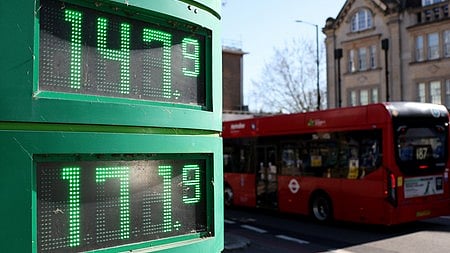
Crude oil prices rose sharply on Sunday after Saudi Arabia shut its strategic East-West pipeline following a drone attack, adding to concerns over supplies amid worsening security conditions around the Strait of Hormuz and the Red Sea.
US West Texas Intermediate futures climbed 2.8 per cent to $102.87 a barrel by 6.27 pm Eastern Time, while Brent crude, the international benchmark, gained 3.1 per cent to $107.87 a barrel.
Drones launched from Iraq damaged the East-West pipeline on Thursday, forcing Saudi authorities to suspend operations. Riyadh has not revealed the extent of the damage or indicated when the pipeline could reopen.
The pipeline, which can transport seven million barrels of crude a day, connects Saudi Arabia’s oil-producing areas near the Persian Gulf with export terminals on the Red Sea coast. It has become an important alternative route as the conflict involving Iran and the United States disrupts shipments through the Strait of Hormuz.
Saudi Aramco chief executive Amin Nasser said during the company’s August earnings call that the pipeline had played a greater role in stabilising oil markets than the large-scale release of strategic reserves led by the United States.
Despite the shutdown, South Korea expects only a limited impact on its oil supply in the immediate term. The Ministry of Trade, Industry and Resources said domestic refiners had secured more than 90 per cent of their crude requirements for September and October, based on the previous year’s levels.
The ministry held talks with oil refiners and other businesses to assess the consequences of the pipeline attack and the broader escalation in the West Asia. It said the government would monitor supply conditions and support shipping companies seeking alternative routes.
“The government will communicate closely with oil refiners and maritime shippers while closely monitoring supply conditions to prevent any inconvenience to the public,” Vice Industry Minister Moon Shin-hak said.
South Korea is also prepared to use policy measures such as crude oil swaps with private companies if supply pressures intensify, he added.
Meanwhile, a diplomatic meeting between Iran and Gulf Arab states, which was due to take place in Oman on Monday to discuss the situation in Hormuz, was postponed following the pipeline attack.
Omani Foreign Minister Badr Albusaidi said the regional meeting in Salalah had been deferred “in the interests of consensus”, while reaffirming Oman’s commitment to dialogue and regional stability.
Maritime security concerns deepened on Sunday after another tanker was attacked and a major fire broke out on board, according to the United Kingdom Maritime Trade Operations centre.
Saudi Arabia has also faced a series of attacks by Iran-aligned armed groups. Houthi militants in Yemen struck energy facilities and other civilian sites in the kingdom early last week, injuring more than 70 people, according to Saudi state media.
The Houthis have reportedly captured the strategic Perim Island in the Bab el-Mandeb Strait after taking the Yemeni port city of Mokha. Control of these locations could strengthen the group’s ability to disrupt shipping through the waterway connecting the southern Red Sea with international markets. The group had declared a maritime embargo on Saudi Arabia in July.
Against this backdrop, South Korea and the United States will hold their biannual Integrated Defense Dialogue in Busan from Wednesday to Friday. The talks are expected to cover security issues including Seoul’s possible military deployment to the Strait of Hormuz, the transfer of wartime operational control, the allies’ joint defence posture and shipbuilding cooperation.
With IANS inputs
Join our official telegram channel (@nationalherald) and stay updated with the latest headlines