Business
Sunday sell-off erases Rs 6 lakh crore after Budget raises derivatives tax
Higher securities transaction tax on futures and options triggers broad sell-off, hits brokerages and benchmarks
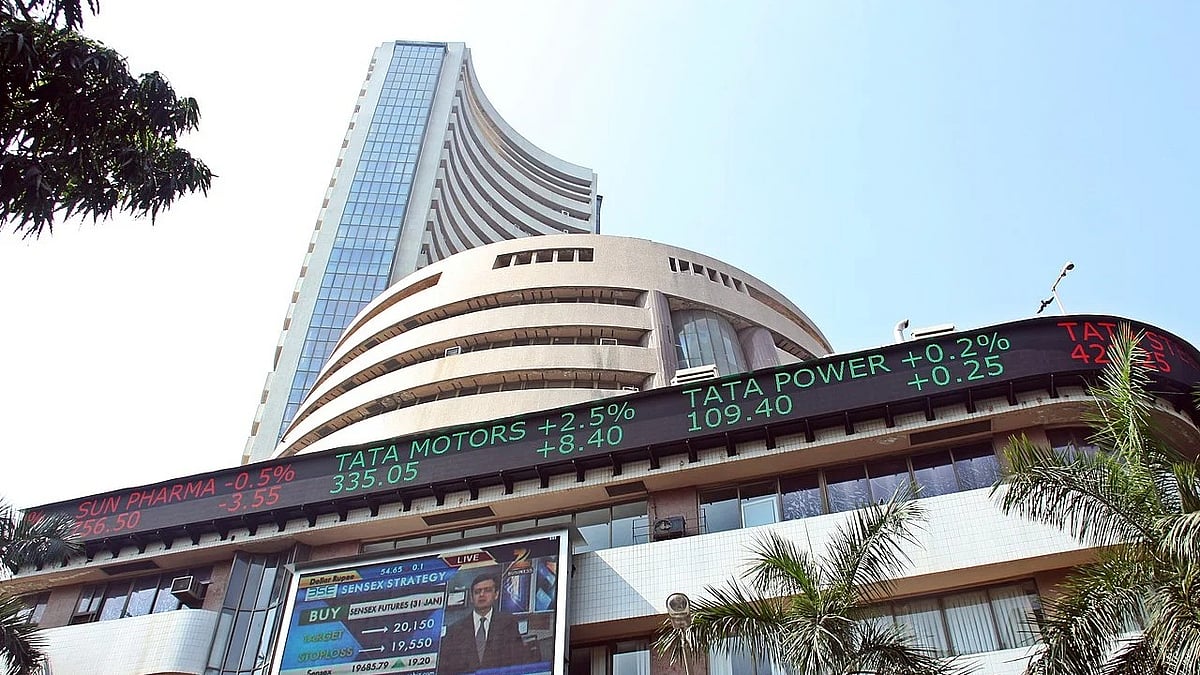
Indian equity markets fell sharply during a special trading session on Sunday after finance minister Nirmala Sitharaman announced an increase in the securities transaction tax (STT) on futures and options in the Union Budget 2026, sparking heavy selling in derivatives-linked stocks.
The BSE Sensex was down 1,004 points, or about 1.2 per cent, at 81,265, while the Nifty slipped 330 points to 24,990 around 12:35 pm. The sell-off wiped out nearly Rs 6 lakh crore in investor wealth, with the total market capitalisation of BSE-listed companies falling to Rs 453.87 lakh crore.
Under the Budget proposals, STT on futures contracts has been raised to 0.05 per cent from 0.02 per cent. The levy on options premiums has been increased to 0.15 per cent from 0.10 per cent, while the tax on exercised options will rise to 0.15 per cent from 0.125 per cent.
Market participants said the changes represent a significant rise in trading costs for derivatives investors and could slow activity in a segment that has expanded rapidly in recent years. Futures and options trading has become a major revenue driver for stock exchanges and retail brokerages, making the sector particularly vulnerable to policy shifts.
Shares of brokerage firms and exchanges led the decline. BSE Ltd, Groww parent Billionbrains Garage Ventures and Angel One fell by as much as 13.5 per cent as investors reacted to the higher tax burden. BSE slipped to an intraday low of Rs 2,517.30, while Angel One dropped to Rs 2,284.70.
“The steep increase in STT on futures and options, following last year’s hike, is likely to raise impact costs for traders, hedgers and arbitrageurs,” said Shripal Shah, managing director and chief executive of Kotak Securities. “This could cool derivative activity and reduce volumes. The intent appears to be moderation of volumes rather than revenue maximisation.”
Losses were not confined to brokerage stocks. Heavyweights such as Reliance Industries fell around 2.5 per cent, while State Bank of India declined about 5 per cent, adding to the pressure on benchmark indices.
The sharp market reaction underscores investor concerns that higher levies on derivatives trading could dampen participation in one of the most active segments of India’s capital markets.
With agency inputs
Join our official telegram channel (@nationalherald) and stay updated with the latest headlines