Cricket
India vs Pakistan: How much does a handshake cost these days?
The optics jars when former greats of the two countries behave as cordially as ever in public gaze
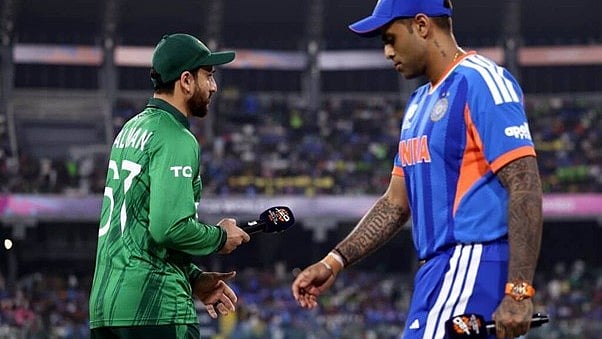
The India-Pakistan match was eventually played because money talks, but the courtesy and grace of cricket was far from being back. Contrary to the popular belief that the customary handshake among the captains or that between teams may be back in Colombo, one could almost cut through the cold vibes with a knife on Sunday.
The posturing was clear when captains Suryakumar Yadav and Salman Ali Agha stood with as much distance between themselves as possible and avoided shaking hands at the toss. A section of the media also reported on eve of the match that Jay Shah, the ICC chairman and Mohsin Naqvi, the head honcho of Pakistan Cricket Board (PCB) and interior minister of the country, will be sitting at one Hospitality Box to talk their way out of a possible thaw of relationship – but nothing like that transpired, at least in public gaze.
The no-handshake policy, started by the Men in Blue during the last Asia Cup and the justification from Surya and head coach Gautam Gambhir was surely an example of weaponizing of the players. A continuity of the same – certainly with directives from powers that-be – indicate that there has been no change in India’s position. It’s a no-brainer that it’s their way of answering to Pakistan’s ploy of trying to hold the T20 World Cup to ransom with a selective boycott of the ‘big game’ and an attempt at scoring brownie points by creating a situation which demanded a part of the ICC top brass visiting Lahore.
The call was India’s to make a departure from the practice during their last three meetings – as Salman made it clear in their press conference that he would be open to do it and cricket should be played in the 'right spirit.' It is learnt that the PCB had actually set a term on the table for ICC chairman Usman Khawaja to get the two teams back to shaking hands, but India was clearly in no mood to oblige.
‘’This no shaking hands is such a silly thing that India has started,” said former India batter Sanjay Manjrekar on X. One of the rare dissenting voices, the former international and TV pundit said: “It’s unbecoming of a nation like ours. Either play properly within the spirit of the game or don’t play at all.”
If Manjrekar harped on the handshake business, popular TV commentator Harsha Bhogle went a step further in a video to say he finds the prelude to such contests almost toxic now. “I’m not excited about this India vs Pakistan game. This time I fear our beloved sport is being held hostage to larger economic and political ends.
“It’s become an arrow to be fired for political gamesmanship. There are geopolitical concerns and points to be won here and there. As always, they’re adjusting the draw and people are making war-like gestures. I don’t think we enjoy this game anymore. We exploit it. And that is the reality of India against Pakistan.”
The over-leveraging of a single contest, which has ceased to be a meaningful contest for some time, is becoming rather pointless. The irony of it all lies in the double standards in practice in and around the game – which sees Wasim Akram, the sultan of swing, engage in a warm handshake and chat with Rohit Sharma, brand ambassador of this World Cup or a reunion of Saz and Waz, as the joint show between Ravi Shastri and Akram once used to be called.
Well, long will it continue to fester? Will the India-Pakistan game continue to be played just because it’s good for business? Given the one-sided nature of the recent contests, even that also is in serious question!
Join our official telegram channel (@nationalherald) and stay updated with the latest headlines