Economy
Rupee hits record low as Economic Survey flags currency ‘paradox'
India remains savings-deficient, runs a persistent current account deficit, leaving rupee vulnerable whenever global capital flows weaken
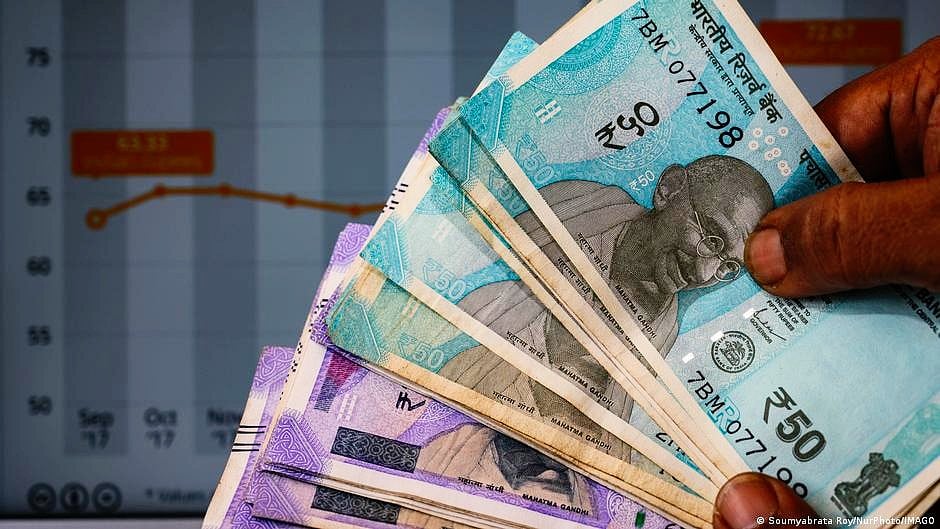
The rupee slipped to an all-time low of 92.00 against the US dollar in early trade on Thursday, 29 January. The fall came amid steady dollar demand and a cautious global mood after the US Federal Reserve kept interest rates unchanged at its first policy meeting of 2026, pushing the dollar index up from its four-and-a-half-year lows.
While the day’s market move reflected global risk aversion, the Economic Survey 2025–26, released on Thursday, offers a broader explanation for the rupee’s sustained weakness, describing it as a “paradox” in which domestic fundamentals are no longer rewarded with currency stability in an unsettled global system.
According to the survey, the rupee depreciated by around 6.5 per cent between 1 April 2025, and 22 January 2026, making it one of the weakest-performing currencies in this period. Its fall was comparable to that of the Japanese yen, which lost about 5.5 per cent, and steeper than declines seen in other Asian peers such as the Philippine peso and the Indonesian rupiah. The survey argues that the rupee is “punching below its weight”, with its valuation failing to reflect India’s robust growth and macroeconomic stability.
In the short term, the weakening has been driven by a sharp swing in the balance of payments. India moved from a surplus of $23.8 billion in the first half of FY25 to a deficit of $6.4 billion in the first half of FY26, funded largely through a drawdown of foreign exchange reserves. Tepid foreign portfolio investment flows have added to the pressure, as global investors have redirected capital toward AI-led opportunities in the US, Taiwan and South Korea.
Trade-related uncertainty has further weighed on sentiment. Market nervousness over the outcome of ongoing trade negotiations with the United States and the imposition of penal tariffs has kept investors cautious, limiting capital inflows at a time when external financing needs remain high.
The survey also points to deeper structural constraints. India remains savings-deficient and runs a persistent current account deficit, leaving the rupee vulnerable whenever global capital flows weaken. Moreover, as the fastest-growing major economy, India’s investment-led expansion has increased demand for imports such as machinery, electronics and energy, widening the trade gap. Geopolitical shifts have compounded these pressures, making traditional stabilising inflows more volatile.
Despite the slide, the survey notes that the rupee’s movement has been orderly, cushioned by foreign exchange reserves of $701.4 billion, enough to cover over 11 months of imports. It also suggests that an undervalued rupee may partially offset the impact of higher US tariffs, even as it reiterates that durable currency strength will ultimately require India to emerge as a major exporter of manufactured goods.
Join our official telegram channel (@nationalherald) and stay updated with the latest headlines