Entertainment
Asha forever: The voice that time cannot silence
Last of Hindi cinema’s golden greats, her songs endure across generations
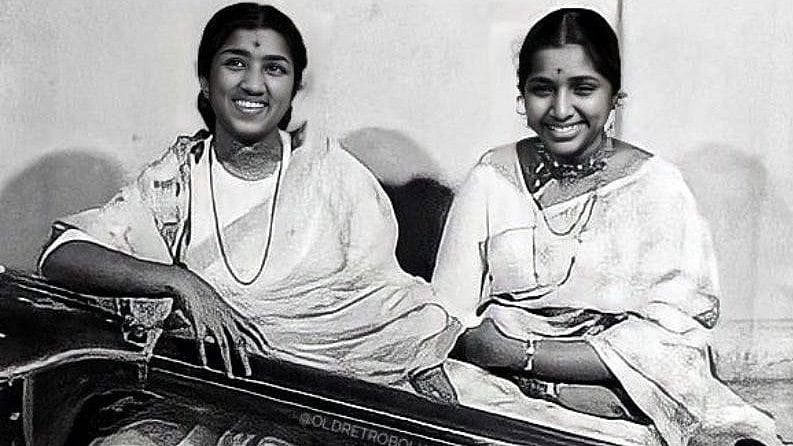
The passing of Asha Bhosle at 92 in Mumbai today, 12 April, brings to a close one of the most extraordinary chapters in the history of Indian music. She was the final surviving pillar of a golden generation of playback singers whose voices defined Hindi cinema for decades and helped shape the musical sensibilities of a nation.
Alongside her late sister Lata Mangeshkar and contemporaries Mukesh, Mohammed Rafi and Kishore Kumar, Asha stood at the centre of a musical era that dominated film soundtracks for over half a century. As the youngest among these legends, her departure marks the symbolic end of that incomparable period in Hindi film music.
Recognised by the Guinness Book of World Records as the most recorded artist in history, Asha Bhosle’s career was remarkable not just for its longevity but for its staggering range and adaptability.
Asha began singing professionally at the age of nine in 1943, stepping into the industry at a time when Lata Mangeshkar was already beginning to emerge as its most sought-after voice. Through the late 1940s and 1950s, Asha often found herself overshadowed by her sister’s towering success. While she delivered popular songs during this period, she was frequently confined to lighter compositions, particularly cabaret and dance tracks, rather than the more classically demanding repertoire often assigned to Lata.
However, the arrival of a new generation of composers gradually expanded her opportunities. Recognising the distinct tonal quality and emotional agility of her voice, they entrusted her with increasingly varied material. Over time, Asha established an identity that was unmistakably her own, stepping out from the shadow of comparison and building an enduring reputation for versatility.
Few singers have shaped a genre as decisively as Asha did the Bollywood dance number. Songs such as 'Piya Tu Ab To Aaja' from Caravan, 'Ye Mera Dil' from Don, 'Dum Maaro Dum' from Hare Rama Hare Krishna and 'O Haseena Zulfonwali' from Teesri Manzil remain benchmarks of energy, sensuality and musical precision.
During the 1960s and 1970s, Asha’s voice became almost inseparable from the screen presence of dancer Helen, with the singer lending an unmistakable vitality to many of the era’s most memorable cabaret performances. While she later explored numerous other styles, her command over rhythm-driven songs became one of her defining artistic signatures.
By the late 1970s, a perception had emerged that Asha’s strengths lay primarily in lighter or more experimental songs, while Lata retained the edge in classical or semi-classical compositions. That assumption was firmly overturned with Asha’s work in Umrao Jaan, where she delivered a series of ghazals marked by restraint, poise and emotional depth. The performance earned her her first National Film Award and critical recognition of her classical command.
Her artistic evolution continued with 'Mera Kuch Saamaan' from Ijaazat, an unconventional composition that showcased her ability to inhabit introspective and poetic material with remarkable sensitivity. By the 1980s, Asha had conclusively demonstrated that her artistry could not be confined to any single genre or expectation.
Asha Bhosle’s independence extended beyond her music. At 16, she chose to elope with Ganpatrao Bhosle, defying her family’s wishes. The marriage proved troubled and ended after several years, during which she returned to her maternal home with two young children while expecting a third. Despite the separation in 1960, she retained the surname Bhosle, which had by then become integral to her public identity.
In 1980, she married composer R. D. Burman at the age of 47, once again choosing her own path despite opposition from both families. Their creative partnership would go on to produce some of Hindi cinema’s most innovative and memorable music.
Across thousands of recordings and an unmatched diversity of styles, Asha Bhosle embodied artistic resilience and reinvention. With her passing, Hindi film music loses not only one of its most distinctive voices but also one of the last living links to a formative era whose influence continues to resonate across generations.
Join our official telegram channel (@nationalherald) and stay updated with the latest headlines