Environment
Environmental crime now world's 3rd most profitable criminal industry, INTERPOL reminds
Germany commits an additional €1.5 million as partners strengthen cross-border investigations into illegal logging, waste dumping and wildlife-related crimes
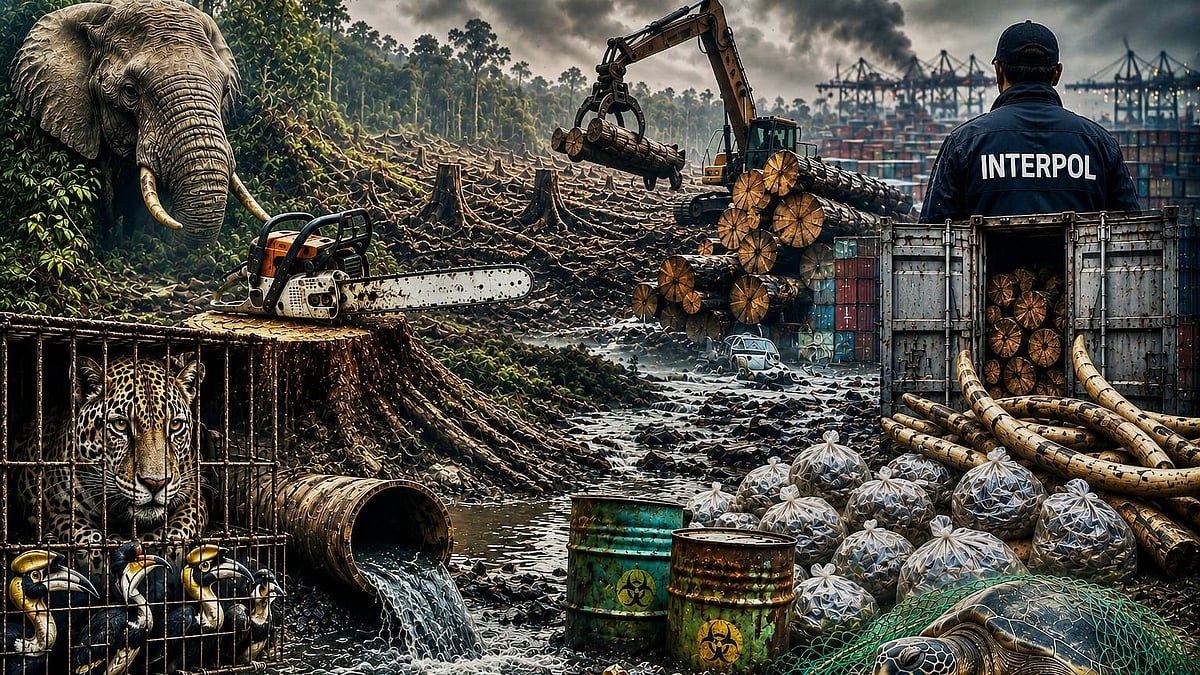
Germany's Federal Environment Ministry (BMUKN) and INTERPOL have announced an expansion of their cooperation to combat international environmental crime, committing additional funding and deeper collaboration to tackle offences ranging from illegal logging and mining to waste trafficking.
The announcement was made during the Hamburg Sustainability Conference (HSC) 2026, where policymakers, international organisations, businesses and civil society groups from the Global North and South met to discuss coordinated responses to environmental crime.
Federal Environment Minister Carsten Schneider described environmental crime as a lucrative transnational criminal enterprise that threatens ecosystems, governance and economic stability.
"Cross-border environmental crime is not a peripheral issue, but a highly profitable criminal business model. Those who illegally harvest timber, exploit raw materials or illegally dispose of waste are not only destroying the natural foundations of life on Earth, but also undermining government institutions and fuelling regional conflicts," Schneider said.
He added that environmental crime causes damage exceeding $1 trillion annually, while contributing to deforestation, pollution and the loss of biodiversity.
INTERPOL Secretary General Valdecy Urquiza said criminal networks involved in environmental offences generated hundreds of billions of dollars in illegal profits each year and stressed that international police cooperation remained essential to disrupting their operations.
He said the joint GAIA project had demonstrated the benefits of cross-border intelligence sharing, operational support and capacity building.
According to the organisations, partner countries participating in the project's first year reported more than 500 investigations and identified 262 criminal entities. Analytical work and INTERPOL's global notices system also identified another 503 entities, including trafficking routes, hotspots and criminal operating methods.
Germany's Environment Ministry announced an additional €1.5 million in funding to expand the GAIA project, which supports operational actions, forensic assistance, intelligence analysis and training for law enforcement agencies in countries across Latin America, Africa and Asia.
According to estimates cited by the ministry, environmental crime has become the world's third most profitable criminal industry after drug trafficking and counterfeiting, generating billions of dollars in illicit profits that finance organised crime and contribute to regional instability.
The BMUKN and INTERPOL have collaborated under the GAIA project since 2024. The initiative also includes the World Wide Fund for Nature (WWF), which works to protect environmental defenders and civil society organisations involved in exposing environmental crimes.
Join our official telegram channel (@nationalherald) and stay updated with the latest headlines