Environment
The Himalaya serves another warning
We continue to behave as though the mountains will endlessly absorb our mistakes. They will not. And Nepal is further proof.
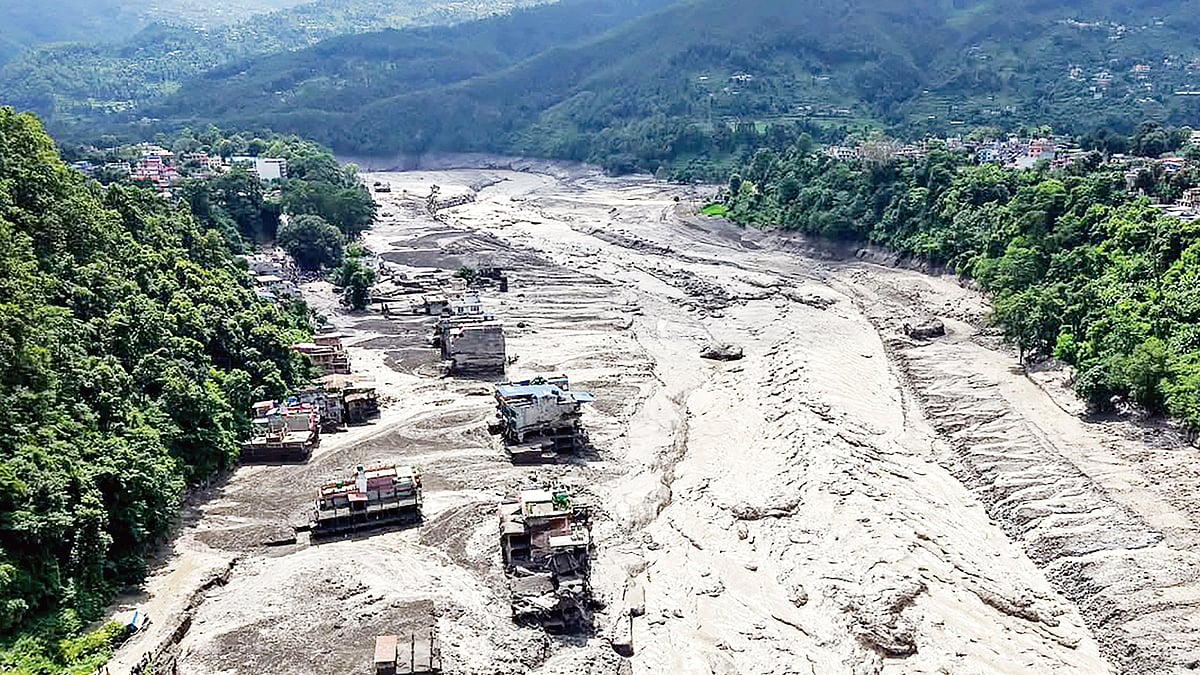
Nepal’s latest disaster is a grim warning. A sudden, deadly flood along the Nepal-Tibet border that claimed hundreds of lives is not just another act of nature. It’s a sign of a warming, destabilised and overbuilt Himalayan region.
From Kashmir to Himachal Pradesh and Uttarakhand, glaciers are retreating, glacial lakes are multiplying, slopes are being carved up for construction and fragile ecosystems are being pushed beyond their capacity.
And yet we continue to behave as though the mountains will endlessly absorb our mistakes. They will not.
The Himalayan crisis has three interconnected aspects: melting glaciers and unstable glacial lakes, pollution and sewage degrading lakes like the Dal lake, and extreme seismic vulnerability. Treating them as separate problems is a luxury we cannot afford.
A cloudburst can trigger a landslide. An earthquake can destabilise a glacial lake. A lake outburst can send water and debris into valleys already crowded with roads, bridges, hydropower projects and human settlements.
Climate change may intensify natural hazards. But policy decisions determine how destructive those hazards become.
That is why India needs an integrated Himalayan risk-management strategy. Every major glacial lake must have a scientifically assessed risk profile and a dedicated management plan. Climate, hydrology, biodiversity, water quality, glacier movement and seismic indicators must be monitored continuously — not after disaster strikes.
****
Research and data from the Department of Earth Sciences at the University of Kashmir and other institutions show that glaciers — particularly the Kolahoi Glacier, which has lost more than 22 per cent of its area — are shrinking at an alarming rate.
As temperatures rise, glacial lakes form and expand. Their threat is amplified by human activity. Indiscriminate construction, deforestation and other interventions in the Panjshir and Pir Panjal ranges have weakened ecological systems that once provided a natural buffer against extreme events.
If lake levels are not monitored in time, a glacial lake outburst flood (GLOF) could send enormous quantities of water and debris into the Jhelum Basin, threatening densely populated areas downstream.
And the crisis extends beyond glacial lakes. Kashmir’s high-altitude alpine lakes — Gangabal, Vishansar, Krishansar, Gadsar, Tarsar, Marsar, Kausarnag, Sheshnag, Satsar, Nundkol and Alpather — are vital components of the valley’s water security. Above the tree line, they collect snowmelt and rainwater and release it gradually towards rivers, wetlands and groundwater.
This natural water-security system still lacks dedicated management. Monitoring of water quality, biodiversity and climate indicators remains sporadic. Effectively, we wait for a lake to burst before realising it needed monitoring.
Climate vulnerability is only half the story. Kashmir sits on a seismic fault line. The 2025 national seismic zoning map issued by the Bureau of Indian Standards places the Himalayan arc, including Jammu and Kashmir, in the most dangerous category, Zone VI. As Indian and Eurasian plates continue to collide, major earthquakes along the Main Himalayan Thrust are a persistent threat.
The 2005 Muzaffarabad earthquake, that measured 7.6 on the Richter Scale and killed more than 80,000 people, should have been warning enough. Instead, unregulated construction on vulnerable slopes continues. Critical infrastructure, including schools and hospitals, does not always receive the seismic scrutiny such terrain demands.
****
Uttarakhand has already endured enough to expose the folly of treating every catastrophe as an isolated event. Kedarnath. Joshimath. Rishiganga — each revealed a different vulnerability, with the same underlying lesson: development ignores geology at a very high price.
According to the Wadia Institute of Himalayan Geology and other scientific organisations, more than 1,000 glacial lakes have formed in Uttarakhand’s high Himalayan regions. Many are capable of triggering flash floods. Studies cited by Doon University and environmentalists indicate temperatures have risen by as much as 1.5 to 2°C over the past three decades. Every year, major glaciers like Gangotri and Gomukh retreat by 20-30 metres.
As ice melts, unstable mixtures of rock, debris and water accumulate below glaciers. A cloudburst or even modest seismic disturbance can set this material hurtling downhill, devastating hydropower projects and settlements built along riverbanks.
****
Himachal Pradesh faces the same convergence of factors. Hydropower projects, road expansion and unplanned mountain cutting heighten the consequences of extreme weather events.
Data from the State Centre on Climate Change indicate that extreme rainfall, cloudbursts and flash floods have increased by more than 40 per cent in recent years.
The Sutlej, Beas and Chenab valleys are seeing accelerated snowmelt. In Lahaul-Spiti and Kinnaur, many of the new lakes created by rapidly retreating glaciers are held back by weak natural dams.
A recent study by the Himachal Pradesh Council for Science, Technology and Environment identified 2,292 glacial lakes in the Sutlej Basin alone: 1,335 in Tibet, 470 in Spiti and 487 in the Himachal section below Khab in Kinnaur. Forty-nine lakes cover more than 10 hectares.
If a lake in Tibet bursts, its water can travel down the Sutlej into Himachal, eventually affecting the plains of Punjab. The Chenab and Ravi basins contain another 373 glacial lakes.
The International Centre for Integrated Mountain Development (ICIMOD) has identified hundreds of lakes in the Hindu Kush Himalayan that pose significant risks. Science has tools to reduce those risks. Controlled drainage, siphoning and other engineering interventions can lower water levels in particularly dangerous lakes.
But engineering alone will not save the Himalayas. Governance must change too.
****
Originating in the Tibetan Plateau, the Brahmaputra sustains India’s northeastern states and is the economic, social and cultural backbone of the region. China’s hydropower ambitions on the Yarlung Tsangpo — their name for the river — are a growing concern for India.
The formal completion of the 510-megawatt, 116-metre Zangmu project in Tibet has implications far beyond power generation, given the river’s vital importance to Arunachal Pradesh and Assam. Tibet’s seismic vulnerability compounds the risk: an earthquake or landslide could damage the dam and unleash devastating floods downstream. In a conflict, a sudden release of water could turn the dam into a man-made ‘water bomb’ for Arunachal Pradesh. Resulting flash floods could race through the Northeast within hours.
Rivers do not recognise political boundaries; neither do floods, landslides or glaciers. Real-time data sharing and basin-level monitoring with neighbouring countries are essential. The Himalayas demand cooperation across borders, which is easier said than done.
The Himalayas have been warning us for years. We have responded with committees, compensation packages and reconstruction drives — and then gone back to business as usual.
India must rethink what it calls development in the mountains. We must stop pretending that every road, dam, tunnel, hotel and township represents progress. In an ecologically fragile mountain region, the first question must be: Can this ecosystem bear it?
If the answer is no, it is not development. It is a disaster, deferred.
The next catastrophe may begin with a melting glacier, a bursting lake, a cloudburst, a landslide or an earthquake. When it comes, we may once again call it ‘unprecedented’. But no, we have been warned. Will we have the wisdom to heed the warning before the mountains jolt us out of our indifference?
Join our official telegram channel (@nationalherald) and stay updated with the latest headlines