Environment
Ship pollution may be more harmful than road traffic emissions: Study
Scientists say ultrafine particles from cruise ship emissions can trigger inflammation in lung cells and reduce their ability to resist common viruses
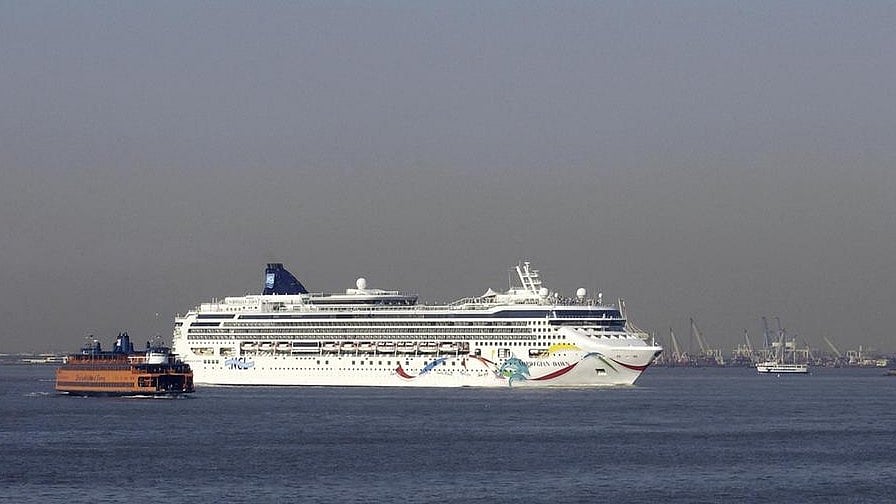
A team of 32 researchers began studying pollution around the port in 2018 and spent more than two years sampling air from different sources. Southampton is the UK's leading vehicle and deep-sea trading port, and more than 2.5 million cruise passengers passed through it in 2025.
Researchers found a distinct pollution signature downwind of the cruise terminal, containing tiny ultrafine particles and metals including vanadium, nickel, cobalt and molybdenum.
They then tested particles collected near the cruise terminal on lung cells, including cells donated by people living in Southampton. Prof Matthew Loxham of the University of Southampton, who led the research, said the particles were more capable of triggering the release of chemical signals associated with inflammation and reducing the cells' ability to prevent viruses from replicating.
Further tests suggested that vanadium particles were responsible for the inflammatory effects and reduced ability to resist common viruses.
The researchers also found a clear relationship between levels of ultrafine vanadium detected downwind of the cruise terminal and the number of cruise ships in port.
Loxham said vanadium becomes concentrated in heavy fuel oil during the refining of crude oil. When ships burn heavy fuel oil, some of the metal vaporises and is released through exhaust emissions.
Dr Nat Easton, one of the researchers, said she was surprised by the higher concentrations of vanadium and nickel in particles associated with cruise ships compared with those from container ships.
Cruise ships can carry more than 5,000 passengers and may keep their engines running while berthed to provide heating, hot water, lighting and cooking.
Associated British Ports (ABP), which operates Southampton, said it was taking steps to improve air quality. The port was the first in the UK to introduce large-scale shore-power connections, allowing vessels to switch off their engines while berthed. About 15% of cruise ships currently use shore power.
However, ABP raised concerns about aspects of the study's methodology and the strength of some conclusions presented to the media.
Researchers also acknowledged that there are currently no measurements showing how far ultrafine particles or vanadium spread from the port. Easton said neither ultrafine particles nor their chemical composition are routinely monitored.
A new EU directive will require measurements of ultrafine particles around pollution hotspots including ports and airports, but the requirements do not apply to the UK.
Join our official telegram channel (@nationalherald) and stay updated with the latest headlines