Environment
The battle over Mekedatu
It’s more than a dispute over a dam; it’s really a debate about how India intends to manage rivers in an increasingly uncertain future
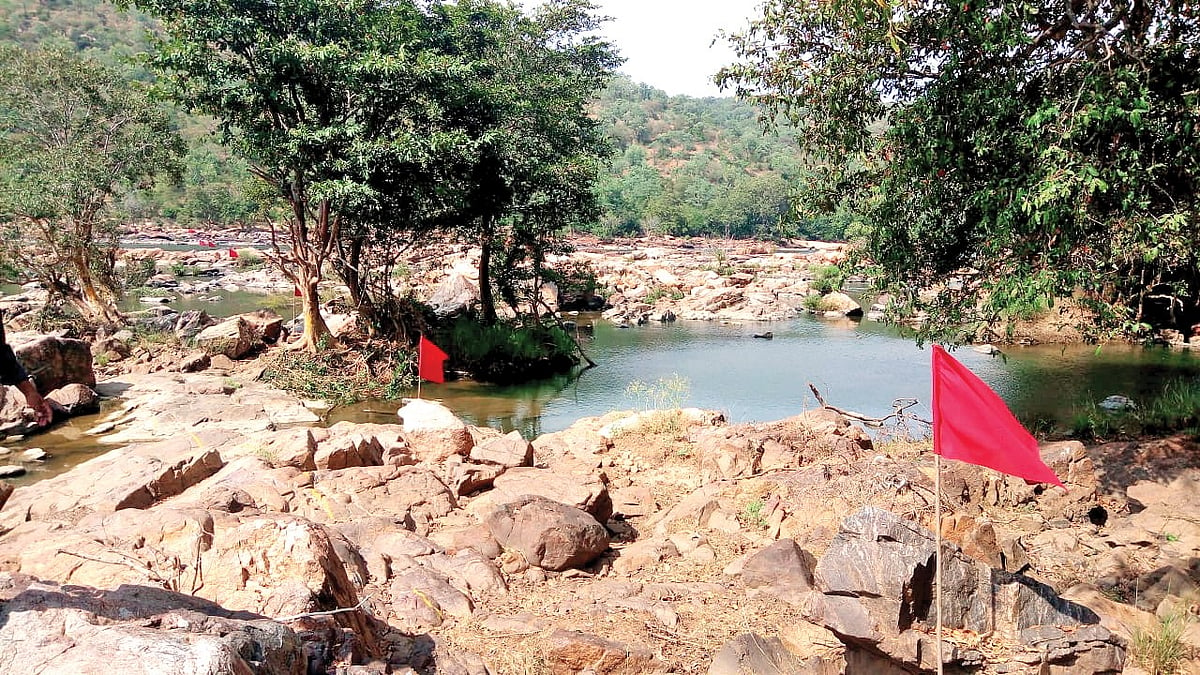
The renewed confrontation between Karnataka and Tamil Nadu over the proposed Mekedatu Balancing Reservoir Project is not just another episode in the long-running Cauvery dispute. It is a conflict that encapsulates some of the most pressing challenges confronting India in an era of climate uncertainty, rapid urbanisation and shrinking natural resources.
At the centre of the controversy is the fundamental question: who has the first claim over a river? An upstream state seeking drinking water security for a rapidly expanding metropolis, or downstream communities whose agriculture, livelihoods and survival depend on uninterrupted river flows?
The latest flashpoint came after the Supreme Court declined to entertain Tamil Nadu’s review petition against the project, which emboldened Karnataka to push once again for clearances. Tamil Nadu fears Mekedatu could alter the delicate balance established after decades of litigation and negotiations over water-sharing.
A thirsty city and a narrow gorge
Over the past three decades, Bengaluru has expanded at a pace that far outstripped the capacity of its natural resources. Lakes have disappeared under real estate projects. Wetlands have been encroached upon. Groundwater extraction has reached alarming levels. The city has become increasingly dependent on pumping Cauvery water over long distances and impractical elevations.
The water crisis that gripped Bengaluru in recent years exposed the vulnerability of this model. Tankers became the city’s lifeline. Borewells ran dry. Residential communities imposed restrictions on consumption. Experts pointed to decades of neglect of lakes, wetlands and groundwater recharge systems.
Against this backdrop, the Karnataka government argues, the Mekedatu project is indispensable.
About 90 km south of Bengaluru, Mekedatu is a picturesque gorge where the Cauvery narrows dramatically between rocky cliffs before flowing into Tamil Nadu. The name, which means ‘goat’s leap’ in Kannada, comes from a local legend that a goat once crossed the gorge in a single jump.
The proposed reservoir would store about 67 thousand million cubic feet (tmcft) of water and generate 400 MW of electricity. Karnataka says around 4.5 tmcft of water can be diverted annually to meet the drinking water needs of Bengaluru and neighbouring Kanakapura. State officials maintain that the project falls within Karnataka’s allocated share of Cauvery waters and therefore does not violate any tribunal award or Supreme Court order.
The state government also argues that the reservoir would improve groundwater recharge, increase water availability during drought years and help secure drinking water requirements for a city under mounting water stress.
For many in Karnataka, especially industry groups and urban residents, the project is seen as a necessity. Go 300 km downstream and the same project is viewed very differently.
The delta’s dread
In Tamil Nadu’s delta districts of Thanjavur, Tiruvarur, Nagapattinam and Tiruchirappalli, the Cauvery is the backbone of agriculture. Vast stretches of paddy fields depend on timely water releases from upstream reservoirs.
Farmers in the delta have endured years of uncertainty caused by erratic monsoons and prolonged interstate disputes. Many fear that Mekedatu would give the upstream state greater control over the timing and release of water; a fear substantiated by officials associated with the state’s Cauvery management apparatus. Farmer organisations say that even temporary disruptions can have devastating consequences for the state’s agricultural heartland.
A reservoir within a wildlife sanctuary
Mekedatu lies within the Cauvery wildlife sanctuary, one of south India’s most important forest ecosystems. Forest officials note that the area is home to several vulnerable and endangered species, including the grizzled giant squirrel, smooth-coated otter, honey badger and Deccan mahseer fish.
If implemented, the project would submerge approximately 7,862 acres of the sanctuary and another 4,619 acres of adjoining reserve forests. More than 12,000 acres of ecologically sensitive forest land would be inundated.
The sanctuary serves as a crucial corridor connecting the Eastern and Western Ghats, linking the Biligiri Ranganatha Hills and the forests of Male Mahadeshwara Hills. The loss of forest cover and migratory routes could have consequences extending far beyond the immediate project area.
Conservation biologist Sanjay Gubbi, who has studied the region extensively, points out that the sanctuary provides dispersal space for elephants and tigers and helps reduce human-animal conflict.
The project would require large-scale blasting, excavation and extraction of construction materials. These activities will have long-term impacts on local ecosystems even before the reservoir begins to fill.
An ecological contradiction
Perhaps the greatest irony of the proposal is that it seeks to solve one environmental crisis by creating another.
Bengaluru’s water shortage is largely the outcome of decades of unsustainable urban planning. The city once possessed an intricate network of lakes and tanks that stored rainwater and replenished groundwater reserves. Much of that network has either disappeared or become severely degraded.
Environmental groups point out that Bengaluru continues to lose substantial quantities of treated water through leakages. Rainwater harvesting remains uneven. Wastewater recycling is far below its potential. Restoration of lakes and wetlands has progressed slowly despite repeated warnings from experts.
A 15-member expert appraisal committee is understood to have raised concerns regarding environmental impacts and alternative options. The findings have never been made fully public.
The human cost
If the reservoir becomes a reality, several tribal settlements and forest-dependent communities face displacement. Villages such as Bommasundra, Galebore, Makivala, Kogge Doddi, Nelluru Doddi and Sampatagere Doddi are likely to be affected.
For these communities, displacement means far more than relocation. It involves the loss of access to forests, grazing lands, fishing resources and cultural landscapes that have sustained generations.
Tourism-dependent livelihoods could also be affected. Sangama, one of Karnataka’s most popular eco-tourism destinations, will be submerged.
The climate change conundrum
Large reservoirs have traditionally been justified on the assumption that river flows remain reasonably predictable. Climate change challenges that assumption.
Both Karnataka and Tamil Nadu are experiencing increasingly erratic rainfall patterns. Droughts, extreme rainfall events and seasonal variability are now common across the Cauvery basin.
Water policy analysts have argued that investing thousands of crores in large storage structures may not be the most effective strategy in an era of hydrological uncertainty. Rather, water security may depend on restoring ecosystems, improving efficiency and managing demand.
The Cauvery itself has become more vulnerable to climatic fluctuations. During years of deficient rainfall, tensions between Karnataka and Tamil Nadu often intensify, revealing the limits of existing water-sharing arrangements.
The crisis of water management
The Mekedatu controversy exposes the weaknesses in India’s approach to river governance. Rivers do not recognise political boundaries. Yet water management in India continues to be shaped largely by state-level interests.
As water scarcity increases, interstate disputes are likely to become more frequent and more contentious. The Cauvery conflict has already generated decades of litigation, protests and political mobilisation. Mekedatu threatens to open another prolonged chapter in that history.
India lacks robust river-basin governance mechanisms capable of balancing ecological concerns, climate risks, urban needs and downstream rights within a common framework. As a result, debates are often reduced to competing claims over water allocation.
The river itself receives little consideration. Neither do the forests, wildlife populations and vulnerable communities whose futures are tied to it.
Bengaluru undoubtedly needs water security. Tamil Nadu’s farmers need assured river flows. The Cauvery Wildlife Sanctuary deserves protection. Climate change demands caution.
Reconciling these competing realities will require imagination, cooperation and a willingness to move beyond the politics that have long defined interstate river disputes.
K.A. Shaji is a South India–based journalist who has chronicled rural distress, caste and tribal realities, environmental struggles and development fault lines. More of his writing here
Join our official telegram channel (@nationalherald) and stay updated with the latest headlines