Environment
VW, Ford, Tesla batteries linked to deforestation of indigenous lands in Indonesia
An investigation traces nickel from mines in Sulawesi through Chinese processors to global battery supply chains, raising concerns over rainforest loss and indigenous rights
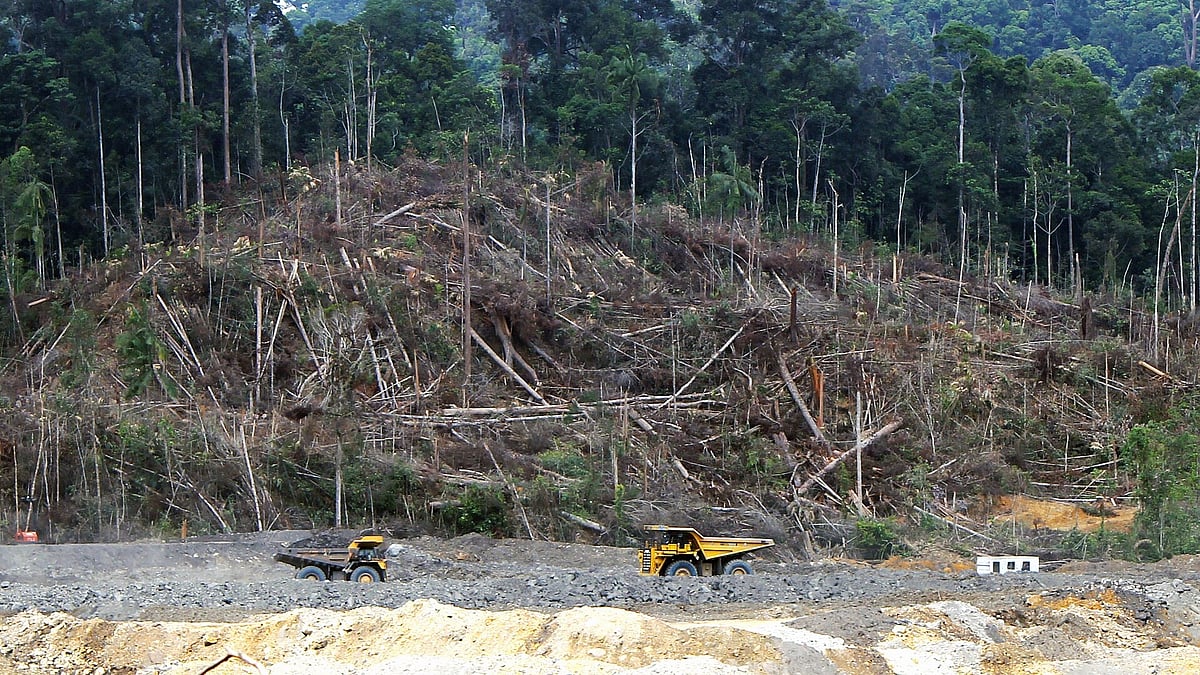
Mines linked to the battery supply chains of major carmakers are associated with widespread rainforest loss in Indonesia, an investigation finds.
Satellite analysis links nickel mining in Sulawesi to deforestation in lands inhabited by the indigenous Tolaki people.
Volkswagen, Ford and other automakers say they take supply-chain risks seriously, while Tesla and several mining and processing companies did not respond to requests for comment.
Nickel mines linked to the battery supply chains of major Western carmakers, including Volkswagen, Ford and Tesla, are associated with widespread deforestation in Indonesia's Sulawesi island, according to an investigation by The Guardian and European media partners.
The investigation traced nickel ore from the Cahaya and Hengjaya mines through processing facilities in Indonesia and China to battery manufacturers supplying automotive companies in Europe and the United States. Satellite analysis found extensive rainforest loss in areas inhabited by the indigenous Tolaki people.
The mines are located in nickel-rich woodlands in Sulawesi, which holds some of the world's largest deposits of the metal. Nickel is widely used in electric vehicle battery cathodes because it helps increase energy density and driving range.
Wadimula, a Tolaki elder living near the 21,000-hectare Cahaya mining concession, said the destruction of the forest threatened the community's way of life.
“We used to ask the forest for protection in return for our offerings,” she told The Guardian. “Destroying it means destroying our own life.”
The report traced ore from the two concessions to a nickel processing facility in Morowali, operated by a local subsidiary of Chinese company Zhejiang Huayou Cobalt. There, limonite ore is processed into mixed hydroxide precipitate, a key raw material for battery cathodes.
Shipments of the processed material from Morowali to China were valued at $606 million in 2024 and $470 million in 2025, according to the investigation. The material was transported to Huayou cathode manufacturing facilities in Quzhou and Yulin.
Corporate disclosures and trade data linked Huayou's supply chains to battery manufacturers, including Contemporary Amperex Technology Co Ltd (CATL), and subsequently to major carmakers. However, the investigation said public records did not establish the exact volumes or timing needed to link particular shipments directly to individual vehicle batteries.
The report identified Volkswagen, Volvo, Ford, General Motors, Tesla, BMW, Stellantis and Hyundai among carmakers linked to Huayou cathodes or shipments from CATL. Mercedes-Benz was separately linked to Huayou.
Geospatial analysis by The TreeMap suggested that nickel mining accounted for around two-thirds of the forest loss recorded since 2001 within the Cahaya concession area and more than half of the loss in the Hengjaya concession area.
Sulawesi Cahaya Mineral, the operator of the Cahaya mine, cleared an additional 330 hectares of forest in 2024, according to an analysis by Indonesian non-profit Auriga. The company delivered 11 million tonnes of limonite ore to Huayou's smelter that year, with deliveries rising to nearly 12.5 million tonnes in 2025.
The company received two administrative sanctions in 2025 for illegally clearing more than 450 hectares of forest beyond its permitted area, the report said. Sulawesi Cahaya Mineral is a subsidiary of Merdeka Battery Materials, whose shareholder group includes Huayou and CATL.
The investigation noted that the expansion of nickel mining has been facilitated by weakened environmental safeguards and exemptions for mining activities in areas designated as production forest.
Volkswagen said it took potential supply-chain risks seriously but could not rule out that the companies identified in the investigation were part of its supply chain. Ford said it was reviewing the allegations and would determine appropriate next steps.
Mercedes-Benz said it assessed environmental and social harm in raw material supply chains through risk-based due diligence. Renault said it had identified a nickel mining site in Sulawesi as an indirect supplier in its battery supply chain and had engaged business partners to verify environmental, social and governance information.
Volvo Cars, General Motors, Stellantis and Hyundai also cited their supplier monitoring and responsible sourcing efforts. Tesla, CATL, Huayou and Sulawesi Cahaya Mineral did not respond to requests for comment, according to the report.
The findings highlight the environmental challenges associated with the transition to electric vehicles. While electric cars produce fewer direct emissions than vehicles powered by fossil fuels, the mining and processing of critical minerals can cause substantial damage to forests, biodiversity and local communities.
The International Energy Agency projects that global nickel demand will double to 5.5 million tonnes by 2040. A study published in Nature Communications last year found that the carbon footprint of nickel from the most destructive mines could be up to 500 times higher than previously reported.
Researchers have argued that greater use of public transport, smaller vehicles and improved battery recycling could reduce demand for newly mined materials without slowing the shift away from fossil fuels.
Join our official telegram channel (@nationalherald) and stay updated with the latest headlines