Environment
World must cut emissions by 18 pc by 2030 to limit climate overshoot: UN
UN Environment Programme warns that countries are falling short of climate commitments, with current policies projected to drive global warming to 2.8°C
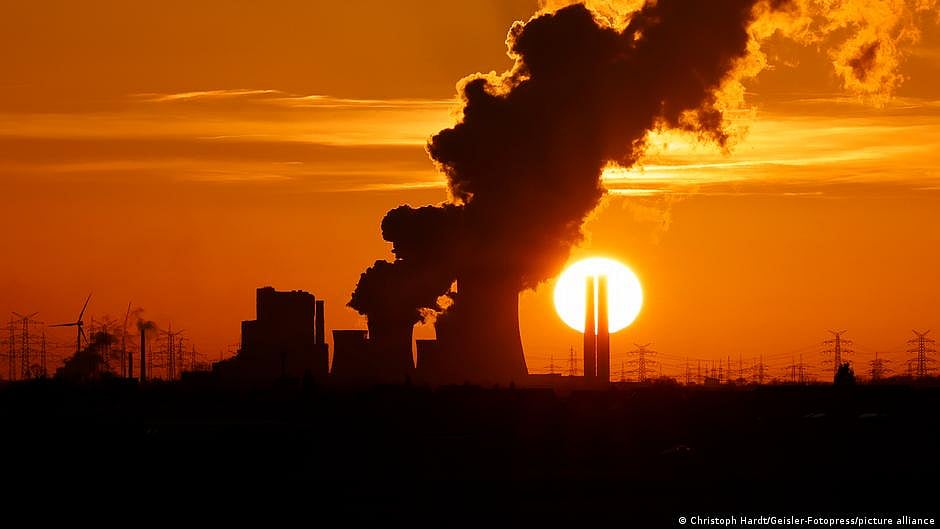
The UN says global emissions must fall 18% by 2030 and 45% by 2045 to limit warming to 1.7°C.
The window to limit warming to 1.5°C has closed, but limiting the overshoot remains possible.
Current policies could lead to 2.8°C of warming above pre-industrial levels.
The world needs to cut greenhouse gas emissions by 18% by 2030 and 45% by 2045 to limit global warming to 1.7°C above pre-industrial levels, the United Nations Environment Programme (UNEP) has said, warning that governments are failing to turn climate commitments into immediate action.
In its latest emissions gap report, UNEP said the window to limit warming to 1.5°C had closed, but limiting the extent and duration of an overshoot remained possible.
Global emissions appeared to have stalled in 2025, remaining broadly similar to the previous year. However, UNEP analysts cautioned against interpreting this as a peak or sustained plateau, citing geopolitical uncertainty and continued reliance on fossil fuels despite strong growth in renewable energy.
Inger Andersen, UNEP's executive director, said governments had failed to take the ambitious action needed to meet the 1.5°C target, the central goal of the Paris climate agreement.
“We procrastinated, and now we are saying this window has closed,” she said, adding that countries should continue working to minimise the extent and duration of the overshoot.
“It’s not time to throw in the towel and give up. This is about how to find our way back, as shortly and quickly as possible,” Andersen said.
Current policies could lead to 2.8°C warming
According to UNEP projections, even if countries fulfil all their updated emissions-reduction pledges, global temperatures would rise by around 2.6°C above pre-industrial levels. Under current policies, warming could reach 2.8°C.
Scientists warn that higher temperatures would increase the risks to human life and ecosystems. Exceeding 1.5°C by a larger margin could also raise the likelihood of triggering climate tipping points, potentially causing major and difficult-to-reverse changes in the climate system.
The United States, the world's second-largest emitter after China, has withdrawn from the Paris climate agreement under President Donald Trump and is threatening to reverse a longstanding trend of declining greenhouse gas emissions.
Bill Hare, chief executive of the Climate Analytics thinktank, called on major fossil fuel producers, including the US and Saudi Arabia, to act on the scientific evidence and reduce their reliance on fossil fuels.
He said these countries produce 20-25% of the world's fossil fuels and must stop allowing political considerations to delay action.
Mohamed Adow, director of the Power Shift Africa thinktank, said renewable energy technologies were expanding rapidly, but governments were not moving away from fossil fuels quickly enough.
“The technology is racing ahead while political leadership is dragging its feet,” he said.
Weak climate pledges deepen concerns
At the COP30 climate summit in Brazil in November 2025, countries were expected to submit stronger commitments under the Paris agreement. However, UNEP's analysis found that the pledges remained insufficient to put the world on a path consistent with climate goals.
The shortfall is expected to be addressed through the Paris agreement's global stocktake, an assessment of progress towards emissions targets scheduled for 2028. However, uncertainty over the timing of the next report by the UN's Intergovernmental Panel on Climate Change (IPCC) could complicate efforts to assess progress using the latest scientific evidence.
Johan Rockström, director of the Potsdam Institute for Climate Impact Research, said global emissions were projected to reach around 50 gigatonnes of carbon dioxide equivalent annually by 2035 if current national commitments were implemented. To align with climate goals, emissions would need to fall below 35 gigatonnes, he said.
“The science is already clear. Closing that gap is a question of political action, not a lack of scie