World
Amid threat of renewed conflict, Iran steps up public weapons displays and military training
Authorities expand weapons demonstrations and volunteer mobilisation efforts in Tehran as tensions with the United States persist and economic pressures mount
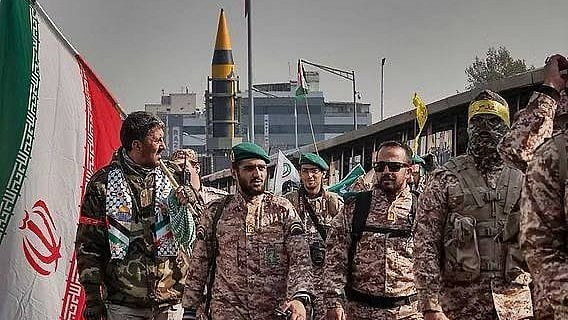
Iranian authorities have intensified public displays of weapons and military preparedness in Tehran, using training sessions, parades and state-backed mobilisation campaigns to project resilience as tensions with the United States remain high and fears of renewed conflict continue to linger.
Members of the Islamic Revolutionary Guard Corps have increasingly been seen conducting public demonstrations on the use of Kalashnikov-style assault rifles, while military parades in the capital have featured vehicles equipped with belt-fed machine guns. Ballistic missiles have also been displayed at public events, reflecting what authorities portray as national preparedness amid a volatile security environment.
The displays come as US President Donald Trump has warned that military action remains an option if negotiations with Tehran fail and Iran refuses to relinquish control over the Strait of Hormuz. Trump has also suggested that American forces could seize Iran’s stockpile of highly enriched uranium by force and has previously alleged that weapons were supplied to Kurdish fighters for distribution to anti-government protesters.
Iranian officials have presented the public mobilisation campaign as a necessary response to external threats. Supporters argue that familiarising civilians with basic weapons handling is required in the current security climate.
“This is necessary for all our people to get trained because we are in a war situation these days,” Tehran resident Ali Mofidi said during a training session. “If necessary, everyone should be available and know how to use a gun.”
State-backed mobilisation campaign
For months, Iranian state television and official messaging campaigns have encouraged citizens to join the “Janfada” movement, described as volunteers prepared to sacrifice their lives in defence of the country. Authorities claim that more than 30 million people have registered through online platforms or public events to support the initiative. Independent verification of the figure has not been possible.
State media have also featured armed presenters and public appeals aimed at encouraging participation.
Journalist Soheila Zarfam, writing in the state-owned Tehran Times, described her decision to register as being motivated by concern for Iran’s future despite the risks involved.
The mobilisation effort unfolds against a backdrop of economic strain, with many Iranians facing layoffs, business closures and rising costs of food, medicines and other essentials. Analysts say the displays serve not only as a signal to foreign adversaries but also as a means of reassuring supporters of the Islamic Republic during a period of uncertainty.
Human rights advocates, however, have criticised aspects of the campaign. Nobel Peace Prize laureate Shirin Ebadi condemned images showing young boys handling assault rifles, comparing them to practices associated with armed groups in parts of Africa.
Weapons training becomes increasingly visible
Recent demonstrations have showcased a range of firearms, from historic British Lee–Enfield rifles (United Kingdom, introduced in 1895) to older muzzle-loading weapons. However, the most visible activities have been concentrated in Tehran rather than rural regions where civilian gun ownership has traditionally been more common.
At a training session in the capital this week, volunteers attended separate classes for men and women. Basij volunteer force instructor Hadi Khoosheh demonstrated the handling of a folding-stock Kalashnikov-pattern rifle and said participants who completed the programme would receive certification confirming basic weapons training.
According to observers at the event, some participants displayed only limited familiarity with firearms, underscoring the introductory nature of the training programme.
Mofidi said he remained determined to support the country if conflict escalated.
“Definitely we will stand against the Americans and won't give up even an inch of our soil,” he said. “No matter if they come from the sea or land, we will stand by our flag.”
The expanding public demonstrations underscore how Iran is combining military symbolism, volunteer mobilisation and political messaging as it navigates continuing tensions with Washington and uncertainty over the future of regional security.
Join our official telegram channel (@nationalherald) and stay updated with the latest headlines