World
At least 104 civilians killed in Sudan drone strikes as war spreads into Kordofan
UN warns of possible war crimes as attacks hit hospitals, schools and peacekeepers; humanitarian crisis deepens
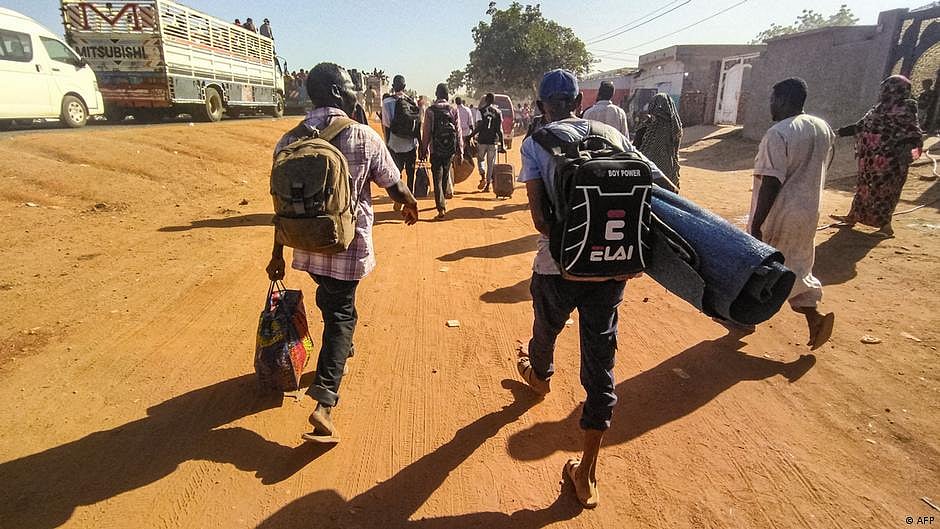
At least 104 civilians have been killed in a wave of drone attacks across Sudan’s Kordofan region, marking a deadly escalation in the country’s civil war as it enters its third year.
The strikes, which began in early December and continued until Friday, followed the capture of a key Sudanese army base in Babnusa by the paramilitary Rapid Support Forces (RSF) after days of heavy fighting. The violence signals a major shift in the conflict, which had until recently been concentrated in Darfur, now expanding into Sudan’s vast central region.
The deadliest attack occurred in Kalogi, South Kordofan, where drones struck a kindergarten and a hospital, killing 89 people, including 43 children and eight women, according to local officials.
United Nations High Commissioner for Human Rights Volker Türk said he was “alarmed by the further intensification in hostilities” and warned that attacks on medical facilities violate international humanitarian law.
Peacekeepers targeted
The violence has also claimed the lives of six Bangladeshi peacekeepers serving with the UN mission in Sudan. They were killed on December 13 when drones hit their base in Kadugli, the capital of South Kordofan.
UN Secretary-General Antonio Guterres condemned what he described as “horrific drone attacks”, stressing that attacks on UN peacekeepers may constitute war crimes under international law.
A day later, Dilling Military Hospital was struck. The Sudan Doctors Network reported nine deaths and 17 injuries, accusing armed groups of the “systematic targeting of health institutions”. UN officials confirmed six deaths and 12 wounded, many of them medical personnel.
The SAF (Sudanese Armed Forces) have blamed the RSF for the attacks, though the paramilitary group has not responded to the allegations.
Humanitarian crisis worsens
Beyond the immediate casualties, the escalation has triggered a deepening humanitarian emergency:
More than 40,000 people have fled North Kordofan, according to local authorities
Kadugli and Dilling remain partially besieged, trapping civilians
30% of health facilities in North Kordofan are no longer functional
North Kordofan’s Health Minister Iman Malik said the state has recorded 13,609 cholera cases and 730 dengue fever infections, compounding the crisis as medical infrastructure collapses.
In Heglig, captured earlier by the RSF and later handed over to South Sudan’s army under a tripartite arrangement, nearly 2,000 people were displaced to White Nile state.
The fighting in Kordofan follows the RSF’s October seizure of el-Fasher, the Sudanese army’s last major stronghold in Darfur. A recent report by Yale University’s Humanitarian Research Lab found that RSF fighters killed civilians attempting to flee el-Fasher and later destroyed evidence by burying, burning or removing bodies.
Diplomatic efforts resume
The renewed violence comes even as international peace efforts restart. SAF chief Abdel Fattah al-Burhan met Saudi Crown Prince Mohammed bin Salman on December 15, expressing readiness to work with US President Donald Trump on peace initiatives.
A day later, Egypt and the United States jointly rejected “any attempts to divide Sudan” and called for a comprehensive ceasefire.
Sudan has topped the International Rescue Committee’s Emergency Watchlist for three consecutive years. The war, which began in April 2023, has officially killed more than 40,000 people, though aid groups warn the true toll is far higher.
More than 14 million people have been displaced, making Sudan home to what the United Nations describes as the world’s largest humanitarian crisis.
Join our official telegram channel (@nationalherald) and stay updated with the latest headlines