World
Benjamin Netanyahu says attack on Iran to continue with ‘full force’
Israeli PM says Israel has a comprehensive strategy aimed at weakening the “Iranian regime”
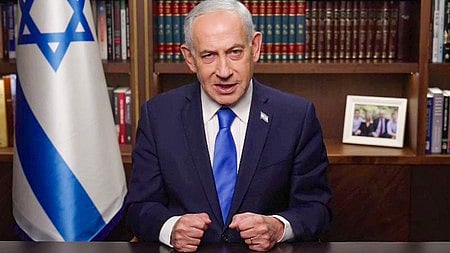
In a forceful and defiant address, Israeli Prime Minister Benjamin Netanyahu declared that Israel’s military campaign against Iran would continue with “full force and uncompromising momentum,” signalling that the confrontation between the two regional adversaries is far from over.
Speaking in a live televised statement on Saturday, Netanyahu said Israel had prepared a comprehensive strategy aimed at weakening what he described as the “Iranian regime”. According to him, the campaign would unfold with a series of calculated moves and unexpected developments designed to reshape the balance of power.
“There is a well-prepared plan with many surprises,” he said, suggesting that the unfolding operation could significantly undermine the current leadership in Tehran and potentially open the door to political change.
In a direct appeal to the Iranian public, Netanyahu sought to frame Israel’s actions as being directed not against the people of Iran but against their ruling establishment. “The moment of truth is approaching,” he said. “We do not seek to divide Iran, but to liberate it and live with it in peace.”
The Israeli leader also turned his criticism toward the United Nations, accusing the global body of unfairly condemning Israel while remaining silent on what he described as atrocities committed by Iran and its regional allies. He argued that the international community had failed to respond adequately to violence linked to Iranian-backed groups.
Netanyahu further issued a stern warning to Lebanon, urging its government to implement the existing ceasefire agreement and move decisively to disarm Hezbollah. If Beirut fails to act, he cautioned, the consequences of Hezbollah’s continued aggression could prove disastrous for the country.
Meanwhile, across the Atlantic, US President Donald Trump asserted that the United States had dealt a crippling blow to Iran’s military capabilities after nearly a week of intense fighting. Speaking to reporters during a press gaggle aboard Air Force One, Trump portrayed the early phase of the conflict as a decisive setback for Tehran’s armed forces.
The United States and Israel launched their joint military operation against Iran on 28 February, targeting a range of strategic installations across the country.
Trump claimed the strikes had effectively dismantled large portions of Iran’s naval and air power. “We’ve wiped out their navy — 44 ships. We’ve wiped out their Air Force. Every plane,” he said, adding that American forces had also inflicted heavy damage on Iran’s missile infrastructure.
According to the US president, the campaign has severely curtailed Iran’s ability to mount sustained retaliation. He said roughly 70 per cent of Iran’s rocket launchers had been destroyed — systems he described as both costly and difficult to replace.
With many launch facilities and manufacturing capabilities now crippled, Trump suggested that Tehran’s capacity to launch attacks has diminished dramatically. “They’re at about 9 per cent of what they sent out in the first two days,” he said, portraying the current situation as a stark contrast to the intensity of Iran’s initial response.
As the rhetoric on both sides grows sharper and the battlefield continues to expand, the confrontation between Israel, the United States and Iran appears to be entering a volatile new phase — one that could reshape the strategic landscape of the Middle East in the days ahead.
With IANS inputs
Join our official telegram channel (@nationalherald) and stay updated with the latest headlines