World
Cracks emerge between Trump, Senate Republicans as election season nears
Delayed nominations, policy disputes and election-year pressures expose growing strains within the GOP
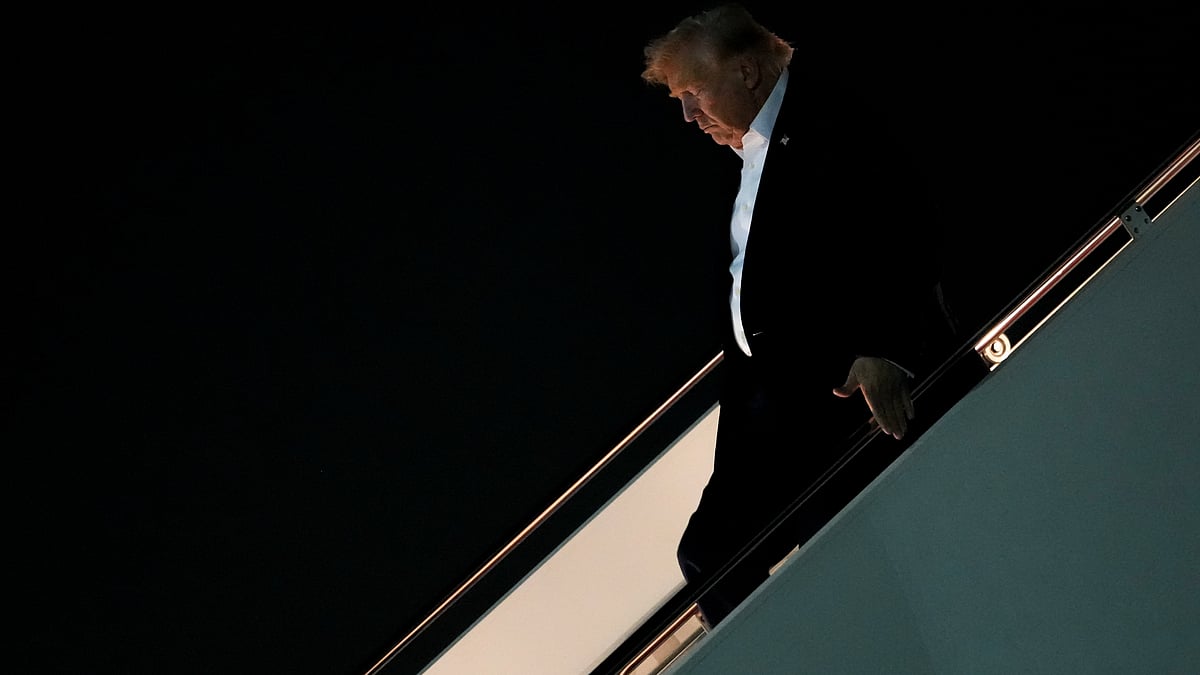
The relationship between US President Donald Trump and Senate Republicans appeared to move closer to a breaking point this week, as the president disrupted efforts to swiftly confirm one of his own nominees and threatened to withhold support for the renewal of a key surveillance law unless lawmakers accepted new conditions.
Tensions escalated after Trump announced on social media late on Wednesday, 17 June that he was delaying the nomination of Jay Clayton to serve as national intelligence director, just hours before the nominee was due to appear at a Senate confirmation hearing. The move added to weeks of growing friction between the White House and Senate Republicans.
Later the same day, several Republican senators, who had largely avoided directly criticising Trump over the Iran conflict, openly condemned his agreement to end the war.
“This is the worst foreign policy blunder in decades,” Senator Bill Cassidy said in a post on X.
The public disagreements mark a sharp departure from the atmosphere a year ago, when Senate Republicans worked closely with Trump to secure passage of his sweeping spending and tax-cut package. At the time, criticism of the president was virtually absent on Capitol Hill, and Republicans hoped to make the legislation a centrepiece of their midterm election campaign.
Instead, with November's elections approaching and Republicans seeking to protect their congressional majorities, Trump has increasingly frustrated lawmakers with a series of demands, reversals and policy interventions. Several Republican senators have now publicly questioned his decisions for the first time.
“I think somebody's not dialling the president into the complexities of what he's done here,” Senator Thom Tillis said after Clayton's confirmation was postponed. “I mean, my God.”
The gradual deterioration of what once appeared to be a solid alliance between the White House and congressional Republicans has also extended to policy priorities.
Trump has shown little interest in much of the Republican legislative agenda, focusing instead on his proposal requiring proof of citizenship for voting — legislation that faces almost no prospect of passage.
At the same time, he has urged Congress to fund elements of his White House ballroom project, approve an acting intelligence director many senators oppose, and grant him greater latitude over decisions related to the Iran conflict.
The widening divide has slowed Senate business and placed additional pressure on Republican incumbents facing re-election. It has also increased scrutiny on Senate majority leader John Thune, who has repeatedly sought to manage expectations by outlining what is politically achievable in the Senate.
Trump pressures Thune on voting legislation
Trump has repeatedly pressed Thune to eliminate the filibuster and push through the proof-of-citizenship measure, known as the SAVE America Act. Thune has told the president both publicly and privately that there is insufficient support within the Senate for either move. Trump, however, has continued to apply pressure.
In a social media post on Thursday, Trump warned that he would be “the last Republican president” if the legislation failed. “Senate Majority Leader John Thune, and the Republican Senate, must not let this carnage happen,” Trump wrote. “They will go down on the wrong side of History, as will all Republicans who just stood by and watched.”
Despite the disagreement, Trump has refrained from directing personal attacks at Thune, unlike his frequent criticism of Thune's predecessor Senator Mitch McConnell, whom he once described as a “dour, sullen, and unsmiling political hack”.
Trump and Thune continue to speak regularly, even when the Senate leader is delivering unwelcome news about legislative realities.
As pressure mounted over the voting Bill, Thune dedicated weeks of Senate floor time to debating the proposal, seeking to demonstrate support for the measure despite the lack of votes required for passage.
No signs of a Republican revolt
For now, there is little indication of a broader rebellion within Senate Republican ranks.
Thune “has managed it better than anyone else could manage it,” Cassidy said. The Louisiana senator has become a more frequent critic of Trump since losing a primary challenge to a Trump-backed opponent.
Concerns have surfaced even among some of Trump's closest allies, particularly over his proposed USD 1.776 billion settlement fund for political supporters and his choice of Bill Pulte as acting intelligence director despite his lack of intelligence experience.
At the same time, Trump's disputes with Senate Republicans have exposed fresh divisions within the party. Several Republican senators reportedly criticised Senator Mike Lee during a private conference lunch this week over his online campaign to abolish the filibuster and force passage of the SAVE America Act, arguing that such efforts risked deepening internal divisions during an election year.
Lee remained defiant, writing on X on Friday that accepting defeat because Republicans currently lack the votes would be a “recipe for failure”.
Texas Senator John Cornyn, one of those who challenged Lee at the meeting, responded by arguing that it was Lee's responsibility to secure the necessary support. “Can't just complain about others,” Cornyn posted. “Prove us wrong.”
With AP/PTI inputs
Join our official telegram channel (@nationalherald) and stay updated with the latest headlines