World
Trump bans Canadian liquor, dairy goods as trade war escalates
Restrictions cover Canadian beer, wine, cider, whisky, spirits and non-alcoholic beer
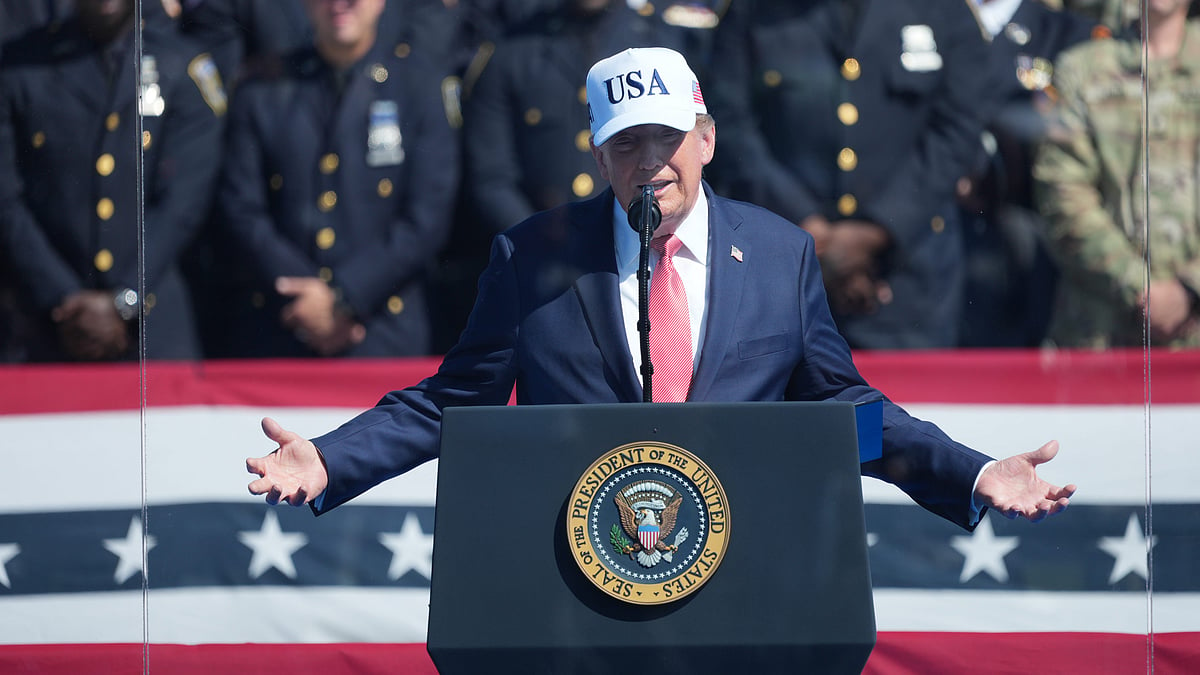
US President Donald Trump has ordered sweeping import bans on a range of Canadian alcoholic beverages, dairy products and motorcycles, escalating his administration’s trade confrontation with Canada.
The new restrictions will take effect at 12:01 am Eastern Time on 29 September, according to a series of White House proclamations. Canadian goods imported before the deadline but not yet cleared for consumption will remain subject to the existing 50 per cent tariff.
A senior Trump administration official said the measures are aimed at countering Canadian retaliatory actions, protecting US producers and restoring what the White House considers a more level playing field in bilateral trade.
The official said the newly prohibited goods account for trade worth “single-digit billions” of dollars, while changes to the existing tariff regime will have little impact on the roughly $20 billion worth of Canadian goods already covered by the duties.
“The actual economics of it is much more challenging for Canada than it is for us,” the official told reporters, arguing that the newly banned products represent about 0.1 per cent of overall US consumption.
The alcohol restrictions cover a wide range of Canadian products, including packaged beer, sparkling wine, cider, sake, whisky, bourbon, rum, gin, vodka, tequila, brandy, liqueurs and other spirits. Non-alcoholic beer is also included.
Trump’s administration is also barring several Canadian dairy-related products, including whey protein concentrates, modified whey, fluid whey, dried whey and certain forms of molasses.
A separate proclamation prohibits imports of Canadian motorcycles and engine-powered cycles equipped with engines larger than 800cc.
Alongside the new bans, Trump has modified the list of Canadian products already subject to the existing 50 per cent tariffs. Those changes take effect on 15 September.
The revised tariff list adds several categories of paper, iron and steel structures, aluminium products and metal fittings, as well as golf carts, small motor vehicles, outboard motorboats, furniture, mattresses and lamps. Certain cheeses made from milk other than cow’s milk have also been added.
At the same time, the administration has removed salt, Portland cement, refined lead, certain household paper products, switchgear assemblies and some fishing-rod parts and accessories from the tariff list.
The administration said the changes followed feedback from US businesses after the earlier tariffs came into force. Some products were removed because certain parts of the US economy rely heavily on Canadian supplies that would be difficult to replace.
Trump’s separate plan to increase tariffs on Canadian vehicles to 50 per cent from 1 January remains in effect, the senior official confirmed.
“The President's position on autos going up to 50 per cent on 1 January, that remains,” the official said.
Despite the escalation, Washington has left the door open to negotiations with Ottawa. The administration said discussions with Canadian officials over the previous several days had been constructive, with another round of talks expected within days.
Asked whether a broader alternative agreement with Canada remained possible, the official said: “Yes, that's always a possibility.”
Trump initially imposed the additional duties under Section 338 of the Tariff Act of 1930 through proclamations issued on 20 July. Their implementation was temporarily suspended after Canada indicated that it would address the measures at the centre of the dispute.
The suspension expired on 22 August after the White House said Canada had failed to remove the disputed measures.
Section 338 gives the US president authority, under specified circumstances, to impose duties of up to 50 per cent and prohibit imports from countries deemed to discriminate against US commerce.
The latest restrictions deepen an already strained trading relationship between Washington and Ottawa, even as both sides continue to signal that negotiations remain possible.
With IANS inputs
Join our official telegram channel (@nationalherald) and stay updated with the latest headlines