World
White House claims Iran hostilities ‘terminated’, sidesteps 1 May war powers deadline
Trump letter to Congress asserts end of conflict even as US forces remain deployed and ceasefire holds
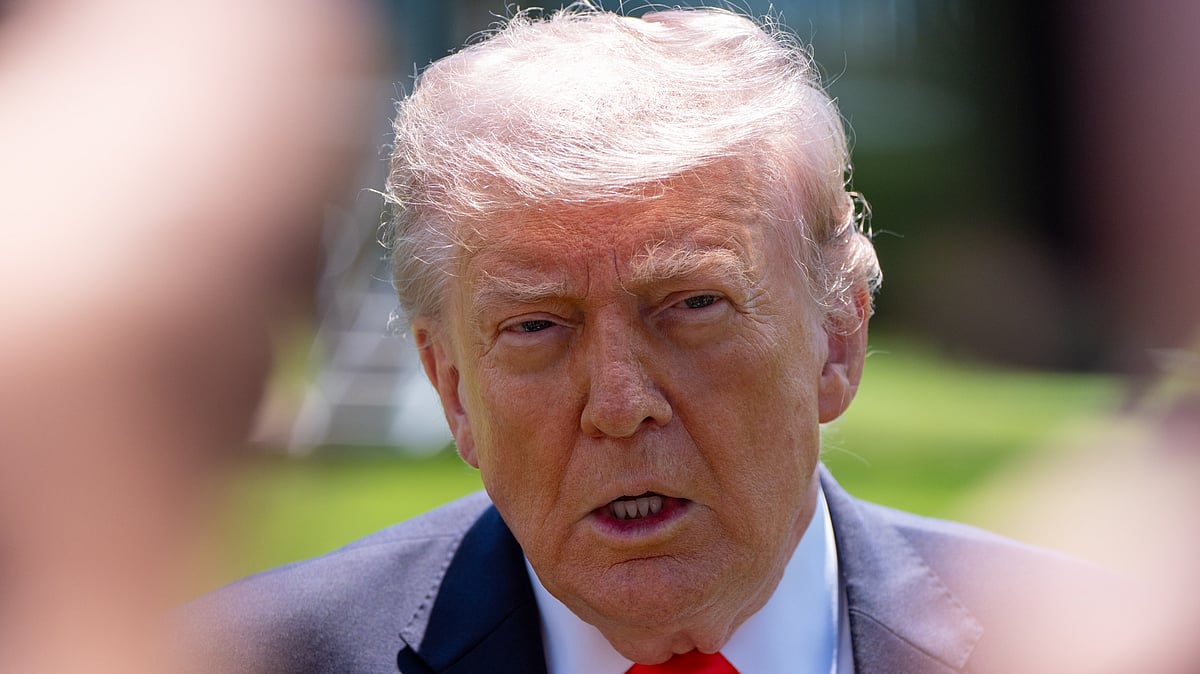
The White House told Congress in a letter on Friday, 1 May that hostilities with Iran have “terminated”, even as US armed forces remain deployed in the region.
The message from US President Donald Trump effectively sidestepped the 1 May legal deadline to secure Congressional approval for continuing the war. The deadline was already expected to lapse without action from Republican lawmakers, many of whom have deferred to the president.
The letter underscores a sweeping — and legally contested — claim of presidential authority at the centre of Trump’s war, which began two months ago without Congressional approval. 'The hostilities that began on February 28, 2026, have terminated,' Trump wrote to House speaker Mike Johnson and senator Chuck Grassley, the Senate president pro tempore.
At the same time, he signalled that the conflict may not be over. “Despite the success of United States operations against the Iranian regime and continued efforts to secure a lasting peace, the threat posed by Iran to the United States and our Armed Forces remains significant,” the Republican president said.
Under the War Powers Resolution of 1973, Congress must declare war or authorise the use of force within 60 days — Friday marked that deadline — or within 90 days if the president seeks an extension. This Congress made no effort to enforce that requirement, leaving Washington on Thursday for a week after the Senate rejected, for a sixth time, a Democratic bid to halt the war.
The Trump administration has shown no inclination to seek congressional approval. It argues that the law’s deadlines do not apply because the conflict with Iran effectively ended when a fragile ceasefire took hold in early April.
Senate majority leader John Thune on Thursday said he did not plan to hold a vote to authorise force in Iran or otherwise intervene. “I'm listening carefully to what the members of our conference are saying, and at this point I don't see that,” Thune said.
Reluctance among Republicans to challenge Trump on the war comes at a politically sensitive moment, with public frustration rising over the conflict and its impact on fuel prices. Even so, most GOP lawmakers say they support Trump’s wartime leadership or are willing to give him more time amid the fragile ceasefire.
Senator Kevin Cramer said he would back an authorisation of war if Trump requested one, but questioned whether the Vietnam-era resolution designed to reassert congressional authority is constitutional. “Our founders created a really strong executive, like it or not like it,” Cramer said.
Some Republican senators, however, have indicated they want Congress to weigh in eventually. Alaska senator Lisa Murkowski said in a floor speech on Thursday that she would introduce a limited authorisation for the use of military force when the Senate returns from its one-week recess, if the administration has not presented what she called a “credible plan”.
“I do not believe we should engage in open-ended military action without clear accountability,” Murkowski said. “Congress has a role.”
A handful of GOP senators have, for weeks, signalled that Congress should assert its authority at some stage. One of them, Maine’s Susan Collins, voted with Democrats on Thursday for the first time to halt the war, saying she wants a clearly defined strategy to end the conflict. “The president's authority as commander in chief is not without limits," Collins said, adding that the 60-day deadline is “not a suggestion, it is a requirement."
Alongside Collins and Murkowski, Republican senators John Curtis, Thom Tillis and Josh Hawley, among others, have said they would ultimately like to see a vote.
Curtis said he would not support continued funding for the war until Congress authorises it. “It is time for decision-making from both the administration and from Congress — and that can happen in league with one another, not in conflict,” Curtis said.
Thune suggested the White House should step up engagement with lawmakers through briefings and hearings if it wants sustained support from Capitol Hill.
“Obviously, getting readouts from our military leadership on a somewhat regular basis I think will be helpful in terms of shaping the views of our members about how comfortable they are with everything that's happening there, and the direction headed forward,” Thune said.
The administration maintains that the deadline does not apply. The War Powers Resolution stipulates that a president has 60 calendar days after notifying Congress of military hostilities to either end the campaign or obtain approval. A 30-day extension is permitted for safe withdrawal of forces, provided Congress is informed.
With the 60-day window expiring on Friday, defense secretary Pete Hegseth told a congressional hearing on Thursday, “We are in a ceasefire right now, which our understanding means, the 60-day clock pauses or stops.”
The administration is advancing that argument even as Iran retains control over the Strait of Hormuz and the US Navy continues a blockade aimed at preventing Iranian oil tankers from reaching open waters.
Democrats dismissed the claim that 1 May was not the operative deadline. “I do not believe the statute would support that,” Virginia senator Tim Kaine told Hegseth during the hearing.
Senator Adam Schiff argued that US forces remain actively engaged, even if bombing has paused under the ceasefire. “Ceasing to use some forces while using others does not somehow stop the clock,” Schiff said.
The development came as little surprise to at least one House Democrat overseeing military matters. Washington representative Adam Smith, the ranking Democrat on the House Armed Services Committee, told the Associated Press: “Is the expectation that the Trump administration is going to follow the law? I do not have that expectation.”
With AP/PTI inputs
Join our official telegram channel (@nationalherald) and stay updated with the latest headlines