World
Donald Trump eyes quick end to Iran war, sidelines Hormuz reopening
Marco Rubio says strait “will be open one way or another”, through Iranian compliance or a multinational coalition
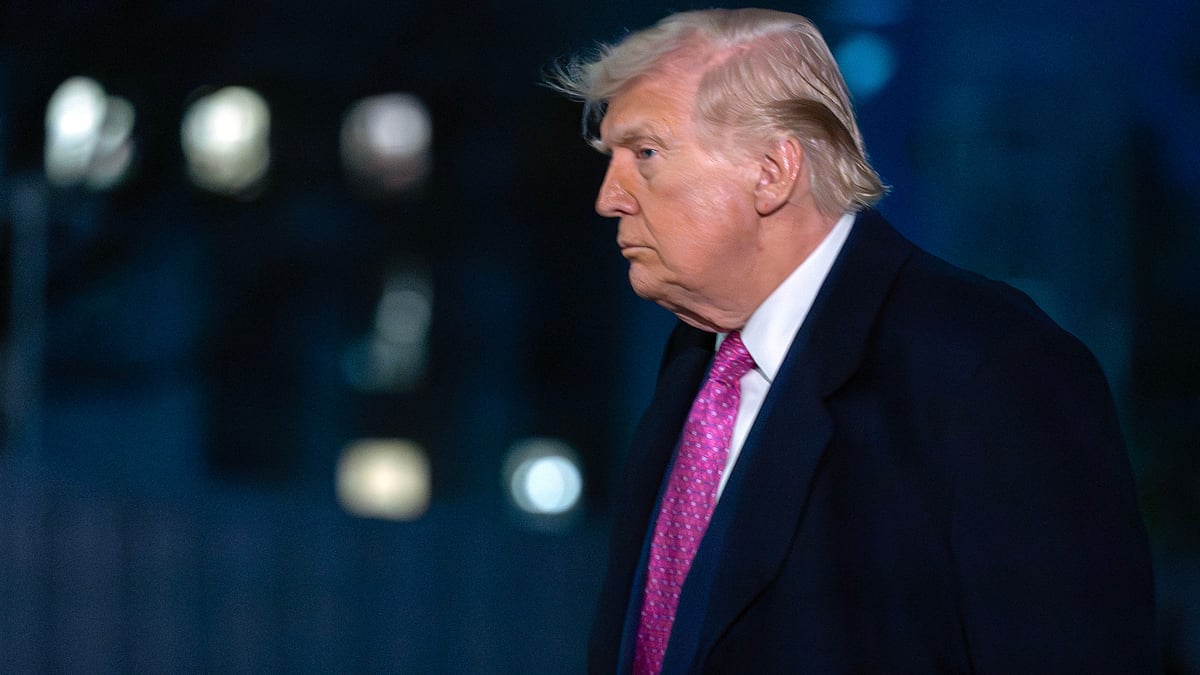
Five weeks into the escalating conflict with Iran, US President Donald Trump appears to be recalibrating his war strategy, signalling a willingness to wind down “Operation Epic Fury” even if the vital Strait of Hormuz remains largely closed — a move that could reshape the trajectory of the conflict and its global economic fallout.
According to a report by The Wall Street Journal, Trump has told aides that reopening the strategic waterway is no longer an immediate priority, as doing so could significantly prolong the military campaign beyond his desired four-to six-week timeline. Officials familiar with the discussions indicated that any attempt to wrest control of the chokepoint would be both complex and time-consuming, risking deeper entanglement in the region.
If carried through, the decision could effectively leave Tehran with a firm grip over one of the world’s most critical energy corridors. The partial blockade of the strait has already rattled global markets, constraining oil flows and driving up crude prices. While a future operation to reopen the passage has not been ruled out, it appears to have been deferred in favour of a quicker end to hostilities.
Yet, this apparent push for de-escalation sits uneasily alongside a significant US military build-up in the region. Over the weekend, the amphibious assault ship USS Tripoli arrived with more than 2,500 Marines, while the administration is also weighing the deployment of an additional 10,000 ground troops. Among the more ambitious options under consideration is a complex mission aimed at seizing Iran’s uranium stockpiles — an operation that would mark a dramatic escalation.
Behind closed doors, Trump and his advisers have concluded that forcing open the Strait of Hormuz would derail their preferred timeline, shifting the focus instead to weakening Iran’s naval capabilities and degrading its missile arsenal before transitioning to a diplomatic endgame. The strategy envisions pressuring Tehran to restore commercial shipping flows voluntarily, while encouraging European and Gulf allies to take the lead in securing the waterway if needed.
This evolving stance was echoed at a recent White House briefing, where press secretary Karoline Leavitt stated that ensuring safe passage through the strait is not among the administration’s “core objectives” for concluding the operation.
However, the messaging from Washington has not been entirely uniform. Secretary of state Marco Rubio struck a more assertive tone in an interview with the Al Jazeera, insisting that the strait “will be open one way or another”—either through Iranian compliance with international law or through coordinated action by a multinational coalition.
Despite sustained US bombardment and significant losses — including damage to segments of its navy — Iran has continued to threaten commercial shipping through the chokepoint. While some vessels from allied nations, including India, have reportedly been allowed passage, the broader disruption has sent ripples across global energy markets.
Complicating matters further is Trump’s shifting rhetoric on the issue. In recent days, he has alternated between downplaying the strategic importance of the strait for the United States and issuing stark warnings — at one point threatening to target Iran’s oil infrastructure if the waterway is not “open for business” immediately.
As the conflict grinds on, Washington’s balancing act — between swift military objectives and the realities of a volatile region — underscores the uncertain path ahead, where strategic restraint and escalation appear to coexist uneasily.
With PTI inputs
Join our official telegram channel (@nationalherald) and stay updated with the latest headlines