World
Trump orders US withdrawal from Gurugram-based International Solar Alliance
A long-time climate sceptic, Trump targeted institutions with environmental and climate mandates
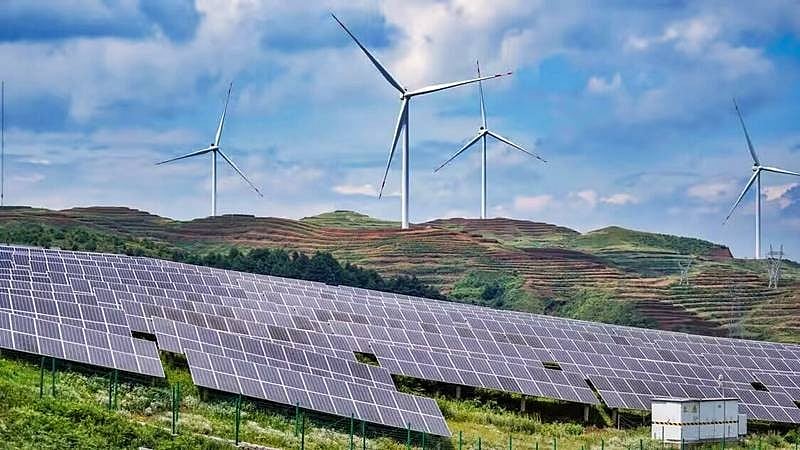
In a sweeping assertion of his “America First” worldview, President Donald Trump has ordered the United States to withdraw from the International Solar Alliance (ISA), the Gurugram-headquartered coalition championing solar energy as a global response to climate change.
The ISA found itself among 66 international bodies — spanning both the UN system and independent multilateral platforms — from which the US was pulled out through an executive order issued on Wednesday. The White House said these organisations were deemed to be working “contrary to US national interests”.
A long-standing climate sceptic who has repeatedly dismissed climate change as a “hoax”, Trump trained his sights squarely on institutions with environmental and climate mandates. The axe fell hard, sweeping up entities devoted to renewable energy, conservation and emissions reduction — with the ISA caught in the crossfire.
Explaining the rationale, secretary of state Marco Rubio said Washington was pushing back against what he described as “climate orthodoxy”, arguing that such frameworks undermine America’s sovereignty, freedoms and economic prosperity.
Founded in 2015 as a joint initiative of India and France, the International Solar Alliance has grown into a 124-nation grouping, with around 100 full members. Its ambition is expansive: mobilising $1 trillion in investment for solar energy by 2030 while accelerating the spread of solar technologies across the developing world. The alliance is currently led by director-general Ashish Khanna.
Between 2022 and 2025, the United States contributed $2.1 million to the ISA, according to a US government database. The funds were earmarked to support the US–India Climate and Clean Energy Agenda 2030 Partnership, aimed at speeding up solar deployment in emerging and developing economies.
The ISA’s exit was part of a broader retreat. At the forefront of Trump’s withdrawal list was the United Nations Framework Convention on Climate Change (UNFCCC), the cornerstone body behind the Paris Climate Agreement. It was joined by a host of UN-linked agencies dealing with water, oceans and energy, as well as the UN programme focused on curbing emissions from deforestation and forest degradation.
Beyond the UN system, 35 non-UN organisations were also targeted, including nine working directly in the climate and environment space. Among them was the Intergovernmental Panel on Climate Change (IPCC), which, under the leadership of India’s Rajendra Pachauri, shared the Nobel Peace Prize in 2007.
The decision marks a sharp reversal from an earlier chapter in US engagement. Washington had committed to joining the ISA in 2016, when Prime Minister Narendra Modi and then President Barack Obama stood together at the White House, pledging cooperation on clean energy and climate action — a promise now formally set aside.
With IANS inputs
Join our official telegram channel (@nationalherald) and stay updated with the latest headlines